




Modular Metal Formwork
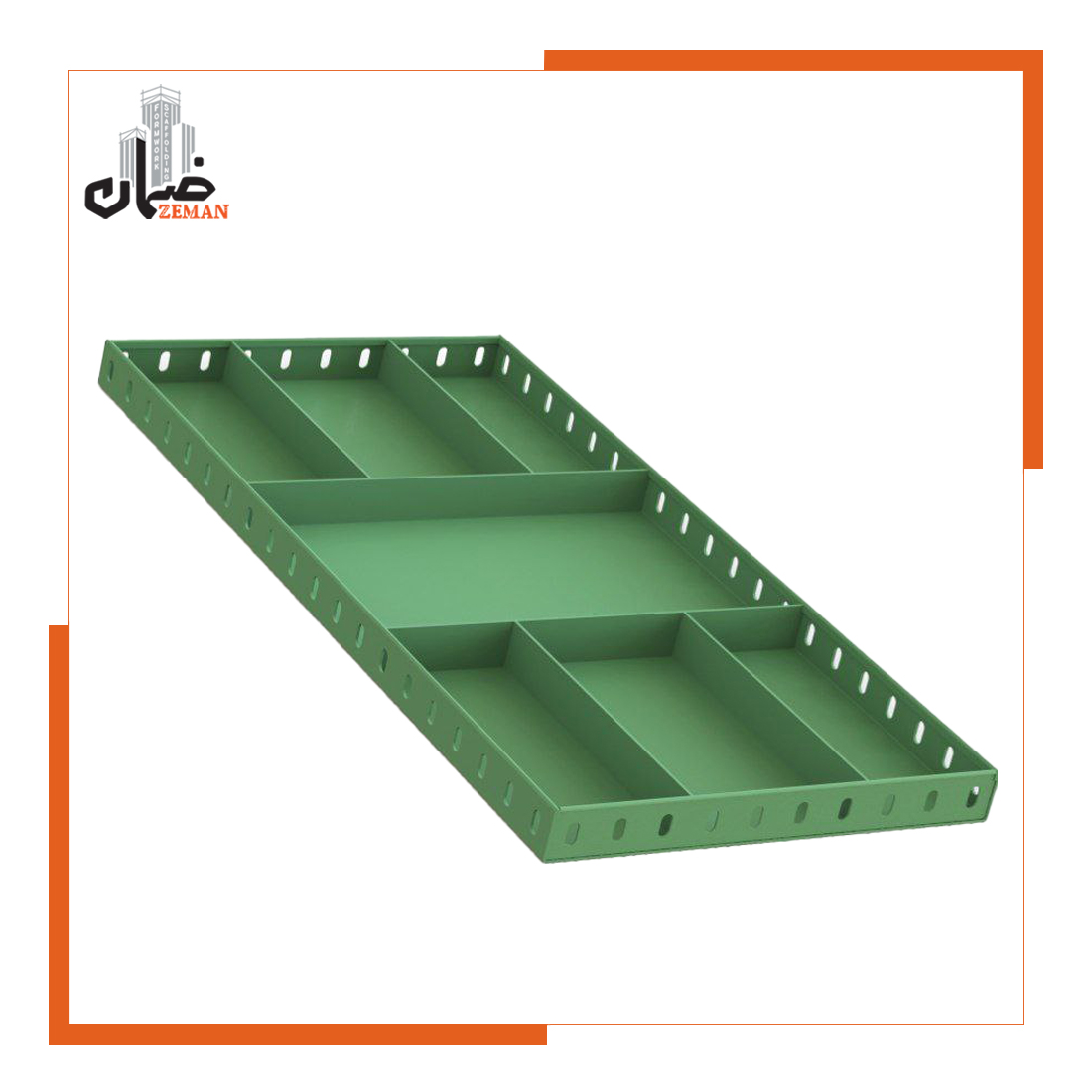
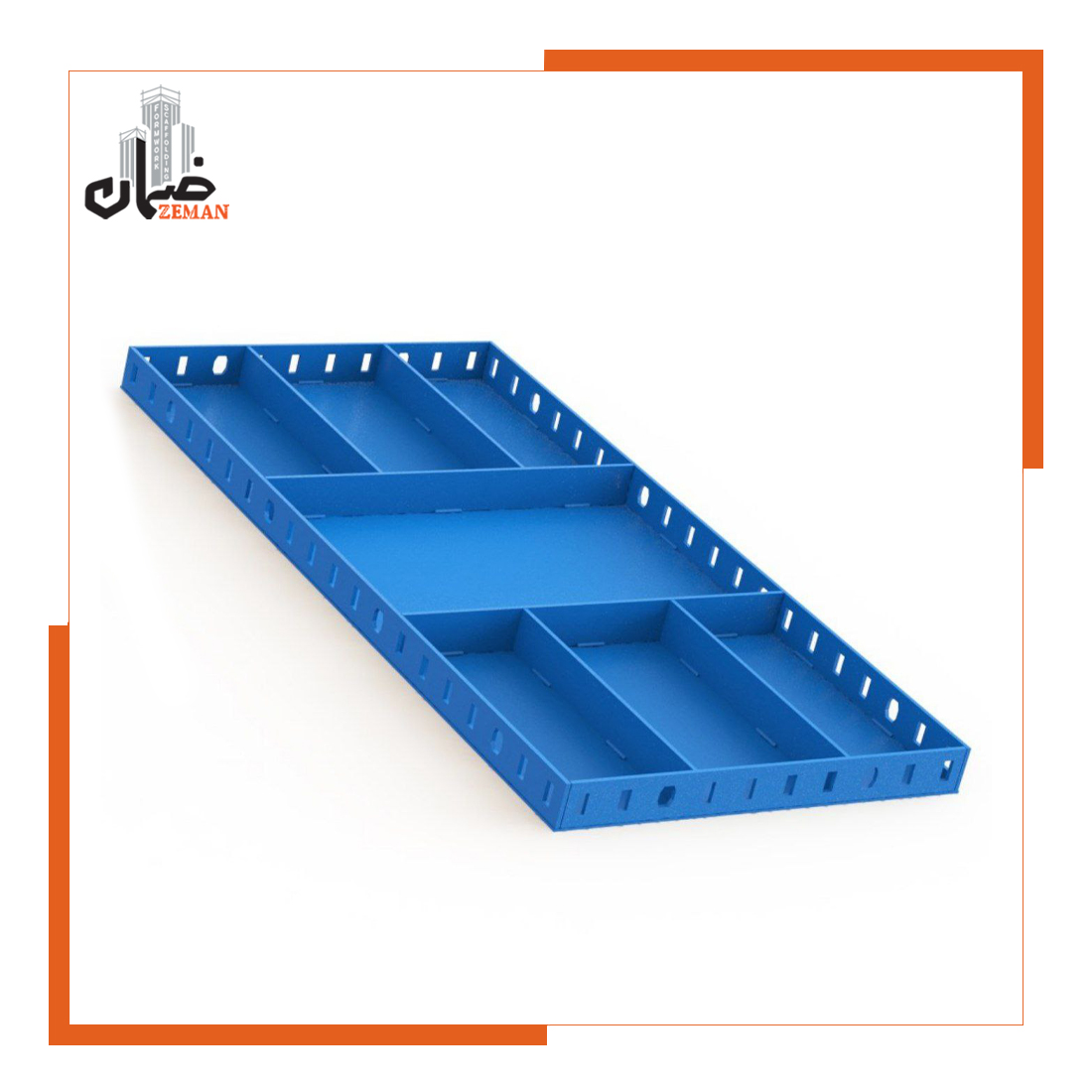
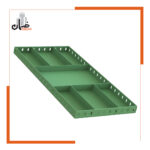
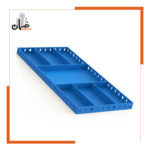
Zeman Company, as the only manufacturer in Iran producing the complete range of concrete formwork equipment, manufactures both types of metal concrete formwork used in the country. Detailed information on these systems is provided below:
Strip-Type (Welded) Metal Formwork
In strip-type formwork, the central facing sheet and the peripheral edge strips are cut separately and then welded together. The facing surface of these formworks is made from 3 mm thick steel sheet, while the punched edge strips welded around the panel are produced with cross-sectional dimensions of 5×60 mm or 5×50 mm, depending on the customer’s requirements.
Bent-Edge (Pressed) Metal Formwork
In addition to modular strip-type (welded) formwork, another type of modular system—known as bent-edge formwork—is also manufactured and, depending on customer preference, is used in formwork systems as a substitute for strip-type formwork. In this system, all panel angles and peripheral edges are formed by bending machines, and only a limited number of components are welded. It should be noted that, in terms of application, installation method, and compatibility with accessories, bent-edge formwork is identical to strip-type formwork.
From a weight perspective, bent-edge formwork is at least approximately 10% lighter than strip-type formwork, which makes it more economical in practice. The bent-edge formwork produced by Zeman Company is manufactured from 3 mm thick steel sheet using fully specialized machinery that has been designed and developed in-house by the company’s engineering team.
Modular Metal Formwork
Introduction: The Cornerstone of Modern Concrete Structures
In today’s dynamic construction industry, significant transformations have taken place with the primary goals of increasing speed, improving quality, and optimizing costs. At the core of these developments lies formwork technology—a process that directly influences structural strength, final appearance, and overall project economics.
For decades, timber formwork was the conventional solution. However, due to disadvantages such as short service life, excessive waste generation, and dependence on highly skilled labor, it failed to meet the demands of modern large-scale projects. In this context, modular metal formwork emerged as an engineered and efficient alternative, revolutionizing the execution of concrete structures. This system is not merely a tool, but a smart project-management strategy that delivers durability, precision, and economic efficiency.
What Is Modular Metal Formwork?
Modular metal formwork is a prefabricated system composed of steel panels with defined and standardized dimensions, used as a temporary framework to contain fresh concrete and shape it until it achieves sufficient initial strength. Once the concrete has cured, the panels and their accessories are easily dismantled and made ready for reuse in other parts of the same project or in future projects. This reusability is the fundamental basis of the system’s economic justification.
The Modular Philosophy: The Key to Flexibility and Speed
The term “modular” in engineering refers to a system based on standardized units and dimensions. This philosophy is at the heart of metal formwork design. All panels and accessories are manufactured according to standard increments, typically multiples of 5 centimeters. This seemingly simple standardization delivers substantial operational advantages for contractors.
This modular approach is not merely a design feature, but a strategic advantage in construction management. Component interchangeability means that a 100×50 cm panel used today in foundation formwork can tomorrow become part of a shear wall and the next day serve as the side form of a beam. This capability directly reduces operational costs:
- Reduced waste: Unlike timber, no cutting or material disposal is required.
- Lower inventory requirements: A limited set of panels can accommodate multiple structural elements.
- Increased execution speed: Assembling standardized components resembles completing an engineered puzzle, reducing reliance on highly skilled carpenters and significantly accelerating erection and dismantling.
Ultimately, the modular philosophy transforms construction from a traditional, skill-dependent activity into an industrialized, systematic, and predictable process—an invaluable advantage for project managers facing tight schedules and budget constraints.
Technical Specifications and Components of Modular Metal Formwork
For procurement managers and project engineers, understanding the precise technical specifications of concrete metal formwork establishes a common language for quality assurance, cost estimation, and logistical planning. This system consists of multiple components, each playing a critical role in overall performance.
Key Technical Specifications: The Common Language of Engineers
Steel Facing and Frames
The quality of a modular panel is directly linked to the quality of the steel used in its manufacture. The primary components of a panel include:
- Facing sheet: The surface in direct contact with concrete, typically manufactured from ST37 steel sheet with a standard thickness of 3 mm. In high-pressure applications, a thickness of 4 mm may be used.
- Peripheral frames (edges): These elements, which connect panels together, are made from steel sheets with thicknesses of 5 or 6 mm and are precisely punched to accommodate pins and wedges.
- Stiffening ribs: To prevent deformation of the facing plate under the hydrostatic pressure of fresh concrete, stiffeners made from 3 or 4 mm steel sheet are welded to the back of the panel.
Steel Sheet Origin: Quality and Cost Differences
In the Iranian market, the source of steel sheet is a key indicator of both quality and final price. Contractors must understand the technical and performance differences to make informed decisions aligned with project requirements.
- Mobarakeh Steel Sheet: Considered the industry’s gold standard, it features highly uniform thickness, an exceptionally smooth surface free from waviness, and reliable mechanical properties. These qualities result in near-identical panel weights and a perfectly smooth concrete finish, making it essential for exposed concrete projects.
- West Steel or Pickled Sheets: More economical alternatives that may exhibit higher thickness tolerances and less surface smoothness.
Choosing between these sheets is a strategic decision. For architecturally sensitive elements or projects requiring precise crane load calculations, the higher cost of Mobarakeh steel is justified. For foundations or buried elements, more economical options can effectively reduce costs.
Standard Dimensions and Weights
- Panel lengths: Typically 100, 150, and 200 cm.
- Panel widths: From 10 to 50 cm in 5 cm increments.
- Weight: Approximately 38.5 kg/m² with 5 cm edges and 44 kg/m² with 6 cm edges.
Main System Components: From Panels to Corners
- Flat Panels: The primary and most frequently used components, available in solid or perforated types for tie-rod applications.
- Corners: Used to form 90-degree angles, divided into two main categories.
External Corners: Used for outside edges of walls and columns, typically chamfered (1.5×1.5 cm) to prevent sharp and fragile concrete edges.
Internal Corners: Used for inside wall corners and beam-to-slab junctions.
Accessories and Connections: The Structural Glue of the System
The strength and stability of a formwork system depend on the quality and correct performance of its connections. A high-quality panel without standard accessories lacks safety and functionality. The system’s integrity is only as strong as its weakest component; therefore, cost-cutting on accessories is a dangerous and strategic mistake.
- Pin and Wedge: The simplest and most common connection method.
- Bolts and Nuts: Used with wing nuts and washers to resist lateral concrete pressure in double-sided walls.
- Clamps: Medium and heavy clamps secure horizontal walers (usually scaffolding pipes); frog clamps are used in high-pressure zones.
- Walers and Soldiers: Load-distributing reinforcement elements.
- Stabilization equipment: Push-pull props for vertical alignment and brackets for safe working platforms.
Conclusion
As demonstrated throughout this comprehensive guide, modular metal formwork is far more than a set of steel panels—it is an engineered system and a strategic investment in quality, safety, speed, and long-term project economy. Choosing this system represents a decisive step toward industrialized and optimized construction processes, with guaranteed long-term return on investment through reduced labor costs, minimized waste, and dramatically increased execution speed.
Success in concrete construction begins with selecting standardized, high-quality equipment. Partnering with a trusted supplier who offers not only products but also technical expertise and professional consultation provides a significant competitive advantage.
The technical expert team at Zeman, with years of experience in manufacturing and supplying formwork systems, is ready to offer free professional consultation to help you analyze project requirements and choose the most efficient and economical formwork solution.
Contact us today for quotations, latest pricing, and expert technical advice.
Get expert advice
Our sales experts at Zaman are ready to provide guidance and advice before your purchase.

Reviews
There are no reviews yet.