



Custom Formwork
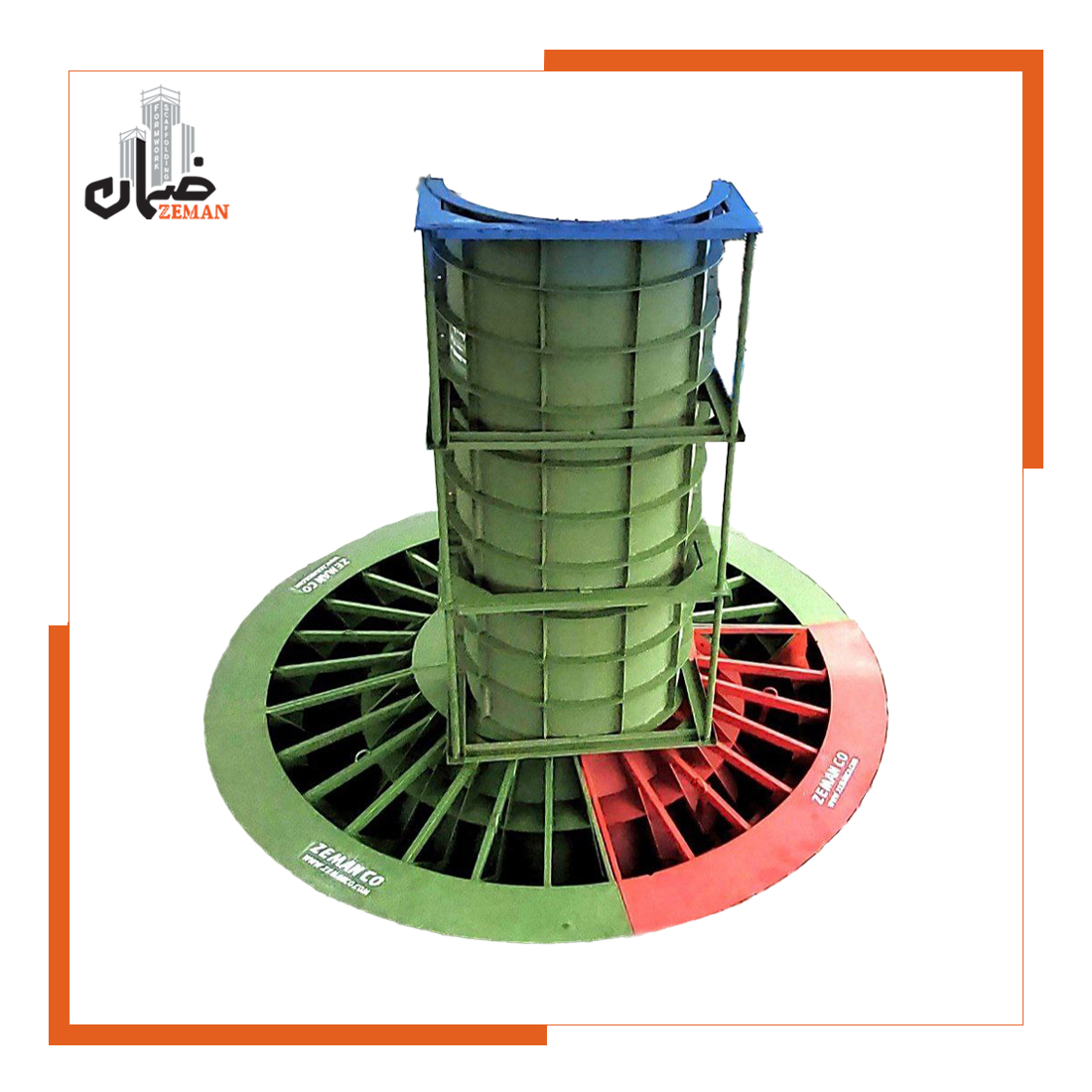
When the formwork of a concrete structure cannot be executed using standard modular formwork systems, corner panels, or fillers, a custom formwork must be designed specifically for that structure. These formworks are typically engineered for surfaces with irregular geometries, curved profiles, and non‑orthogonal angles. In designing such formwork systems, in addition to load‑bearing capacity and deformation criteria, factors such as ease of stripping, transportation, handling, and accurate on‑site adjustment must also be carefully considered.
Custom Formwork
Introduction: What Is Custom Concrete Formwork and Why Is It Essential for Modern Projects?
In the contemporary world of civil engineering and architecture, concrete structures are no longer limited to simple and box‑shaped geometries. Today, the realization of ambitious designs and structures with complex forms requires highly precise and specialized tools. In this context, custom concrete formwork plays a vital and irreplaceable role. Unlike standard modular formwork systems, which are designed for the rapid execution of repetitive elements, custom formwork is specifically engineered for unique projects featuring irregular, curved, arched geometries and non‑orthogonal angles.
The fundamental difference between custom formwork and modular systems lies in their design philosophy. Modular formwork is optimized for efficiency, scalability, and repetition in the construction of flat walls and standard columns. In contrast, custom formwork is employed when the complexity of the structure makes the use of standard systems either impossible or highly inefficient. This requirement originates from advanced engineering and architectural concepts, where formwork is no longer merely a container for concrete, but a precision tool for materializing an engineering vision. Consequently, its selection and fabrication demand a deep understanding of the structural intent behind the design, not merely the dimensions shown on drawings.
The importance of custom formwork in modern infrastructure projects is undeniable. The construction of elegant arch bridges, the lining of long tunnels, massive dam bodies, and distinctive architectural façades all rely on the capabilities of these custom concrete formwork systems. In reality, custom formwork bridges the gap between conceptual drawings on paper and extraordinary concrete structures in the physical world.
In this highly specialized field, Zeman (Zemanco) stands alongside you not merely as a manufacturer, but as a leading engineering partner. Leveraging deep technical expertise and extensive experience, we deliver comprehensive solutions for the design and production of all types of custom concrete formwork, enabling even the most complex projects to be realized with maximum precision and quality.
Exploring the World of Custom Formwork: Types and Specialized Applications
Custom concrete formwork encompasses a wide range of systems, each designed and optimized for a specific application. Understanding these types and their respective uses is essential for selecting the appropriate solution for each project. Many of these systems—such as New Jersey barriers, tunnel formwork, and dam formwork—are directly aligned with national infrastructure development priorities in transportation and energy sectors. Supplying such products goes beyond commercial activity; it represents the provision of critical tools for national growth and development.
| Category | Formwork Type | Primary Application | Key Design Features | Typical Projects |
|---|---|---|---|---|
| Transportation Infrastructure | New Jersey Barrier Formwork | Traffic separation and roadway safety | Manufactured in compliance with Ministry of Roads standards, high impact resistance | Expressways, highways, bypass roads |
| Transportation Infrastructure | Tunnel Lining Formwork | Final structural and protective tunnel lining | Monolithic curved structure, mechanical or self‑propelled traveling system | Metro lines, road and railway tunnels |
| Transportation Infrastructure | Bridge Beam Formwork | Production of precast beams for bridge decks | Designed in T, I, and L configurations, suitable for mass production | Urban and intercity bridges |
| Hydraulic and Marine Structures | Dam Body Formwork | Construction of concrete dam bodies | Climbing or slip‑form systems, high resistance to hydrostatic pressure | Gravity and arch dams |
| Hydraulic and Marine Structures | Accropode Formwork | Production of concrete breakwater units | Highly complex two‑part design, high resistance to marine erosion | Ports, harbors, coastal structures |
| Architectural and Building Structures | Circular Column Formwork | Execution of round concrete columns | Two‑piece system with pin‑and‑wedge connections, smooth exposed surface | Parking structures, commercial buildings, bridges |
| Advanced Systems | Tunnel Form System | Simultaneous wall and slab concreting | Extremely fast construction, monolithic earthquake‑resistant structure | Mass housing, hotels, dormitories |
Transportation Infrastructure Formworks
- New Jersey Barrier Formwork: These systems are used to manufacture standardized concrete barriers for highways and roads. They are typically produced in standard lengths of 4 and 6 meters in compliance with the regulations and technical specifications of the Ministry of Roads, ensuring safety and performance.
- Tunnel Lining Formwork: Among the most complex and massive types of custom formwork, these systems are used for constructing the final concrete lining of tunnel walls. They are produced as monolithic curved structures matching the tunnel cross‑section and are generally equipped with mechanical or self‑propelled traveling mechanisms. Their length may range from 6 to 9 meters.
- Bridge Beam Formwork: Designed for producing precast concrete beams that form the primary structural skeleton of bridge decks. These systems are engineered in various configurations such as T‑beam, I‑beam, and flat sections and manufactured as multi‑piece steel assemblies.
- Bridge Deck Formwork: Used for concreting the final deck surface of bridges, these systems play a crucial role in the completion of urban and intercity bridge projects.
Hydraulic and Marine Structure Formworks
- Dam Body Formwork: Due to the massive volume of concrete placement and high hydrostatic pressures involved, specialized systems such as climbing and slip‑form solutions are designed for dam construction.
- Accropode Formwork: These formworks are used to produce large, geometrically complex concrete units known as accropodes, widely applied as breakwaters in ports and coastal areas. Owing to their size and complexity, they are fully custom‑designed and typically manufactured as two‑piece systems for ease of stripping.
- Manhole and Concrete Pipe Formwork: Circular formworks for manufacturing access manholes for sewer systems and concrete pipes used for water and wastewater transmission. These systems are available in standard diameters (e.g., 700 to 1400 mm for pipes) as well as custom dimensions.
Architectural and Building Formworks
- Circular Column Formwork: Used extensively for round columns in modern architecture, multi‑story parking facilities, and bridges. These systems are typically fabricated as two semi‑circular halves connected with pin‑and‑wedge fastenings. Common diameters range from 300 mm to 1800 mm.
- Mushroom Capital Formwork: A specialized system for creating mushroom‑shaped column capitals, commonly found in certain bridges and unique structural applications.
- Precast Wall Panel Formwork: Available in vertical and horizontal configurations for factory‑based industrial production of concrete wall panels, with the ability to create various surface textures and patterns.
- Architectural Textured Concrete Formwork: These systems feature embossed or recessed patterns on the internal surface, transferring decorative textures directly onto exposed concrete surfaces.
- Curved Formwork: Designed for curved walls in structures such as silos, water tanks, cooling towers, and architectural elements requiring a precise radius of curvature.
Advanced Formwork Systems
- Tunnel Form System: A highly industrialized and fast‑track construction method in which wall and slab formworks are integrated, enabling simultaneous concreting and creating a monolithic, earthquake‑resistant structure.
- Slipform System: An advanced solution for constructing tall vertical structures such as tower cores, silos, and industrial chimneys, where the formwork moves continuously upward while concrete is placed without interruption.
- Large Panel Formwork: Consisting of large, integrated steel panels used to execute extensive wall surfaces with minimal joints and high‑quality exposed concrete finishes.
Design and Manufacturing Process of Custom Concrete Formwork at Zeman: From Concept to Reality
Producing custom concrete formwork is an engineering‑driven process that demands precision, expertise, and quality at every stage. It is not merely the fabrication of a steel component, but the delivery of a precise solution to a specific engineering challenge. At Zeman, we transform this process into a close collaboration with the client to ensure complete alignment between the final product and project requirements.
Stage One: Technical and Engineering Consultation
Every successful project begins with accurate and well‑defined inputs. The process starts with receiving drawings and technical specifications from the client. However, our approach goes far beyond simple data intake. Our engineering team conducts an in‑depth review based on the principles of Design for Manufacturability (DFM).
This proactive approach enables us to identify potential construction and execution challenges early on, propose design optimizations, and minimize project risks. Instead of merely stating, “we will build what you have designed,” our philosophy is: “we help refine your design for optimal fabrication and execution.” This active collaboration prevents errors, delays, and unnecessary costs in later project stages.
Stage Two: Detailed Design and Modeling
After finalizing the conceptual design in coordination with the client, our engineers utilize advanced CAD/CAM software to develop precise three‑dimensional models and fabrication drawings. At this stage, all details—plate thicknesses, stiffener layouts, and connection types—are defined with millimeter‑level accuracy. Structural analysis and concrete pressure simulations are performed to ensure the formwork’s strength and stability under the most demanding conditions.
Stage Three: Production and Fabrication
This stage represents the transformation of engineering designs into a high‑quality physical product.
- Material Selection: We insist on using high‑grade steel plates from reputable domestic producers such as Mobarakeh Steel, since raw material quality is the foundation of durability and service life.
- Manufacturing Processes: Our production line is equipped with precision machinery for high‑accuracy cutting, punching of connection strips, exact assembly in accordance with drawings, and advanced CO2 welding technology, ensuring strong and impermeable joints.
- Quality Control (QC): Quality is never compromised. Continuous inspection is carried out throughout production, and each formwork system undergoes a thorough final inspection to ensure full compliance with design drawings and Zeman’s quality standards.
Commitment to Concrete Surface Quality
In many modern architectural projects, the exposed concrete surface is an essential part of the visual identity of the structure. Our exceptional precision in formwork fabrication—ranging from plate flatness to joint integrity—guarantees a smooth, uniform, and high‑quality concrete finish, significantly reducing the need for costly surface treatments.
Key Factors in Selecting and Ordering Custom Concrete Formwork
Ordering custom concrete formwork represents a significant investment and requires a clear understanding of both technical and economic considerations. This section serves as a practical guide for project managers, engineers, and procurement teams to ensure a transparent and well‑informed decision‑making process.
Price Determining Factors
- Weight: The primary pricing criterion in the Iranian formwork industry is the final product weight (kg). Any factor that increases weight directly increases cost.
- Design Complexity: Highly complex geometries—such as variable‑radius curves or irregular three‑dimensional shapes—require significantly more design and fabrication effort, directly increasing production costs.
- Plate Thickness: Steel plate thickness used in skin plates and stiffeners (typically 3–8 mm) is a major determinant of both strength and weight and therefore price.
- Material Quality: The grade and source of steel significantly affect pricing. While premium steel from reputable mills may slightly increase initial cost, it ensures superior durability and service life.
One budgetary risk clients must consider is the fluctuation of steel market prices. Since pricing is weight‑based, any change in raw material costs directly affects the final price. To manage this risk, we recommend requesting quotations with defined validity periods and consulting Zeman experts regarding market trends. This transparency reflects our commitment to building trust‑based client relationships.
Key Notes in the Ordering Process
- Importance of Accurate Drawings: The quality of the final product is directly dependent on the quality of input data. Complete and detailed execution drawings are the most critical prerequisite for error‑free production.
- Project Scheduling: Custom formwork design and fabrication require adequate lead time and cannot be compared to off‑the‑shelf products. Realistic scheduling is essential to avoid project delays.
- Pre‑Order Consultation: We strongly encourage early consultation with Zeman’s technical team. This free service helps identify optimal technical solutions, improve cost accuracy, and ensure a smooth ordering process.
Why Zeman Is the First Choice of Industry Professionals
In a market with numerous options, selecting a reliable partner for complex and high‑risk projects is critical. Zeman stands out as the preferred choice of engineers and project managers through a unique set of competitive advantages.
Our Competitive Advantages
- Engineering‑Driven Expertise: Beyond manufacturing, we are an engineering‑centric organization capable of analyzing the most complex formwork challenges and delivering innovative, optimized solutions.
- Uncompromising Build Quality: From premium steel selection to advanced welding techniques and strict quality control, our commitment results in durable, precise, long‑lasting products.
- Proven Project Experience: Successful participation in major infrastructure and construction projects nationwide demonstrates our ability to meet the expectations of the most demanding clients.
- Technical Support and After‑Sales Service: Our responsibility continues beyond delivery. Zeman’s technical support team is available for on‑site guidance to ensure optimal assembly and performance of formwork systems.
Frequently Asked Questions (FAQ) About Custom Concrete Formwork
How does the cost of custom formwork compare to modular systems?
Due to the need for custom engineering, complex fabrication processes, longer production times, and generally higher steel consumption, custom concrete formwork is significantly more expensive than standard modular systems. Final pricing in both cases is primarily weight‑based.
What is the service life of custom formwork and how many reuse cycles are possible?
Thanks to all‑steel construction and high‑quality materials, Zeman’s custom formwork systems offer exceptional durability. With proper maintenance, they can be reused for hundreds of concreting cycles, making them a highly cost‑effective long‑term investment.
Does Zeman deliver products across Iran?
Yes. We maintain the logistical capability to safely package and deliver all our products—including large and heavy custom formworks—to construction projects throughout the country.
What is the minimum lead time for designing and manufacturing custom formwork?
Production time depends directly on geometric complexity, dimensions, and order volume. After reviewing technical drawings, the timeline is clearly stated in the quotation. Early ordering with appropriate lead time is strongly recommended to avoid project delays.
Is it possible to rent custom formwork?
Since custom formwork is uniquely designed for a specific project, it is generally unsuitable for reuse on other projects and therefore not available for rental. However, for more standardized systems such as circular column formwork in common diameters, rental availability may be discussed with our sales department.
Get expert advice
Our sales experts at Zaman are ready to provide guidance and advice before your purchase.

Reviews
There are no reviews yet.