




Formwork Bracket
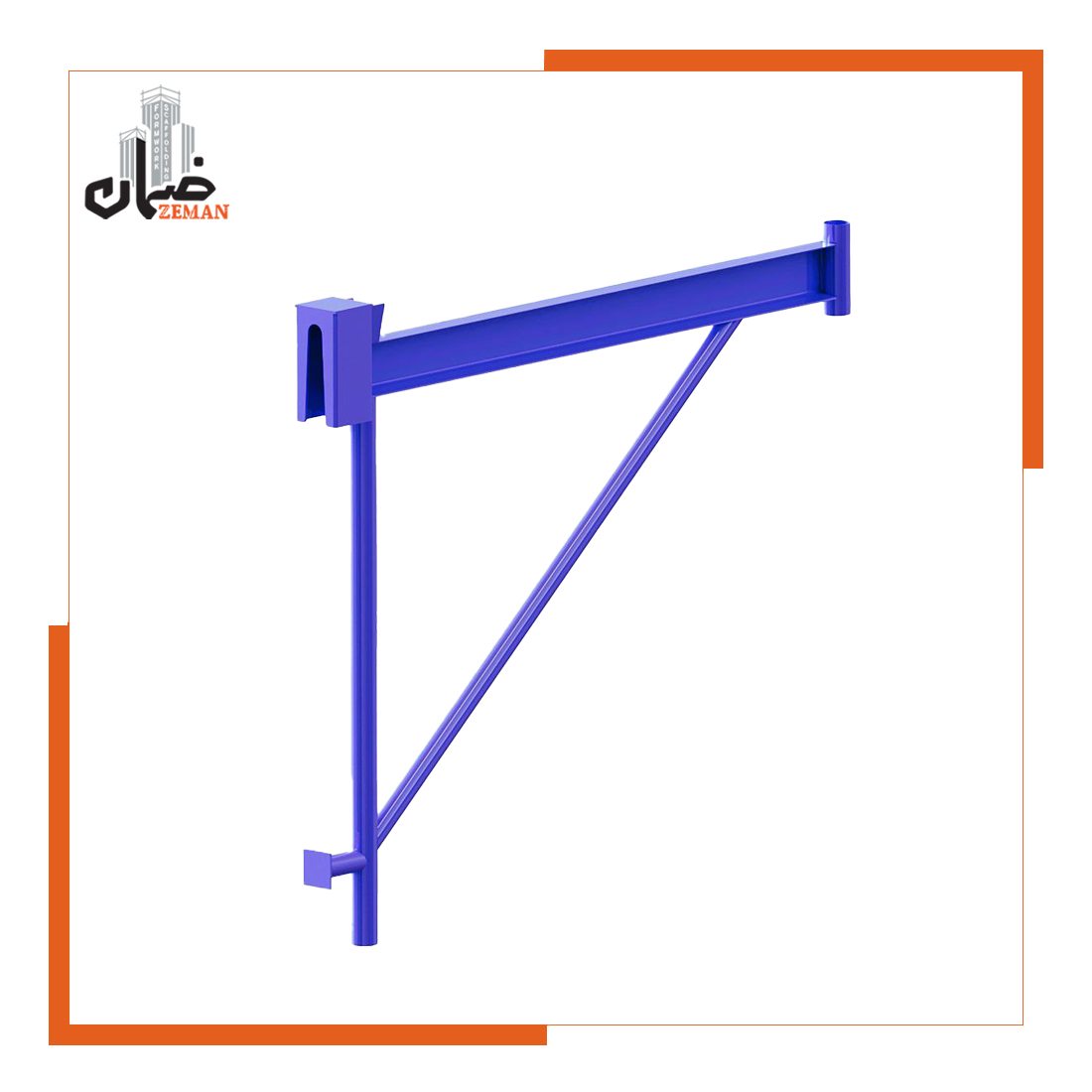
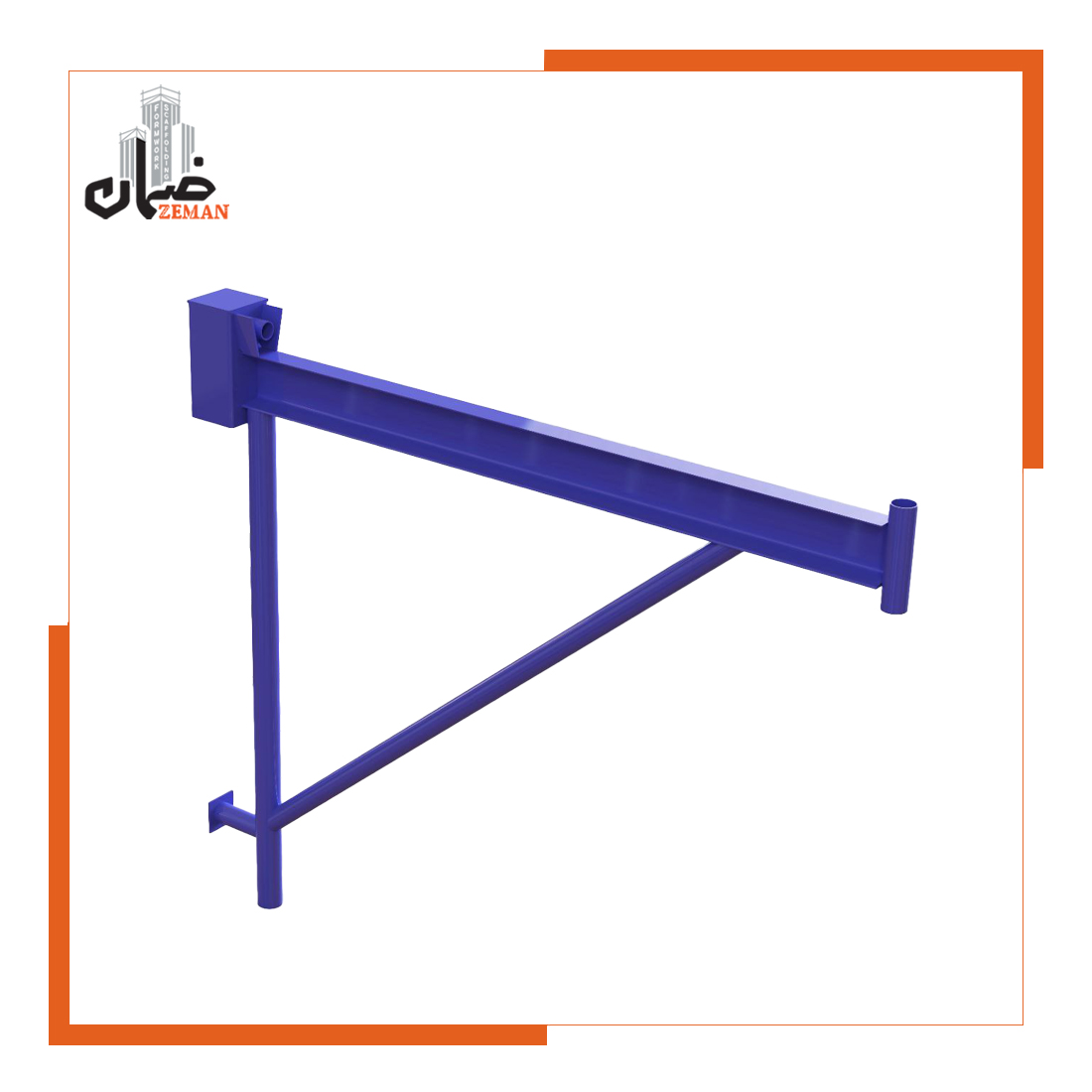
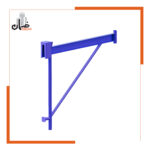
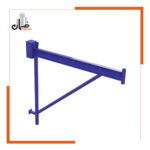
Bracket in concrete formwork and reinforced concrete construction is a steel reinforcing component that is commonly used to support formwork panels, resist applied loads, or create connections between different formwork elements. Brackets play a critical role in maintaining the stability and alignment of formwork systems, particularly in wall formwork, cantilever slabs, ramps, and special architectural concrete façades.
Types of Formwork Brackets
- Wall Formwork Support Bracket: Used to support vertical formwork panels and to connect them to walers or soldiers.
- Cantilever Slab Bracket (Flying Bracket): Used for the execution of projecting slabs such as balconies or cantilever structures.
- Inclined Steel Bracket: Designed to support ramps and inclined structural elements.
- Backstay / Bracing Bracket: Connected to soldiers or support props to enhance overall system stability and safety.
Characteristics of Formwork Brackets
- Material: Heavy-duty structural steel with anti-corrosion paint or hot-dip galvanized finish.
- Shape: L-shaped, U-shaped, or angled configurations (depending on the application); perforated design to allow fast connection using pins, bolts, or welding.
Applications: Maintaining formwork in a fixed and secure position; transferring loads from formwork to scaffolding or directly to the ground; preventing formwork deviation during concrete pouring; and supporting free edges of slabs or walls.
Formwork Bracket
Introduction: The Formwork Bracket, the Hidden Champion of Structural Stability
In the world of engineering and construction, columns and beams are traditionally recognized as the primary symbols of strength and stability. Yet behind these massive elements lie hidden champions upon whose flawless performance the integrity and safety of the entire structure depend: brackets. These engineered components, although relatively small, play a vital role in connecting elements, transferring loads, and enabling the realization of complex architectural designs.
It should be noted that the term “bracket” in the Persian language has a broad range of meanings. This guide focuses specifically on constructional, industrial, and building services brackets and does not address consumer products such as TV wall mounts or medical equipment like orthodontic brackets. The aim of this article is to provide a comprehensive and technical reference for engineers, contractors, and project managers who seek a deep understanding, informed selection, and safe application of these critical components.
In the sections that follow, we begin with an engineering definition and classification of brackets, then proceed to technical specifications, selection criteria, and installation safety protocols. This guide is designed to empower you to make well-informed decisions in your construction projects.
Fundamental Principles: What Is a Construction Bracket and Why Is It Critical?
Beyond a simple definition, a bracket is an engineered structural element designed to connect two or more components, typically at an angle (most commonly 90 degrees). Its primary function is to support a specified load, resist shear and tensile forces, and safely transfer these forces to a main structural member such as a wall, column, or beam. Brackets often function as cantilevered supports or projections and play a key role in holding elements that extend beyond the main structural surface.
The Importance of Brackets in Modern Construction
The role of brackets has evolved from simple supports in traditional architecture into a “key enabling technology” in modern construction. Many contemporary architectural trends—such as complex façades, open-plan interiors, and cantilevered structures—are only achievable through the use of advanced, high-strength brackets. For example, a heavy glass curtain wall system cannot be directly attached to the main structure; instead, a specialized façade bracket system is required to transfer dead loads and wind loads safely to the building frame.
In addition, brackets play a vital role in improving both safety and efficiency on construction projects:
- Safety and Compliance: The use of high-quality brackets is a non-negotiable requirement for meeting seismic safety standards and ensuring structural integrity under dynamic loads.
- Increased Speed and Cost Reduction: Prefabricated brackets significantly reduce on-site welding and fabrication time, leading to lower labor costs and faster project completion.
Raw Materials Overview: Steel, the Uncontested Champion
Brackets are commonly manufactured from durable materials such as steel, aluminum, or plastic. However, in structural applications, steel is considered the industry-standard material due to its exceptional mechanical properties.
- Steel: Steel—particularly products sourced from reputable mills such as Mobarakeh Steel—offers an outstanding strength-to-weight ratio, high durability, and economic efficiency, making it the preferred choice.
- Galvanized Steel: For applications where the bracket is exposed to moisture or corrosive environmental conditions, galvanization (applying a protective zinc coating) is essential to prevent corrosion and extend service life.
- Aluminum: Owing to its low weight and natural corrosion resistance, aluminum is used in specific applications such as façade brackets or light-duty building services.
Comprehensive Classification of Construction Brackets: A Technical Guide
Correct bracket selection requires a clear understanding of the various types available based on different criteria. This section presents a multi-layered classification system to precisely identify the most suitable bracket for each application.
Classification by Application
- Formwork Brackets: This type of bracket is one of the most critical tools for concrete contractors. Its primary function is to support formwork panels during concrete pouring operations, particularly in high-rise structures where concreting is carried out in multiple stages. In addition to supporting formwork, these brackets also provide a safe working platform (scaffold) for workers.
- Façade Brackets: These brackets are used to install and secure dry façade systems such as curtain walls, stone cladding, and decorative architectural elements. Their design must withstand not only dead loads (material weight) but also live loads such as wind forces and seismic effects.
- MEP Brackets: These brackets are used in mechanical, electrical, and plumbing (MEP) systems to support heavy pipes, HVAC ducts, cable trays, and industrial equipment. Specific models, such as RGS.4141 and RGS.4181, are designed to support heavy installations alongside concrete walls.
- Structural Connection Brackets: These heavy-duty brackets are used in primary structural connections, such as steel beam-to-column joints, truss-to-wall connections, or joist support systems. Such brackets are often custom-designed by structural engineers.
Classification by Structural Form and Manufacturing Method
- Profiled Brackets: Manufactured from standard steel sections (such as angles or channels). Due to ease of installation and connection, they are widely used in certain applications.
- Tubular Brackets: Manufactured from steel pipes. While weight differences are often mentioned, the key engineering distinction lies in structural performance: a closed section (tubular) provides significantly higher torsional rigidity than an open section (profiled). Therefore, tubular designs are structurally superior for applications where torsional forces or eccentric loads are present.
Classification by Load Capacity and Design
Heavy-Duty Brackets (Type G): These brackets are designed to carry heavy and semi-heavy loads. Their key distinguishing feature is the presence of internal serrations on contact surfaces. These serrations create a mechanical interlock that prevents slippage under dynamic loads or vibrations (such as those generated by industrial machinery). As a result, this type of bracket is ideal for critical, heavy, and dynamic applications.
Light-Duty Brackets (Type C): Used for applications with lower load requirements where installation speed is the primary priority.
Common Shapes: Bracket geometry directly influences performance and strength.
- L-Shape: The most common form, providing resistance in two perpendicular directions.
- Triangular Shape: Inherently strong due to triangulation principles and exceptionally effective for supporting cantilevered loads.
- T and F Shapes: Designed for specific connection scenarios, particularly in MEP support systems.
Formwork Bracket Anatomy: Technical Specifications and Key Components
To gain a deeper understanding of formwork bracket performance, it is essential to examine its constituent components and technical specifications.
Constituent Components
A standard formwork bracket consists of the following parts:
- Main Body: The primary structural frame of the bracket, typically L-shaped or triangular, manufactured from steel profiles or pipes.
- Internal Bolt: The most critical component, which anchors the bracket body to the previously cast concrete wall.
- Cone: A cast component installed over the internal bolt inside the wall, providing a solid bearing surface.
- Cam Lock: A locking component connected to the cone and external bolt, securing the entire system.
- External Bolt: Connected to the cam lock and used to tighten and adjust the formwork panel against the bracket body.
Materials Science Behind the Components
Smaller components subjected to high compressive stresses, such as the cone and cam lock, are typically manufactured from ductile (nodular) cast iron using precision casting methods. This material is selected for its excellent compressive strength and high wear resistance, making it ideal for high-pressure contact points. Furthermore, casting complex shapes such as cam locks is considerably more economical than machining equivalent steel components.
Technical Specifications Table for Standard Formwork Brackets
To facilitate selection and comparison, the technical specifications of standard formwork brackets are summarized in the table below. Compiled from multiple sources, this table provides a comprehensive and reliable reference for industry professionals.
| Product Name | Structure | Standard Dimensions (Width × Height) (cm) | Approx. Weight (kg) | Body Material | Component Material |
|---|---|---|---|---|---|
| 90 cm Formwork Bracket | Tubular | 90×120 | 24 | Mobarakeh Steel | Ductile Cast Iron |
| 100 cm Formwork Bracket | Profiled | 100×120 | Variable | Mobarakeh Steel | Ductile Cast Iron |
| 100 cm Formwork Bracket | Tubular | 100×120 | Variable | Mobarakeh Steel | Ductile Cast Iron |
| 120 cm Formwork Bracket | Profiled | 120×120 | 35 | Mobarakeh Steel | Ductile Cast Iron |
| 120 cm Formwork Bracket | Tubular | 120×120 | Variable | Mobarakeh Steel | Ductile Cast Iron |
| 160 cm Formwork Bracket | Profiled | 160×120 | 45 (approx.) | Mobarakeh Steel | Ductile Cast Iron |
Note: Weights are approximate and may vary depending on material thickness.
Professional Guide to Selecting and Purchasing Brackets
Selecting the appropriate bracket is an engineering decision that directly affects project safety and cost.
Key Criteria for Selecting Formwork Brackets
Before purchasing, carefully review the following checklist:
- Load Calculations: The first and most important step is accurate calculation of dead and live loads acting on the bracket. The load capacity must always exceed the calculated loads.
- Project Type: Determine whether the bracket is required for formwork, façade, MEP, or structural connections, as this defines the primary bracket category.
- Environmental Conditions: Installation environment (indoor, outdoor, coastal, or industrial) determines the need for corrosion-resistant coatings such as hot-dip galvanization.
- Substrate Type: The material of the supporting structure (concrete, steel, masonry) dictates the appropriate anchor bolts and fasteners.
- Customization Capability: For non-standard connections, assess whether custom-engineered brackets are required.
Price Analysis: What Factors Determine Cost?
- Weight and Dimensions: The primary cost driver is raw material consumption, directly related to bracket size and weight.
- Material and Coating: Galvanized steel brackets are more expensive than painted steel due to additional processing.
- Manufacturing Complexity: Custom shapes requiring extensive welding or machining are higher in cost.
- Order Volume: Bulk purchases typically benefit from discounted pricing.
- Market Fluctuations: Global steel price variations directly affect final product pricing.
Quality Assurance: How to Identify a High-Quality Bracket
- Weld Quality: Welds should be uniform, clean, and free from cracks, undercuts, or discontinuities.
- Coating Quality: Paint or galvanizing must be even and free from chips or uncoated spots.
- Dimensional Accuracy: Check straightness of members, cleanliness of holes, and accurate hole positioning.
- Material Authenticity: Purchase from suppliers who use certified raw materials from reputable sources such as Mobarakeh Steel.
Installation and Safety Protocols: Building with Confidence
The safety of a bracket system depends not only on the quality of the bracket itself but on the integrity of the entire “bracket–anchor–structure” assembly. A 10-ton-rated bracket installed with weak anchors into poor-quality concrete will fail at its weakest point. Therefore, professional installation requires a holistic, system-based approach.
Best Practices for Installing Formwork Brackets
- Surface Preparation: The installation surface must be clean, sound, and capable of bearing the applied loads.
- Proper Anchor Selection: The wall connection is often the weakest link. The use of engineered anchors (mechanical or chemical) matched to the substrate is critical.
- Leveling and Plumbing: Ensure accurate horizontal or vertical alignment with a level to prevent uneven load distribution.
- Correct Bolt Torque: Over-tightening can damage anchors or brackets, while insufficient tightening can cause connection failure. Use a torque wrench to apply the manufacturer’s specified torque.
Critical Safety Guidelines
- Strict Adherence to Load Ratings: Never load a bracket beyond its rated capacity.
- Regular Site Inspections: Brackets—especially in formwork systems—must be inspected before each use for damage or loose connections.
- Qualified Personnel Only: Installation and operation of bracket systems must be carried out by trained and competent workers.
- Guardrail Requirements: When brackets are used as working platforms, they must be equipped with standard guardrails and edge protection to prevent falls.
Frequently Asked Questions (FAQ) About Formwork Brackets
What is the main difference between tubular and profiled brackets?
Beyond weight differences, the primary engineering distinction lies in resistance to different types of forces. Tubular brackets (closed sections) provide significantly higher torsional resistance and are better suited for eccentric loads. Profiled brackets (open sections) perform well under shear and bending loads and are easier to connect.
Is custom fabrication of brackets possible?
Yes. Many reputable manufacturers offer custom design and fabrication of brackets based on specific engineering requirements and project drawings.
Which type of bracket is best for heavy structural applications?
For heavy loads—especially under dynamic or vibration-inducing conditions—Type G brackets with internal serrations are recommended. For critical structural connections, brackets should be custom-designed by a structural engineer.
How is the price of a construction bracket determined?
Pricing is primarily based on weight and dimensions (raw material quantity), material type and coating (such as galvanization), design and manufacturing complexity, and order volume.
What is the best method to prevent corrosion and rust in steel brackets?
For brackets installed outdoors or in humid environments, hot-dip galvanization is the most effective and durable method of corrosion protection.
Can brackets be installed on drywall or lightweight block walls?
Installing heavy construction brackets on non-structural walls such as drywall or lightweight hollow blocks is strictly prohibited. These walls are not designed to carry significant loads. For lighter applications, specialized anchors must be used and connections must be made to a supporting structural element such as a steel or timber stud.
Conclusion: Build with Confidence, Choose Zamanco
As demonstrated throughout this comprehensive guide, a bracket is a critical engineered component whose selection must be based on precise technical criteria such as load calculations, environmental conditions, and application type. Raw material quality, manufacturing accuracy, and strict adherence to installation and safety protocols directly affect structural stability and safety.
Zamanco, with a deep understanding of these technical requirements, positions itself not only as a supplier but as a technical partner alongside its clients. By offering high-quality, engineered brackets designed to meet the demands of modern construction, we help you build safer, more efficient, and more durable structures.
For technical consultation on your next project, detailed price lists, or order placement, contact Zamanco’s technical experts today. We are ready to support you in building structures that are safer, stronger, and more efficient.
Get expert advice
Our sales experts at Zaman are ready to provide guidance and advice before your purchase.

Reviews
There are no reviews yet.