



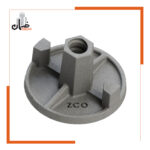
Wing Nut and Plate Washer
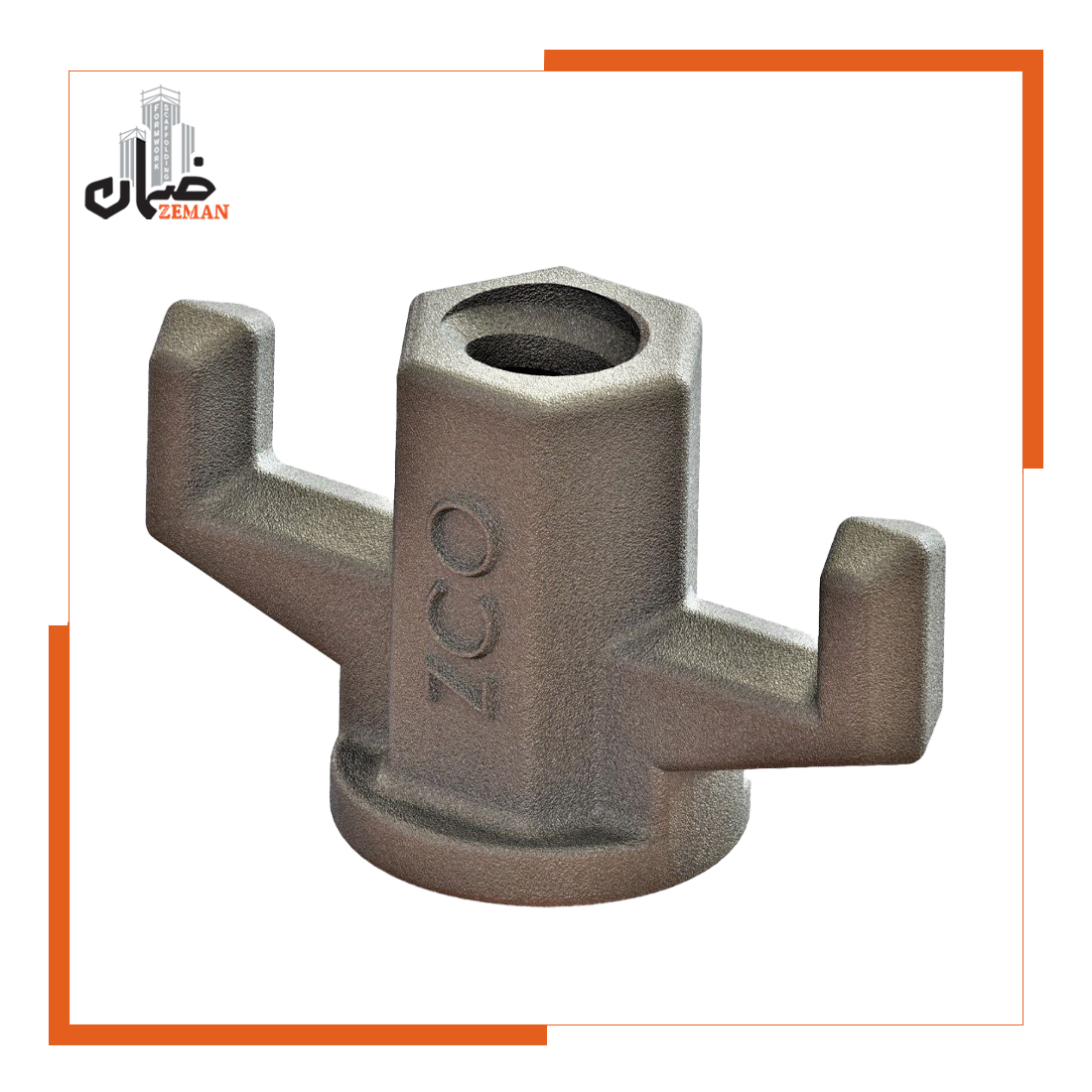
The wing nut is a cast-iron fastening nut with two wings on opposite sides, designed to be easily rotated and tightened by hand or with simple tools.
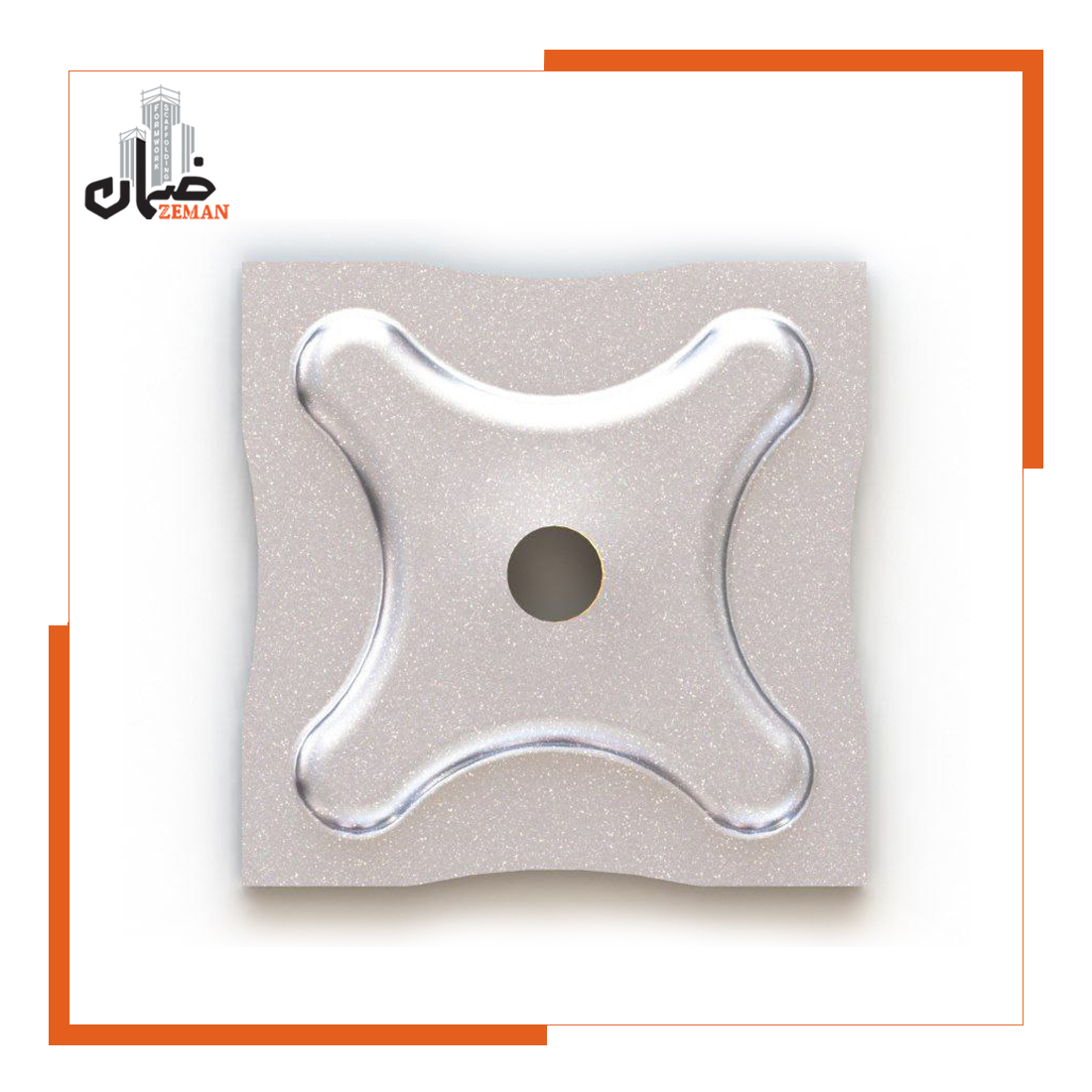
The plate washer (Plate Washer) is a thick, square-shaped metal plate with a central hole, positioned between the wing nut and the formwork to distribute the applied load from the nut over a larger surface area.
Application in Formwork Systems
- Used to secure tie bolts from the outside of steel formwork panels, playing a critical role in fixing the formwork against concrete pressure
- Commonly used in conjunction with plate washers or double-pipe washers
Advantages
- Quick and easy tightening and loosening without the need for a wrench
- Reusable for multiple projects
- Suitable for harsh site and construction conditions
Application of Plate Washers in Concrete Formwork
- Uniform distribution of wing nut pressure across the surface of steel formwork panels
- Prevention of formwork damage caused by excessive nut tightening
- Improved strength of bolt-to-formwork connections and increased durability of formwork systems
- Enhanced safety and structural reliability of formwork connections
- Suitable for use in both horizontal and vertical formwork applications
Wing Nut and Plate Washer
In the complex and highly sensitive process of concrete formwork, where even the slightest error can lead to irreparable financial losses and serious safety hazards, the strength and stability of every single component are of paramount importance. Among the wide range of equipment involved, the wing nut and plate washer are two critical components that play a role far beyond that of a simple fastener; they are directly responsible for restraining the immense hydrostatic pressure of fresh concrete and ensuring the overall integrity of the formwork system.
Zeman Company, as a specialized manufacturer of formwork equipment, fully understands the gravity of this responsibility and delivers products built upon precise engineering, exceptional raw material quality, and a firm commitment to the safety of your projects. This guide is designed to help you make the most informed and professional choice to ensure both the success and safety of your project.
Wing Nut (Bolt Nut): The Beating Heart of the Formwork Tie System
Despite its compact size, the wing nut is one of the most vital components in concrete formwork tie systems, particularly in double-sided wall formwork and high-rise structures. Its proper performance is the primary guarantee of formwork stability against the dynamic pressures generated during concrete pouring.
What Is a Wing Nut? Technical Definition and Key Applications
The wing nut—also commonly known as a “bolt nut” or “winged nut”—is a cylindrical threaded nut featuring two protruding wings on opposite sides. This ergonomic and intelligent design provides a critical advantage on construction sites: rapid and easy tightening and loosening by hand, without the need for any tools. In projects where hundreds of connections must be handled quickly, this feature directly translates into significant savings in time and labor costs.
The primary function of this nut is to secure tie bolts (such as fully threaded bolts or hooked tie rods) in systems that utilize soldier profiles as the main vertical formwork supports. When positioned behind the plate washer, the wing nut firmly locks the bolt in place, preventing any movement or opening of the formwork panels.
Why Is the Material of the Wing Nut Critical? Understanding Ductile Cast Iron
The most important factor determining the quality and safety of a wing nut is the alloy used in its production. The industry standard for manufacturing this component is ductile cast iron, produced through a casting process. The selection of this alloy is driven by several crucial technical reasons:
- Exceptional load-bearing capacity: Ductile iron can withstand extremely high pressures generated during concrete pouring without cracking or sudden brittle failure. Unlike ordinary cast iron or mild steel, this characteristic ensures safety at the most critical moments of operation.
- Corrosion and rust resistance: This alloy offers high resistance to moisture and corrosive environmental conditions. This provides a major economic advantage, as contractors can reuse the nuts across multiple projects and significantly extend the service life of their equipment.
Using wing nuts made from inferior materials dramatically increases the risk of failure during operation, formwork deformation, and serious safety incidents.
DIN 315 Standard: A Guarantee of Quality and Global Compatibility
In the world of engineering, standards are the universal language of quality and reliability. Professional-grade wing nuts are manufactured in accordance with the international DIN 315 standard. Compliance with this standard goes beyond a mere technical requirement; it represents a commitment to quality, safety, and global compatibility. DIN 315 ensures precise dimensional accuracy, perfect thread alignment with standard bolts, and eliminates the risk of mismatch or thread stripping on site. For engineers and project managers, the DIN marking is a clear indicator of professional-grade reliability.
Plate Washer (Soldier Back Washer): Load Distribution and Structural Stability
If the wing nut is the heart of the tie system, the plate washer serves as its backbone. This seemingly simple component plays a critical role in proper load distribution and in preventing localized damage to primary formwork elements.
The Crucial Role of the Plate Washer in Formwork Systems
The plate washer—also known as a flat washer, cast washer, or more precisely, a soldier back washer—is a square-shaped steel component. Its essential and irreplaceable function is to evenly distribute the concentrated compressive force applied by the wing nut over a wider surface area of the soldier profile. Without the plate washer, the point load exerted by the nut can cause localized crushing, deformation, or even puncturing of the soldier flange, ultimately causing the entire connection to fail.
These washers are typically manufactured with a slightly concave (dished) form created through a pressing process. This curvature significantly increases bending stiffness and enables the washer to withstand heavy loads without deformation.
Key Technical Specifications: Dimensions, Thickness, and Material
When selecting the appropriate plate washer, careful attention to its technical specifications is essential:
- Dimensions: Standard sizes are typically 10×10 cm or 11×11 cm.
- Material: Manufactured from high-quality industrial steel sheet. In the Iranian market, Mobarakeh Steel sheets are widely recognized as a benchmark for quality.
- Thickness: One of the most critical quality parameters. Plate washers are produced in 4 mm and 5 mm thicknesses. While 4 mm washers are suitable for many applications, the 5 mm version—with superior strength and durability—is highly recommended for heavy-duty projects, tall walls, and contractors seeking maximum equipment longevity.
- Weight: Approximate weight ranges from 375 to 400 grams, reflecting the density and quality of the raw materials used.
Critical Distinction: Plate Washer vs. Double-Pipe Washer
One common and hazardous mistake on construction sites is using plate washers interchangeably with double-pipe washers. Understanding the functional difference between these two components is essential to maintaining formwork stability.
- Plate Washer: Exclusively designed for use with soldier profiles. Its flat, wide surface fully seats on the soldier flange.
- Double-Pipe Washer: Designed for systems using two rows of scaffolding pipes as backing supports. Its curved shape cradles the pipes.
These two components are not interchangeable under any circumstances, and improper use can jeopardize the stability of the entire formwork system. Zeman Company provides this technical guidance to help prevent such errors and maximize on-site safety.
Step-by-Step Guide: Proper Installation of Wing Nuts and Plate Washers
Correct and standard installation is just as important as the quality of the components themselves. The installation process follows these steps:
- Step 1 – Positioning the Soldier Profiles: After assembling the formwork panels, install the soldier profiles vertically at the designated locations behind the panels.
- Step 2 – Passing the Tie Bolt: Insert the selected tie bolt (fully threaded or hooked) through the holes in the formwork panels and the soldier flange until it protrudes from the opposite side.
- Step 3 – Installing Washer and Nut: Place a plate washer onto the exposed end of the bolt on both sides of the formwork, then screw on a wing nut.
- Step 4 – Tightening the Assembly: Hand-tighten the wing nut until the entire assembly—panel, soldier, and washer—is fully secure and free of play.
Important Note: For each tie bolt passing through the formwork, two plate washers and two wing nuts are required—one set for each side.
Zeman Quality: A Guarantee of Your Project’s Safety
Selecting formwork equipment is a direct investment in the safety, quality, and credibility of your project.
Hidden Risks of Non-Standard Connections
Using low-cost, non-standard nuts and washers is not an economy—it is an acceptance of significant and costly risks that can endanger the entire project. These risks include:
- Sudden failure of nuts or washers during concrete pouring due to inferior materials.
- Formwork deformation, bending, or complete blowout, resulting in concrete loss and costly demolition and rework.
- Concrete slurry leakage, severely degrading the final exposed concrete finish.
- Serious safety hazards to personnel working around the formwork.
- Choosing high-quality connections effectively insures your project against these costly incidents.
Quality Control Process at Zeman Company
- Exclusive use of certified ductile cast iron with verified chemical analysis for all wing nuts.
- Sourcing steel sheets from reputable suppliers such as Mobarakeh Steel for plate washer production.
- Strict adherence to DIN 315 dimensional and tolerance requirements in nut manufacturing.
- Continuous quality inspections throughout casting, pressing, and machining processes to ensure flawless final performance.
Price Inquiry and Technical Consultation
Due to ongoing fluctuations in global steel and cast iron markets, Zeman Company avoids listing fixed prices on its website to protect customer interests and ensure transparent pricing. This approach guarantees that you always receive fair and up-to-date quotations based on current raw material prices.
For free technical consultation, current price inquiries for wing nuts and plate washers, wholesale purchasing conditions, and nationwide shipping coordination, please contact Zeman Company’s sales experts today. We are ready to assist you in selecting the safest and most reliable equipment for your project.
Frequently Asked Questions About Wing Nuts and Plate Washers
How many wing nuts and plate washers are required per tie bolt?
Each tie bolt requires two wing nuts and two plate washers—one set on each side of the formwork.
What is the main difference between 4 mm and 5 mm thick plate washers?
The 5 mm plate washer offers greater resistance to pressure and bending due to its increased thickness. It is the preferred choice for heavy-duty projects, tall walls, or contractors seeking maximum durability and service life.
Can Zeman wing nuts and plate washers be reused in future projects?
Yes, absolutely. Thanks to the use of ductile cast iron in the nuts and high-quality steel in the washers, these components offer excellent resistance to corrosion, wear, and fatigue, making them ideal for repeated use across multiple projects.
Does Zeman Company ship products to cities outside the main metropolitan areas?
Yes. Zeman Company ships all formwork equipment—including wing nuts and plate washers—to all regions across Iran through reliable transportation and freight services.
Why are Zeman wing nuts made from ductile cast iron instead of ordinary steel?
Unlike ordinary steel, ductile cast iron provides superior resistance to impact and compressive loads and does not fail suddenly in a brittle manner. This significantly enhances site safety. Additionally, its enhanced corrosion resistance ensures longer service life and reliable reuse.
Get expert advice
Our sales experts at Zaman are ready to provide guidance and advice before your purchase.

Reviews
There are no reviews yet.