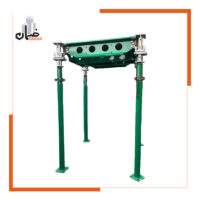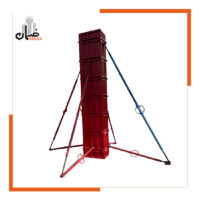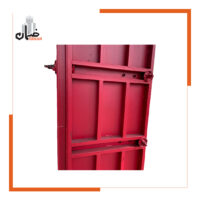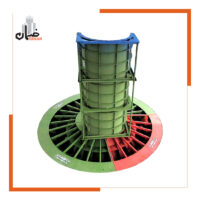




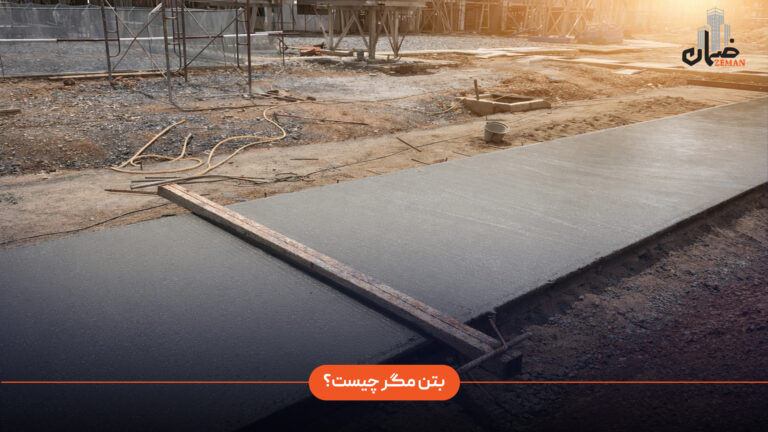
Lean concrete, also known by other names such as blinding concrete, leveling concrete, or sub-foundation lean concrete, is one of the most basic yet most critical stages in the execution of concrete structures. This type of concrete is typically produced with a lower cement content compared to structural concrete, and its primary function is to prepare a suitable base for the construction of foundations and other structural components.
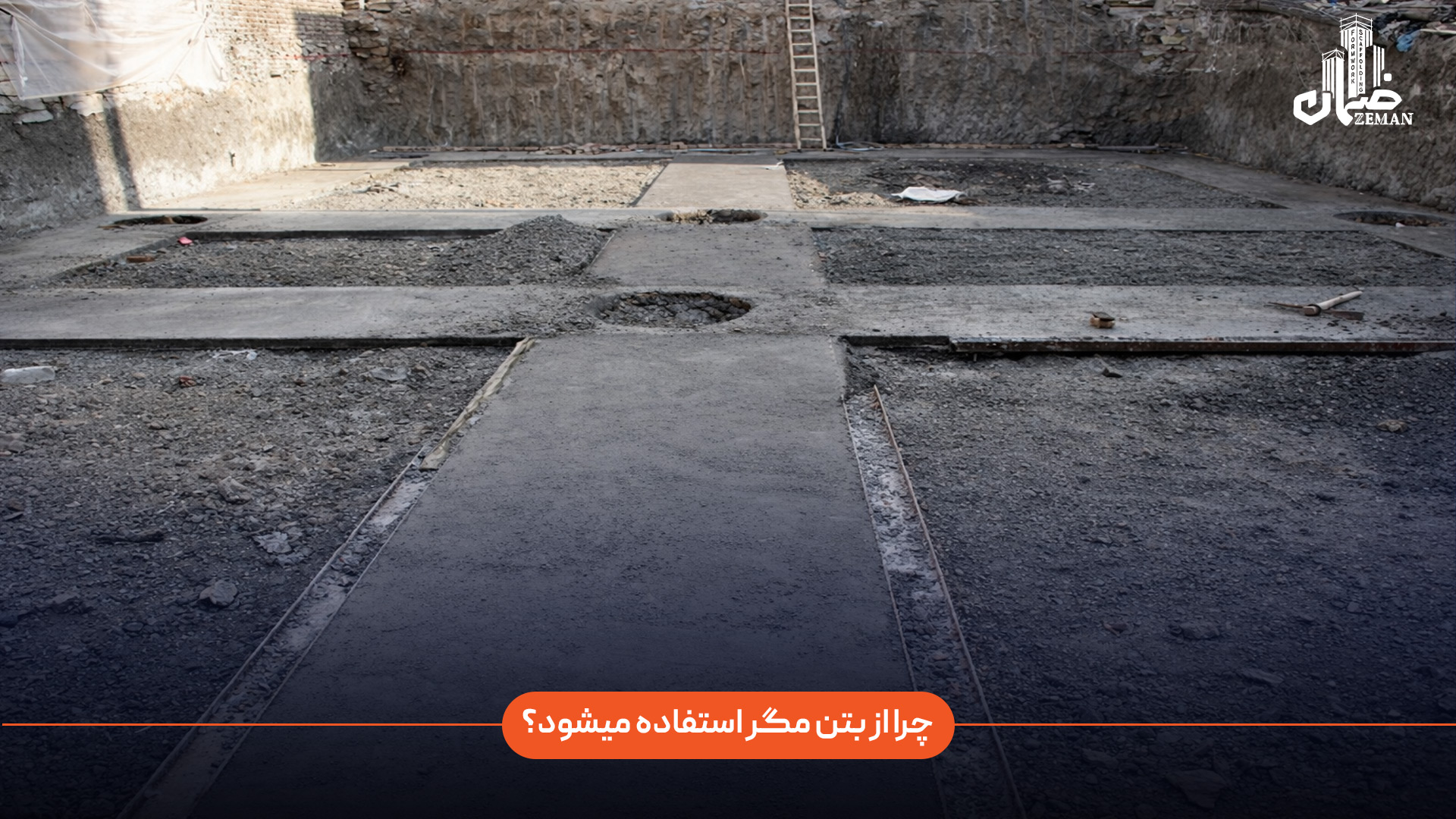
Lean concrete is a thin concrete layer placed between the subgrade soil and the main foundation concrete. The purpose of this layer is to create a smooth, level, clean, and stable surface that prevents direct contact between structural concrete and the soil. Direct contact between concrete and soil can lead to reduced concrete quality, moisture penetration, cement contamination, and a decrease in the final structural strength.
In terms of material composition, lean concrete generally consists of cement, sand, gravel, and water; however, its cement content is lower than that of structural concrete, with a typical cement dosage ranging from 100 to 150 kilograms per cubic meter. This characteristic results in lower execution costs compared to other types of concrete, while its role in extending the service life of the structure remains critically important.
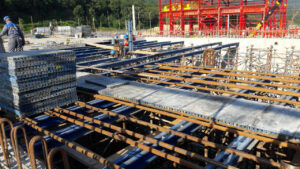
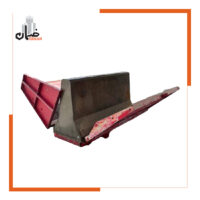
In construction projects—particularly in strip, raft, or isolated foundations—lean concrete is applied as the first concrete layer. After completion of excavation and leveling operations, this concrete is poured to provide ideal conditions for reinforcement installation, formwork assembly, and primary concrete placement. The use of high-quality metal concrete formwork at this stage significantly contributes to accurate leveling and precise foundation execution.
Another key function of lean concrete is preventing the absorption of water from structural concrete by the underlying soil. Subgrade soil is typically moisture-absorbent, and in the absence of a protective layer, it can draw water from the main concrete, thereby reducing its compressive strength. Lean concrete acts as a separation layer that effectively eliminates this issue.
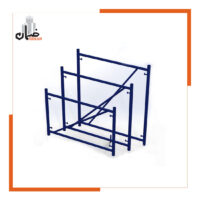
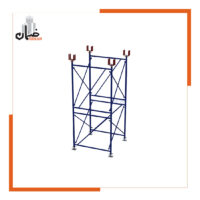
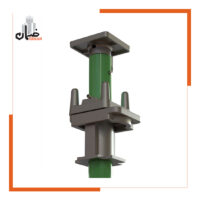
In projects where ceiling jacks and support equipment are used, proper execution of lean concrete ensures greater accuracy in final leveling and correct load transfer. For this reason, many execution engineers emphasize that although lean concrete may appear simple, its quality has a direct impact on the overall performance of the structure.
Overall, lean concrete can be considered the most fundamental element for initiating proper construction execution—an element that, if not correctly implemented, cannot be compensated for even by the highest-quality structural concrete or the most advanced formwork systems.
Why Is Lean Concrete Used?
The use of lean concrete in construction projects is not merely a ceremonial or optional step; rather, it is a technical and executional requirement to ensure structural quality, durability, and safety. The most important reason for using lean concrete is to create a suitable, uniform, and clean base for the execution of foundations and other concrete structural elements.
Under normal conditions, subgrade soil contains irregularities, loose particles, moisture, and contaminants that can severely affect the quality of the main concrete. By covering this base, lean concrete creates a smooth and level surface that allows precise formwork installation and reinforcement placement. Without this layer, uneven soil surfaces can cause formwork misalignment, increased consumption of structural concrete, and reduced dimensional accuracy of the foundation.
Another critical reason for using lean concrete is to prevent direct contact between structural concrete and soil. The subgrade soil can absorb water from the concrete, which disrupts the cement hydration process. The result is reduced compressive strength, increased cracking, and decreased durability of the foundation concrete. Lean concrete, acting as a separation layer, significantly mitigates this risk.
From an execution perspective, lean concrete plays a vital role in increasing construction speed and accuracy. When a smooth and uniform surface is available, reinforcement installation, formwork placement, and positioning of support equipment are carried out more easily. In projects that utilize ceiling jacks and support jacks, foundation leveling directly affects proper load transfer and overall structural safety.
Lean concrete also contributes to reducing structural concrete consumption and additional costs. In the absence of lean concrete, soil irregularities are filled with main concrete, which increases concrete volume and complicates quality control. Executing a lean concrete layer with standard thickness ensures that foundation concrete volume remains accurate and controllable.
From an engineering standpoint, lean concrete acts as a protective layer for the foundation. It prevents the penetration of chemicals present in the soil, harmful moisture, and early deterioration of the main concrete. Consequently, most construction codes and execution guidelines recommend lean concrete as a standard stage of construction.
In many technical articles related to formwork and foundation execution published on the Zemanco blog, it has been emphasized that eliminating or improperly executing lean concrete is one of the primary causes of structural issues during the service life of buildings.
Precast Concrete Foundations or Ready-Made Footings (Types and Applications)
In summary, the use of lean concrete represents a combination of improved quality, reduced long-term costs, and assurance of proper structural execution—a simple yet decisive layer that forms the foundation of standard construction practice.
Advantages of Lean Concrete
Despite its simplicity in composition and execution, lean concrete offers numerous advantages that make it an indispensable component of civil engineering projects. These benefits can be evaluated from technical, economic, and executional perspectives and directly influence the final quality of the structure.
One of the most important advantages of lean concrete is the creation of a smooth and level surface for foundation execution. Even after compaction and leveling, subgrade soil usually contains minor irregularities. Lean concrete covers these imperfections and provides a uniform base for reinforcement placement and formwork installation. This results in higher accuracy during formwork execution, reduced errors, and foundation dimensions that precisely match the construction drawings.
Another significant advantage of lean concrete is the enhancement of durability and strength of structural concrete. By preventing direct contact between the main concrete and soil, the risks of water absorption, cement contamination, and harmful salt penetration are minimized. Consequently, foundation concrete undergoes proper setting and hardening under standard conditions and achieves the expected compressive strength—an especially critical factor in projects where long service life is essential.
From an economic standpoint, lean concrete helps reduce structural concrete consumption and enables better cost control. When the soil base is uneven, larger volumes of main concrete are required to fill voids. A controlled-thickness lean concrete layer ensures precise and predictable foundation concrete volumes, preventing unnecessary cost increases.
Lean concrete also plays an important role in accelerating project execution. A clean and orderly surface allows reinforcement installation, formwork placement, and equipment positioning to proceed without interruptions or repeated adjustments. In projects that utilize ceiling jacks and support systems, this initial accuracy has a direct impact on the safety and stability of subsequent concrete placement stages.
Another advantage of lean concrete is the reduction of execution errors and rework. Many issues encountered during foundation construction stem from unsuitable subgrade conditions and improper leveling. Lean concrete minimizes these risks and enhances overall work quality.
Finally, lean concrete acts as a protective layer that shields the foundation from moisture, erosion, and harmful environmental factors.
Principles of Lean Concrete Placement
Proper execution of lean concrete, although it may appear simple at first glance, requires adherence to specific technical principles. Neglecting these principles can disrupt the entire foundation construction process. Lean concrete can fulfill its intended role only when executed in accordance with site regulations and standard construction practices.
First Principle: Subgrade preparation is the most critical step in lean concrete placement. Before any concrete work begins, the foundation soil must be thoroughly leveled, compacted, and cleared of loose materials, plant roots, and surface contaminants. The presence of unstable or overly moist soil can reduce adhesion and compromise the performance of lean concrete. In many professional projects, the soil surface is lightly moistened prior to concrete placement to prevent sudden absorption of water from the concrete.
Second Principle: Controlling the thickness of the lean concrete layer. The thickness is typically specified between 5 and 10 centimeters and must remain uniform across the entire surface. Excessive increase or reduction in thickness not only raises costs but can also affect the final leveling accuracy of the foundation. The use of precise and standardized formwork—particularly metal concrete formwork—plays a crucial role in controlling thickness and ensuring clean, straight edges.
Third Principle: The quality of materials used in lean concrete. Although lean concrete is classified as non-structural concrete, the use of low-quality materials can lead to surface scaling, cracking, and premature deterioration. Proper aggregate gradation, correct water-to-cement ratio, and uniform mixing are essential factors that must be carefully controlled.
Another important principle is placing the lean concrete continuously and uniformly. Lean concrete should not be poured in isolated sections or irregular stages, as this can create cold joints and surface inconsistencies. After placement, the concrete surface is leveled using simple tools such as a trowel or screed to provide a smooth base for subsequent construction stages.
Another key requirement is preventing early traffic or loading on the lean concrete layer. Although lean concrete does not have high strength, it must be given sufficient time for initial setting. Early foot traffic, equipment placement, or premature installation of reinforcement can cause cracking and surface damage.
Tools and Machinery Required for Lean Concrete Execution
Proper execution of lean concrete, in addition to compliance with technical guidelines, requires the use of appropriate tools and machinery. Selecting the right equipment increases accuracy, execution speed, and reduces human error in construction projects. Although lean concrete is less complex than structural concrete, neglecting the necessary equipment can significantly compromise its final quality.
During the subgrade preparation stage, tools such as shovels, pickaxes, screeds, spirit levels, and soil compactors play a critical role. Compactors are used to densify the subgrade soil and prevent future settlement. An inadequate base, even with lean concrete applied, can lead to cracking and unevenness in the foundation.
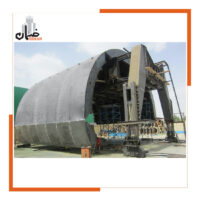
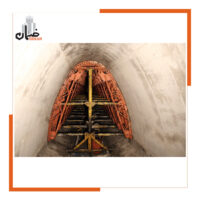
For accurate placement of the lean concrete layer, the use of concrete formwork is particularly important. Formwork ensures controlled concrete thickness and clean, level edges. In professional projects, metal concrete formwork is considered an ideal option due to its high strength, dimensional accuracy, and reusability.
In the concrete production and transportation stage, depending on project scale, either a concrete mixer (betonier) or ready-mix concrete is used. Concrete mixers are highly practical for small to medium-sized projects and allow better control over mix proportions. In large-scale projects, lean concrete is typically supplied as ready-mix and delivered to the site by transit mixers.
Concrete spreading and leveling tools also play a vital role in final quality. Trowels, steel or aluminum screeds, and wooden floats are used to smooth and level the lean concrete surface. The accuracy of this surface directly affects the precision of reinforcement placement and foundation formwork.
Additional equipment includes wheelbarrows, water pumps, hoses, light vibrators (if required), and safety gear such as gloves and boots. Although vibrating lean concrete is generally unnecessary, in certain conditions it may help achieve better uniformity.
Overall, using standard tools and machinery in lean concrete execution not only ensures the quality of this layer but also facilitates more precise execution of subsequent stages such as formwork installation, reinforcement placement, and main concrete pouring.
Stages of Lean Concrete Execution
Lean concrete execution consists of a series of clearly defined and interconnected stages, each of which plays an important role in the final quality of the foundation. Observing the correct sequence and accuracy in these stages prevents execution errors in later phases and provides a proper base for structural concrete placement.
1. Subgrade Preparation and Leveling
The first stage involves preparing the area for lean concrete placement. After excavation operations are completed, the subgrade must be fully leveled and compacted. The presence of loose soil, plant roots, or construction debris can cause settlement and cracking. At this stage, compacting equipment is typically used to achieve the required soil density.
2. Checking Level and Dimensions
After leveling the soil, the floor elevation and foundation dimensions are checked against the execution drawings. This stage is highly critical, as any initial leveling error will be amplified in subsequent steps. Accurate concrete formwork helps clearly define and uniformly control the lean concrete boundaries.
3. Installation of Side Formwork
If required, side formwork is installed around the lean concrete placement area. This formwork prevents concrete spread and ensures uniform thickness. Metal formwork, due to its high strength and precise leveling, is a suitable choice for this stage and can also be reused in other projects.
4. Production and Transportation of Lean Concrete
Lean concrete may be mixed on-site using a concrete mixer or delivered to the site as ready-mix concrete. Mix proportions must comply with the project’s technical specifications. At this stage, controlling workability is important to ensure easy placement and a smooth surface finish.
5. Concrete Placement and Surface Leveling
The prepared concrete is poured uniformly over the subgrade and leveled using screeds and trowels. Heavy vibration is generally unnecessary, but surface uniformity must be carefully checked. This surface serves as the base for reinforcement installation and subsequent construction activities.
6. Initial Curing and Protection
After concrete placement, foot traffic and equipment loading on the lean concrete must be avoided until initial setting is complete. Although lean concrete is non-structural, damage to this layer can reduce the accuracy and quality of subsequent construction stages.
Guidelines for Lean Concrete Execution
To achieve a standard and durable foundation, lean concrete must be executed in accordance with established technical and execution guidelines. Although lean concrete is classified as non-structural concrete, improper execution can lead to serious issues in later construction stages. Therefore, strict compliance with execution requirements at this stage is of high importance.
According to common guidelines, excavation and subgrade leveling must be fully completed before lean concrete placement. The soil surface should be uniform, compacted, and free of any organic or loose materials. If excessive moisture or uncontrolled fill soil is present, subgrade improvement is required to ensure a stable base for lean concrete.
In the next stage, the cement content of lean concrete must be specified in accordance with the project’s technical requirements. Typically, lean concrete contains between 100 and 150 kilograms of cement per cubic meter. Using excessive cement unnecessarily increases costs, while using less than the standard amount can weaken the lean concrete layer.
One of the most critical guideline requirements is controlling the thickness of the executed lean concrete layer. The standard thickness usually ranges from 5 to 10 centimeters and must remain uniform across the entire area. To achieve this uniformity, precise concrete formwork is strongly recommended. Metal formwork, due to its high accuracy and adequate strength, enables orderly and error-free execution.
During concrete placement, the mix must be spread evenly and leveled immediately. According to guidelines, heavy vibration is not required for lean concrete, but voids and segregation must be avoided. The final surface should be smooth, free of grooves, and ready for subsequent construction stages.
After concrete placement, protecting the lean concrete layer is an essential execution consideration. Although this concrete does not have high strength, it must be protected from foot traffic, formwork installation, or heavy equipment placement until initial setting is achieved. Neglecting this requirement can result in cracking and surface irregularities.
Mandatory Considerations During Lean Concrete Execution
Although lean concrete execution may appear simple, observing certain mandatory technical and executional considerations at this stage plays a decisive role in the final quality of the foundation and in preventing future structural issues. Neglecting these seemingly minor points can lead to increased errors, rework, and even reduced durability of the main structural concrete.
1. Avoid Placing Lean Concrete on Loose or Moist Soil
One of the most critical requirements is placing lean concrete on a stable and well-compacted subgrade. Soft, uncontrolled fill, or excessively moist soil can cause settlement of the lean concrete layer and surface unevenness. Prior to concrete placement, adequate compaction and proper drainage of the subgrade must be ensured. If necessary, subgrade improvement or soil replacement is mandatory.
2. Precise Control of Thickness Across the Entire Area
The thickness of lean concrete must be uniform throughout the entire surface. Thickness less than the standard minimum (5 cm) reduces the effectiveness of the separation layer, while excessive thickness leads to increased costs and unnecessary material consumption. The use of metal concrete formwork is one of the most effective solutions for controlling thickness and minimizing human error.
3. Preventing Contamination of Lean Concrete
Lean concrete must not be contaminated with soil, mud, oil, or construction debris. Surface contamination disrupts proper bonding of subsequent layers and may weaken the foundation system. Maintaining a clean work environment and placing concrete continuously are mandatory practices at this stage.
4. Do Not Use Lean Concrete as Structural Concrete
One of the common on-site mistakes is the incorrect use of lean concrete as a load-bearing layer or as a substitute for structural concrete. Lean concrete has no structural strength and serves solely as a preparation and separation layer. Any premature loading or improper use can lead to cracking and surface damage.
5. Protecting Lean Concrete After Placement
After placement, foot traffic, formwork installation, or positioning of heavy equipment on lean concrete must be avoided until initial setting is achieved. This is particularly important in projects where ceiling jacks and support equipment are used simultaneously, as any surface unevenness can affect leveling accuracy and safety in subsequent stages.
6. Preparing the Surface for Subsequent Stages
The final surface of lean concrete must be smooth, level, and free of voids to allow proper execution of reinforcement placement, formwork installation, and foundation concreting. If surface defects are observed, they must be corrected before proceeding to the next stage.
Common Mistakes in Lean Concrete Execution
Despite the apparent simplicity of lean concrete, many construction projects experience recurring execution errors that can compromise foundation quality and even affect the safety of subsequent stages. Identifying these common mistakes and preventing them is a key requirement for professional lean concrete execution.
1. Placing Lean Concrete Without Proper Subgrade Preparation
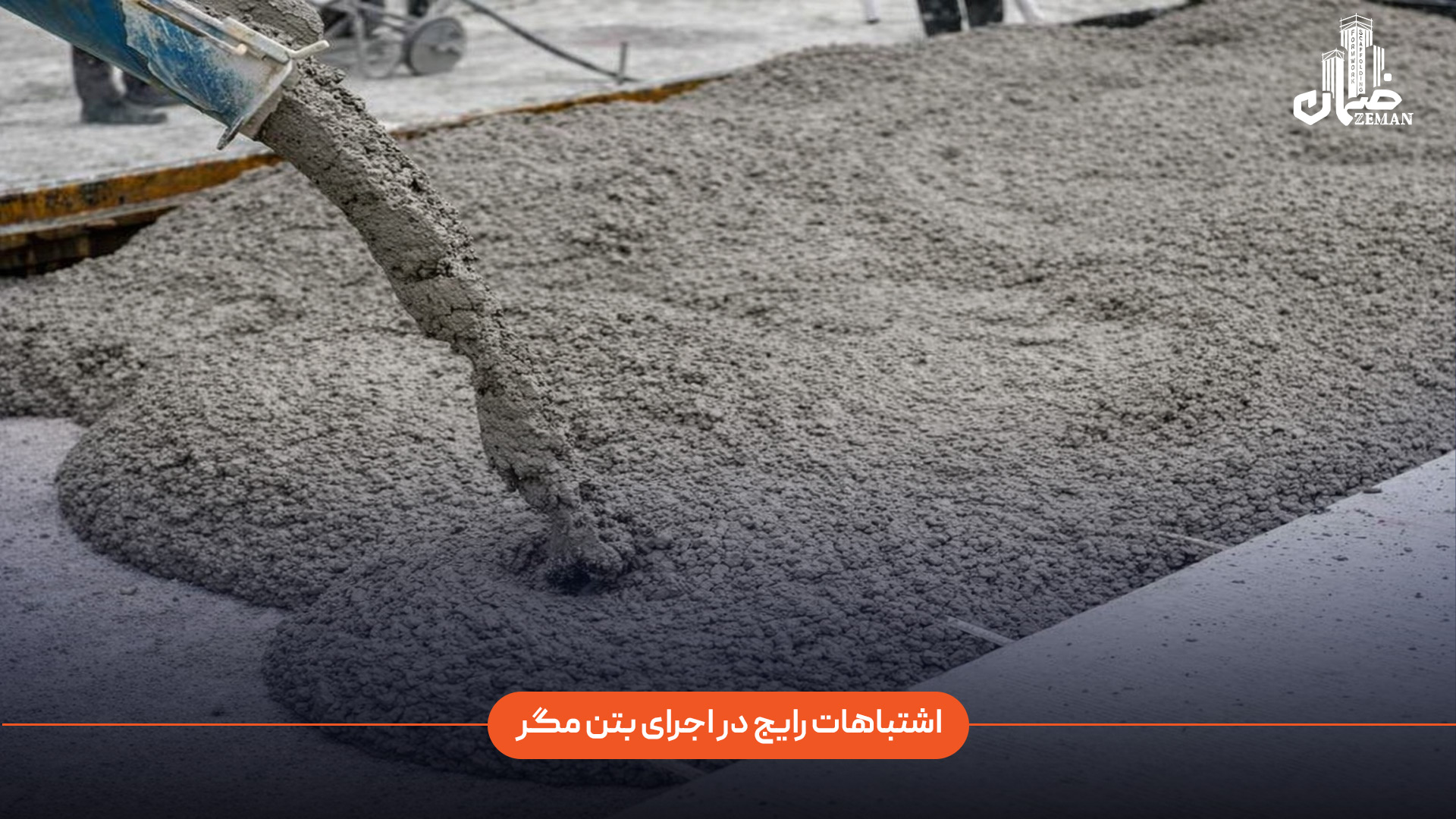
One of the most frequent mistakes is pouring lean concrete on loose, uneven, or unprepared soil. Under such conditions, lean concrete fails to function effectively as a separation layer, and the risk of localized settlement increases. Subgrade preparation includes leveling, compaction, and complete removal of organic materials or debris—steps that are sometimes mistakenly overlooked.
2. Neglecting Standard Thickness Requirements
Failure to control the thickness of lean concrete is a common on-site error. Applying a layer thinner than the allowable minimum reduces its effectiveness, while excessive thickness results in higher costs and unnecessary concrete consumption. Using precise and standardized formwork is the best solution to prevent this issue.
3. Using Concrete with an Improper Cement Content
Some contractors mistakenly use either overly weak concrete or, conversely, high-cement-content concrete for lean concrete execution. Cement content below the standard range reduces the quality of the separation layer, while higher cement content offers no technical justification. Adhering to the recommended cement content range (100–150 kg of cement per cubic meter) is a principle that is sometimes disregarded.
4. Lack of Levelness and Uniformity of the Final Surface
The final surface of lean concrete must be smooth and level to allow proper execution of reinforcement placement and foundation formwork. Surface irregularities increase execution time, require corrective mortar, and reduce the accuracy of subsequent stages. This issue typically occurs in projects where appropriate tools or skilled labor are not utilized.
5. Premature Traffic or Loading
Another common mistake is allowing workers to walk on or placing equipment on lean concrete before initial setting is complete. This can lead to cracking, surface unevenness, and reduced leveling accuracy. In projects where formwork installation or the setup of ceiling jacks and support equipment begins immediately after lean concrete placement, this error has an even more significant negative impact.
6. Incorrect Use of Lean Concrete as a Load-Bearing Layer
In some cases, lean concrete is mistakenly considered part of the load-bearing system or is subjected to temporary loads. However, lean concrete has no structural function, and such misuse can result in serious foundation damage.
Differences Between Lean Concrete and Structural Concrete
Both lean concrete and structural concrete are important components of construction projects; however, their functions, technical characteristics, and roles within the structure are entirely different. A clear understanding of these differences helps prevent execution errors and improper on-site decision-making.
1. Difference in Role and Function
The most fundamental difference between lean concrete and structural concrete lies in their role within the structure.
Lean concrete is a non-structural layer placed prior to the main foundation concrete, and its function is to provide a smooth, clean, and separating surface between the subgrade soil and the main concrete.
In contrast, structural concrete is a load-bearing component of the building and is responsible for transferring applied loads from the structure to the ground.
2. Difference in Strength and Cement Content
Lean concrete has a low cement content (typically 100 to 150 kg of cement per cubic meter) and low compressive strength, as it is not designed to carry loads
Structural concrete, depending on the element type (foundation, column, beam, or slab), has specified and controlled cement content and strength and must fully comply with code requirements.
3. Difference in Thickness and Execution Precision
The thickness of lean concrete is typically between 5 and 10 centimeters, and its purpose is to uniformize the subgrade rather than create a structural volume. Nevertheless, uniform execution is critical, and the use of metal concrete formwork enhances accuracy and prevents thickness variations.
In structural concrete, thickness, dimensions, and concrete cover over reinforcement are of vital importance, and even minor execution errors can adversely affect structural performance.
4. Difference in Reinforcement and Equipment
Lean concrete is unreinforced and does not include any type of reinforcing elements. In contrast, structural concrete is always accompanied by reinforcement, rebar meshes, or other strengthening systems.
5. Difference in Level of Supervision and Quality Control
Structural concrete is subject to more stringent quality control measures, such as compressive strength testing, slump tests, and systematic sampling. Although lean concrete does not require such extensive laboratory testing, execution control—specifically levelness, thickness, and uniformity—remains critically important.
Final Summary and Conclusion on Lean Concrete
Although lean concrete may appear to be one of the simplest stages of foundation construction, in practice it plays a crucial role in the quality, accuracy, and durability of concrete structures. This non-structural layer provides a smooth, uniform, and clean surface, creating the necessary conditions for precise foundation execution, reinforcement placement, and formwork installation, while preventing many execution-related issues in subsequent stages.
Throughout this article, it was examined how lean concrete functions as a separation layer between the subgrade soil and the main structural concrete, preventing water absorption and contamination of the structural concrete. It was also shown that proper cement content, thickness control, correct subgrade preparation, and uniform execution are among the most important factors for successful lean concrete implementation. Although lean concrete does not serve a load-bearing function, improper execution can negatively affect project costs, construction time, and even site safety.
One of the key points that must be considered throughout all stages of lean concrete execution is precision in formwork installation and final surface leveling. The use of standard metal concrete formwork, in addition to increasing execution speed, ensures uniform lean concrete thickness across the entire surface and minimizes human error. This is particularly important in professional and workshop-based construction projects.
Moreover, the smooth and level surface of lean concrete directly influences the quality of subsequent stages such as foundation reinforcement, structural formwork installation, and equipment setup. In projects where ceiling jacks and support systems are used, any unevenness or weakness in the lean concrete layer can adversely affect structural leveling and site safety.
As highlighted in various sections, many common foundation problems arise not from deficiencies in structural concrete, but from neglecting early construction stages such as lean concrete execution. For this reason, professional engineers and contractors consistently consider this stage as the foundation for accurate and proper structural execution.
A review of educational articles and execution experiences published on the ZemanCo blog demonstrates that adherence to simple yet essential principles in lean concrete execution can significantly reduce rework, cost overruns, and project delays.
Final Remarks
If the objective is to construct a precise, safe, and durable foundation, lean concrete should not be regarded as an insignificant stage. Selecting appropriate materials, using standard equipment, and leveraging execution experience pave the way for professional construction. ZemanCo, by providing comprehensive concrete formwork systems, stands as a reliable partner for civil engineering projects throughout all stages of execution.