



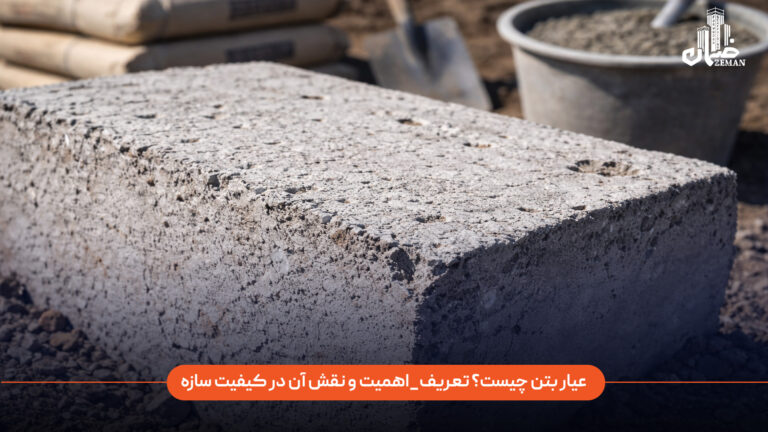
Concrete, as the most widely used construction material in the world, plays a decisive role in the durability, strength, and safety of structures. One of the most important concepts in concrete design and execution is the concrete cement content or concrete grade. A proper understanding of concrete cement content helps engineers, contractors, and employers select concrete suitable for the project type and prevent issues such as cracking, reduced strength, and high permeability.
Definition of Concrete Cement Content or Concrete Grade
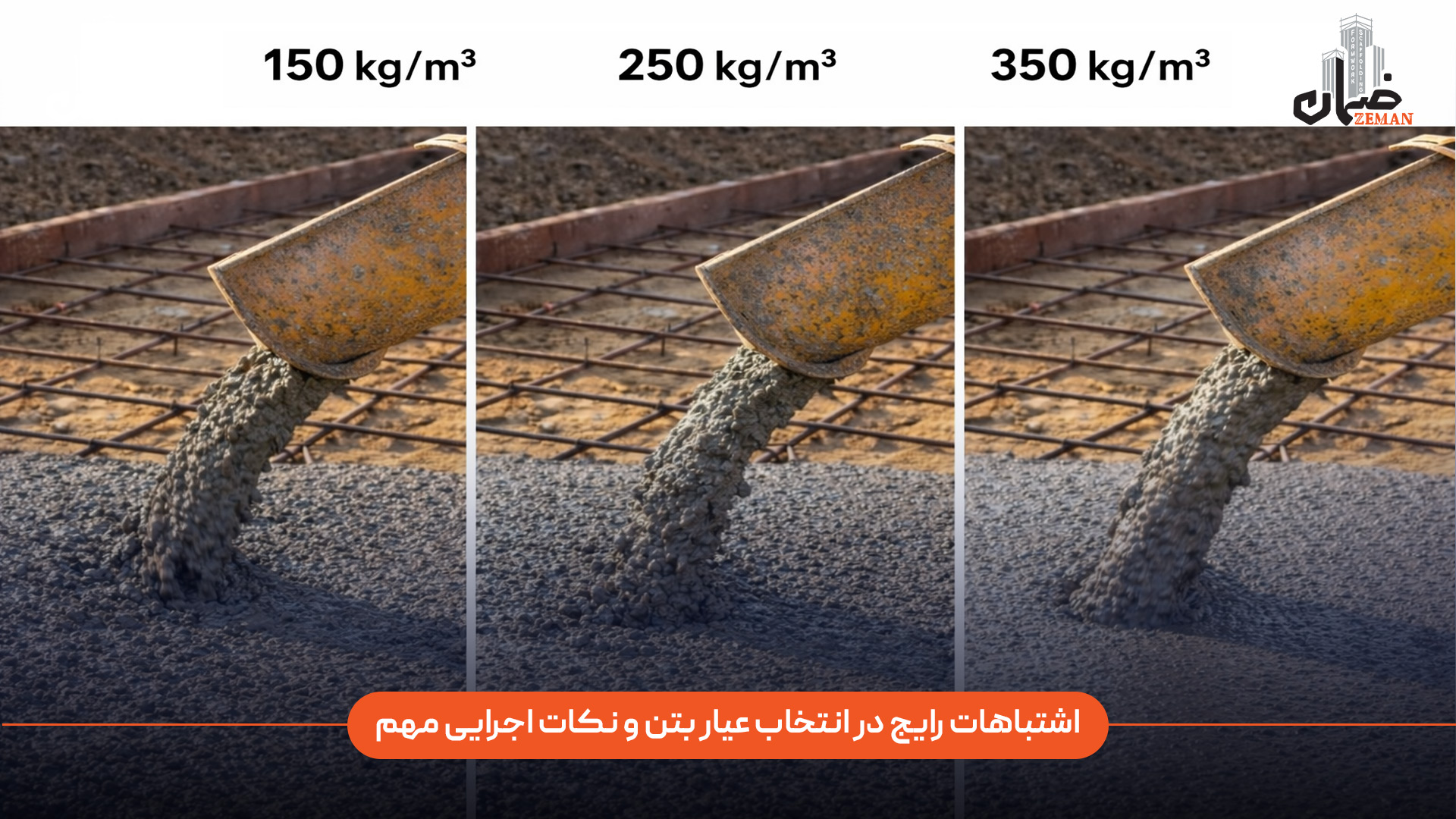
Concrete cement content refers to the amount of cement used in each cubic meter of concrete and is usually expressed in kilograms per cubic meter (kg/m³). For example, if 350 kilograms of cement are used in one cubic meter of concrete, the concrete cement content is said to be 350.
Concrete cement content is directly related to the following factors:
- Compressive strength of concrete
- Durability against environmental factors
- Degree of water permeability
- Bond strength between concrete and reinforcement
Why Is Concrete Cement Content Important?
Selecting the appropriate concrete cement content forms the foundation of structural quality. Concrete with a low cement content may:
- Lack sufficient compressive strength
- Perform poorly against moisture and corrosive materials
- Suffer from efflorescence or premature deterioration
On the other hand, excessively high cement content leads to:
- Increased project costs
- Higher heat of hydration
- An increased likelihood of shrinkage cracks
This occurs. Therefore, determining the optimal cement content is the most critical decision at the concrete design stage.
Difference Between Concrete Cement Content and Strength Class
One common misconception is considering concrete cement content the same as the concrete strength class (such as C25 or C30). However:
- Concrete cement content refers to the amount of cement used
- Concrete strength class refers to the compressive strength specified in standards and codes
Two concretes with the same cement content may have different strengths, because factors such as the following affect the final result:
- Water-to-cement ratio
- Type of aggregates
- Quality of mixing
- Concrete curing conditions
Relationship Between Concrete Cement Content and Formwork
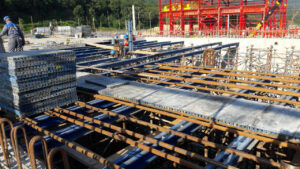
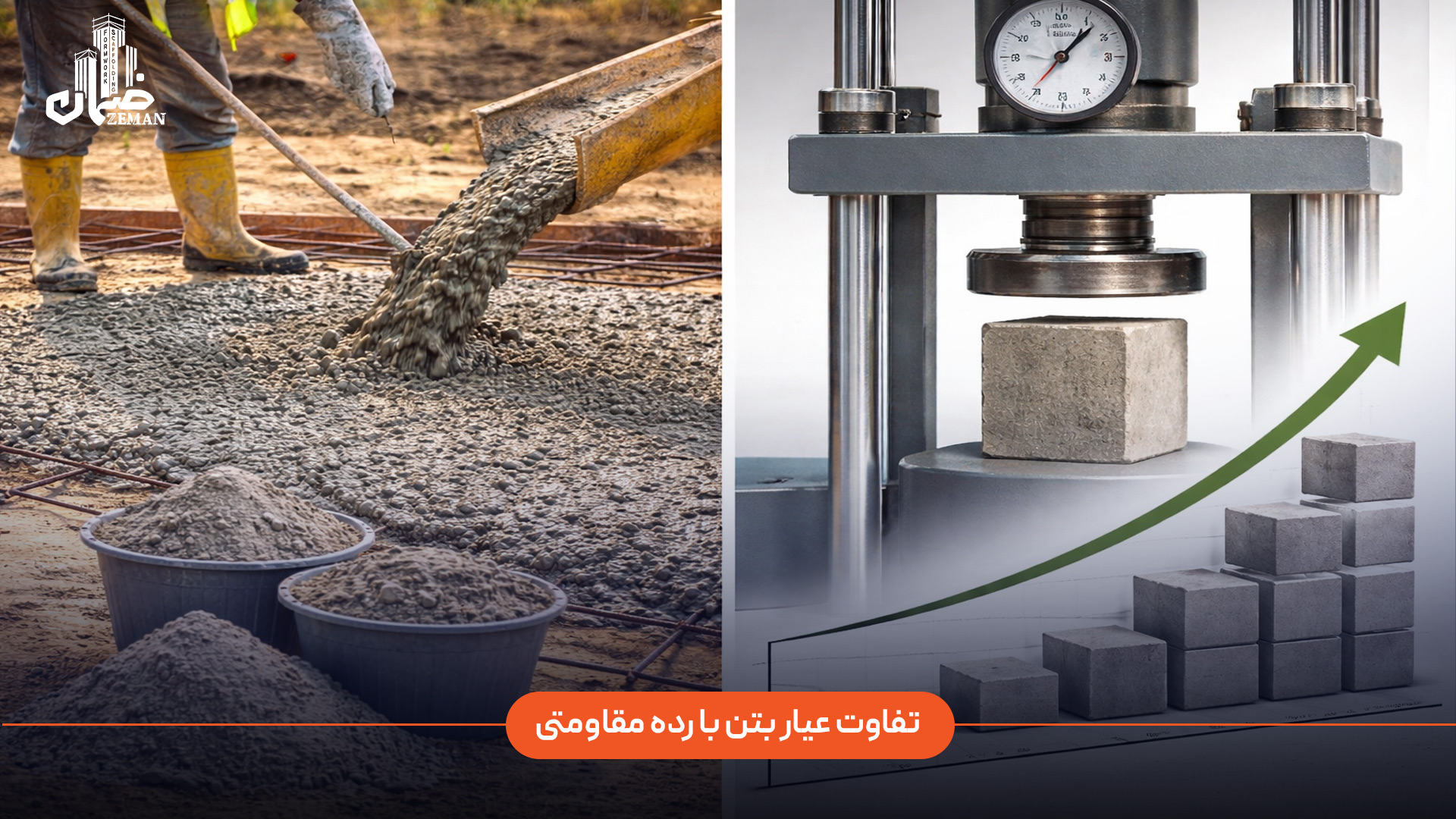
Concrete cement content affects not only strength but also the lateral pressure exerted on concrete formwork. Concretes with higher cement content and greater workability impose higher pressure on the formwork. For this reason, selecting an appropriate formwork system becomes critically important.
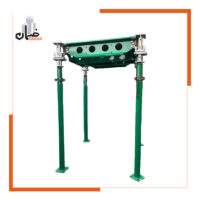
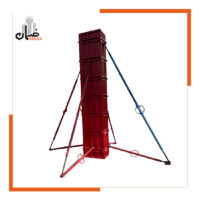
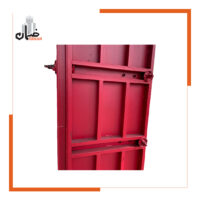
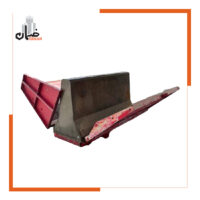
In professional projects, the use of ZAMAN metal concrete formwork systems increases safety, reduces formwork deformation, and achieves a high-quality finished surface.
In addition, in heavy concreting operations, the correct selection of:
- Bolts and tie bolts
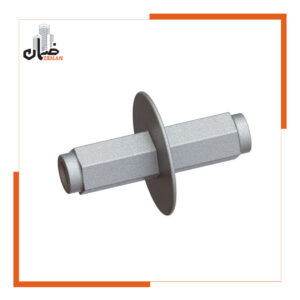
- Water-sealing mid bolts
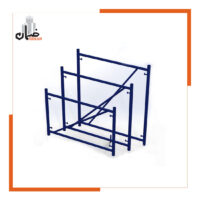
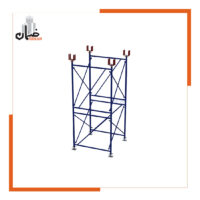
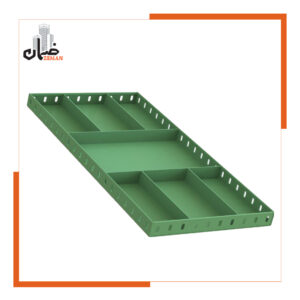
- Modular metal formwork
plays a vital role in controlling concrete pressure, which has been thoroughly examined in ZAMAN’s specialized articles.
Types of Concrete Cement Content and Their Applications in Construction Projects
Concrete cement content is selected based on the type of structure, loading level, environmental conditions, and code requirements. A single cement content cannot be considered suitable for all parts of a building, as each component has different technical requirements. In this section, various types of concrete cement content and their common applications are reviewed.
Classification of Concrete Cement Content Based on Cement Quantity
In general, concrete is divided into three main groups based on cement content:
1. Low Cement Content Concrete (Less Than 250 kg/m³)
This type of concrete is mostly used for non-structural works, including:
- Lean concrete (blinding concrete)
- Non-load-bearing floor screeds
- Filling voids and cavities
The cement content of lean concrete is usually between 150 and 200 kilograms, and its purpose is to provide a clean and level surface for foundation execution, not to carry structural loads. At this stage, the use of precise formwork equipment is not critically important; however, in the subsequent stage—foundation construction—the conditions become completely different.
2. Medium Cement Content Concrete (250 to 350 kg/m³)
This group is the most commonly used type of concrete in building construction and is applied in most structural elements:
- Conventional foundations
- Columns and beams
- Shear walls
- Concrete slabs
Commonly used cement contents such as 300, 325, and 350 fall into this category. These concretes provide a suitable balance between strength, workability, and cost.
In projects where modular metal formwork systems are used, concrete with this cement content generates considerable lateral pressure. Therefore, the use of standard equipment such as:
- Tie bolts and water-sealing mid bolts
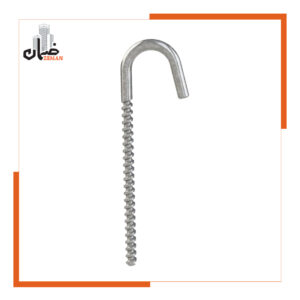
- Hook bolts and formwork nuts
- ZAMAN modular metal formwork systems
Modular Metal Formwork Systems
3. High Cement Content Concrete (More Than 350 kg/m³)
High cement content concretes are used when:
- High compressive strength is required
- Concrete permeability must be minimized
- The structure is exposed to moisture or corrosive substances
Common applications:
- Hydraulic structures and water tanks
- Heavy-duty and special columns
- Industrial structures
- Bridges and tunnels
Typically, cement contents such as 400, 450, or even higher fall into this category. However, increasing cement content without controlling the water-to-cement ratio may result in stiff concrete with poor workability. For this reason, chemical admixtures are commonly used in high cement content concretes.
Concrete Cement Content in Different Building Components
In practice, different cement contents are selected for various parts of a structure:
- Lean concrete: 150 to 200
- Foundation: 250 to 350
- Columns and beams: 300 to 400
- Concrete slab ceiling: 300 to 350
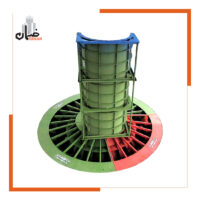
Proper execution of these components requires a strong and precise formwork system. Especially in columns and walls where medium to high cement content concrete is used, employing ZAMAN metal column and wall formwork prevents formwork bulging and concrete leakage.
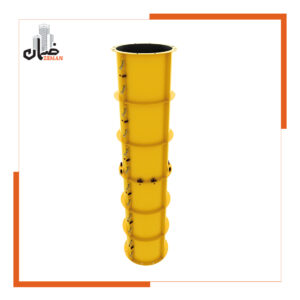
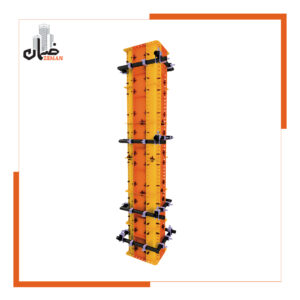
Square and Rectangular Column Formwork
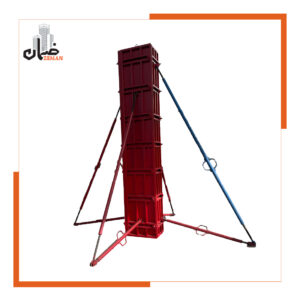
ZEMAX Variable Column Formwork
Formula for Calculating Concrete Cement Content and Influencing Factors
After becoming familiar with the concept and types of concrete cement content, the most important question is how concrete cement content is calculated. Accurate calculation of cement content helps achieve the required strength while preventing unnecessary cost increases and execution issues.
Main Formula for Calculating Concrete Cement Content
The basic formula for calculating concrete cement content is very simple:
Concrete cement content = Weight of cement used (kg) ÷ Volume of concrete (m³)
For example, if 350 kilograms of cement are used to produce one cubic meter of concrete, the concrete cement content will be:
Concrete cement content = 350 kg/m³
However, in practice, concrete mix design is not limited to determining cement content alone, and other parameters must also be carefully evaluated.
Water-to-Cement Ratio and Its Relationship with Concrete Cement Content
One of the most important factors affecting concrete strength is the water-to-cement ratio (W/C). As this ratio decreases:
- The compressive strength of concrete increases
- Concrete permeability decreases
In general:
- High W/C → weaker concrete
- Low W/C → stronger concrete but with reduced workability
In many mix designs, even with a constant cement content, reducing the water-to-cement ratio leads to increased strength. Therefore, to maintain workability in high cement content concretes, admixtures such as plasticizers and superplasticizers are used.
Numerical Example of Concrete Cement Content Calculation
Assume that 5 cubic meters of concrete with a cement content of 300 are to be produced. The required amount of cement is calculated as follows:
- Concrete cement content: 300 kg/m³
- Concrete volume: 5 m³
Required cement = 300 × 5 = 1,500 kg of cement
Considering that each bag of cement typically weighs 50 kg:
- Number of cement bags = 1,500 ÷ 50 = 30 bags
This calculation is highly practical in on-site construction projects, especially for the execution of foundations, slabs, and columns.
The Effect of Formwork Geometry on Actual Concrete Consumption
In theoretical calculations, the concrete volume is considered precisely; however, during execution, factors such as:
- Concrete leakage through formwork joints
- Formwork bulging
- Formwork deformation under concrete pressure
lead to an increase in actual concrete consumption. This issue is particularly critical in concretes with medium to high cement content.
The use of standard metal formwork and appropriate accessories such as:
- Water-sealing tie bolts
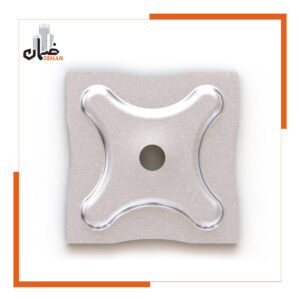
- Wing nut washers (Washer Kas)
- Heavy-duty formwork nuts
which are supplied as part of ZAMAN concrete formwork products, plays a key role in controlling concrete consumption volume and achieving the actual designed cement content.
Minimum Concrete Cement Content According to Codes and Standards
According to the Iranian Concrete Code (ABA):
- The minimum cement content for structural concrete is generally 250 kilograms
- For structures exposed to moisture or corrosive environments, this value must be increased
- Lean concrete (blinding concrete) is not subject to this limitation
Failure to comply with the minimum cement content may result in reduced strength and long-term durability loss of the structure.
Table of Concrete Cement Content, Compressive Strength, and Common Applications
For proper concrete selection in construction projects, merely understanding the concept of cement content is not sufficient. Engineers and contractors typically rely on concrete cement content tables to estimate compressive strength ranges and to select concrete appropriate for the type of structure. These tables enable faster, more accurate, and standards-compliant decision-making.
| Main Application | Equivalent Strength Class (Approx.) | Approximate 28-Day Compressive Strength (MPaMPa) | Concrete Cement Content (kg/m3kg/m^3) |
| Lean concrete (blinding) | C8 / C10 | 10 – 12 | 150 |
| Flooring, garden wall foundations | C12 / C15 | 15 – 18 | 200 |
| Sidewalks, curbstones | C16 / C20 | 18 – 22 | 250 |
| Small building foundations | C20 / C25 | 23 – 27 | 300 |
| Beams, columns, slabs (urban standard) | C25 / C30 | 28 – 32 | 350 |
| Water tanks, tall structures | C30 / C35 | 33 – 38 | 400 |
| Abrasion-resistant concrete, bridge construction | C35 / C40 | 38 – 45 | 450 |
| Special and ultra-heavy structures | C45+ | 45+ | 500 |
The Relationship Between Concrete Cement Content and Compressive Strength
Approximately, the higher the concrete cement content, the greater its compressive strength. However, this relationship is not completely linear and depends on factors such as:
- Water-to-cement ratio
- Type and grading of aggregates
- Mixing quality
- Curing conditions
Accordingly, the following empirical tables are widely used in construction sites and technical offices.
Concrete Cement Content Table (Approximate and Site-Based)
- Cement content 150 to 200
- Approximate compressive strength: 7 to 10 MPa
- Application: Lean concrete, blinding concrete
- Cement content 250
- Approximate compressive strength: 15 to 20 MPa
- Application: Light foundations, non-load-bearing walls
- Cement content 300
- Approximate compressive strength: 20 to 25 MPa
- Application: Conventional foundations, beams and columns, concrete slabs
- Cement content 350
- Approximate compressive strength: 25 to 30 MPa
- Application: Columns, shear walls, critical structural slabs
- Cement content 400 and above
- Approximate compressive strength: More than 30 MPa
- Application: Special structures, tanks, bridges, and industrial structures
Note: The above values are approximate, and final design must be based on an engineered mix design.
Selecting Concrete Cement Content Based on Structural Type
In Iranian construction projects, the following practice is generally applied:
- Lean concrete under foundations: Cement content 150 or 200
- Residential building foundations: Cement content 250 to 300
- Columns and shear walls: Cement content 300 to 350
- Structures exposed to moisture or water: Minimum cement content 350
Selecting a cement content higher than required not only increases costs, but also leads to problems such as increased concrete temperature and shrinkage cracking.
The Role of Formwork in Achieving Actual Concrete Strength
Even if the concrete cement content is selected correctly, improper formwork execution can reduce the quality of the final concrete. Leakage of water or cement paste through formwork joints will result in:
- Reduction of effective cement content
- Loss of compressive strength
- Surface honeycombing of concrete
For this reason, in structures with medium to high cement content concrete, the use of:
- Precise modular metal formwork
- Water-sealing tie bolts
- Special mid-bolts for water-retaining walls
Concrete Cement Content and Environmental Conditions
In regions with specific environmental conditions such as:
- Humid northern regions of the country
- Hot and dry central regions
- Industrial and corrosive environments
the concrete cement content must be selected with greater precision. Under these conditions, increasing cement content along with reducing the water-to-cement ratio significantly enhances concrete durability.
Common Mistakes in Selecting Concrete Cement Content and Important Execution Tips
Despite the high importance of concrete cement content, mistakes occur in many construction projects that can severely reduce the final quality of the structure. Recognizing these errors and observing proper execution practices plays a key role in increasing concrete strength, durability, and service life.
Common Mistakes in Determining Concrete Cement Content
1. Selecting concrete cement content solely based on cost
Some contractors use concrete with cement content lower than the permissible limit to reduce costs. While this may reduce expenses in the short term, in the long term it will lead to:
- Reduced compressive strength
- Decreased structural safety
- Increased repair and strengthening costs
2. Increasing cement content without considering the mix design
Uncontrolled increases in cement content do not always result in better concrete. If the water-to-cement ratio is not properly controlled, the concrete will suffer from:
- Shrinkage cracking
- Reduced workability
- Increased heat of hydration
In professional projects, increasing cement content must be accompanied by the use of appropriate admixtures.
3. Neglecting the environmental conditions of the project
In humid, cold, or hot and dry regions, concrete cement content must be selected according to climatic conditions. Using a fixed cement content for all projects is one of the common mistakes on construction sites.
Important Execution Tips for Achieving the Actual Concrete Cement Content
To ensure that the executed concrete achieves the designed cement content in practice, the following points are essential:
- Proper control of concrete vibration: Excessive vibration causes segregation, while insufficient vibration leads to honeycombing.
- Preventing cement paste leakage: Poor formwork allows cement paste to escape and reduces the effective cement content.
- Proper curing of concrete: Even high cement content concrete will not achieve the required strength without proper curing.
Accordingly, the use of standard formwork equipment such as:
- Precision metal formwork
- Water-sealing tie bolts
- High-strength formwork connections
The Relationship Between Concrete Cement Content and Structural Durability
Concrete cement content directly affects structural durability. Concrete with appropriate cement content:
- Has higher resistance to water penetration
- Experiences slower reinforcement corrosion
- Has a longer service life under harsh environmental conditions
Especially in structures such as tanks, retaining walls, parking structures, and industrial facilities, selecting the proper cement content and executing accurate formwork are critical success factors.
- Shear wall formwork
- Lateral concrete pressure
- Selecting appropriate tie bolts
Final Summary on Concrete Grade
Concrete cement content is one of the most important parameters in the design and execution of concrete structures. Selecting the appropriate cement content must be based on the following factors:
- Type of structural element
- Environmental conditions
- Code and standard requirements
- Execution quality and formwork accuracy
Using concrete with the appropriate cement content alongside standard formwork equipment guarantees the safety, durability, and final quality of the structure. The ZAMAN (Zemanco) brand, by providing professional formwork systems and standard accessories, plays a significant role in the correct execution of concrete with its true designed cement content.