



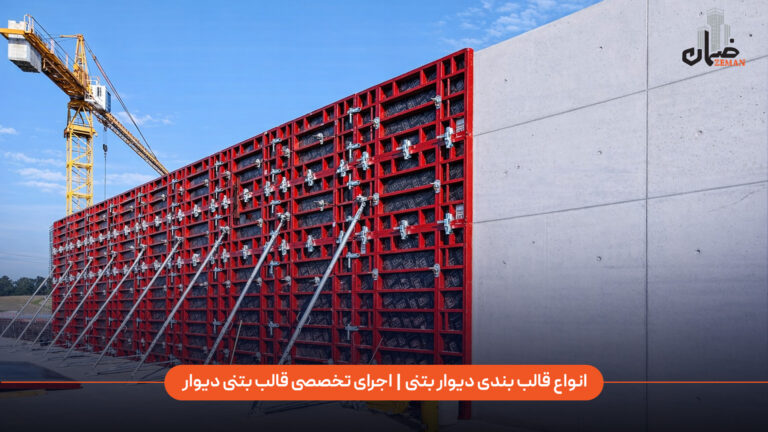
Why Is Concrete Wall Formwork Critically Important?
Concrete walls are among the most fundamental components of civil engineering and construction structures. From retaining walls in deep excavations to shear walls, tunnel linings, utility shafts, and perimeter walls, all require precise and engineering-based execution. In this context, the various types of concrete wall formwork play a decisive role in the quality, safety, execution speed, and long-term durability of the structure.
Formwork is not merely a temporary tool for holding fresh concrete; rather, it is an integral part of the construction engineering process that directly affects the geometric shape, strength, surface uniformity, and even the structural performance of the wall. Any error in the design or execution of formwork may lead to wall deformation, concrete cracking, reduced structural quality, and even serious site accidents.
With the expansion of modern construction projects, traditional formwork methods no longer meet current technical and execution requirements. Therefore, the use of engineered and standardized systems in concrete wall formwork has become an essential necessity.
What Is Concrete Wall Formwork?
Concrete wall formwork is a system consisting of temporary structures, components, and connections used to shape, support, and restrain fresh concrete until it reaches sufficient strength. This system is required to:
- Withstand the lateral pressure generated by fresh concrete
- Maintain the wall dimensions and alignment exactly in accordance with the drawings
- Prevent grout and cement paste leakage
- Ensure the safety of execution personnel
Depending on project conditions, wall formwork may be executed as either double-sided or single-sided systems. Its components are selected based on wall height, concrete placing rate, type of concrete, and environmental conditions.
Behavior of Fresh Concrete and Its Impact on Concrete Wall Formwork
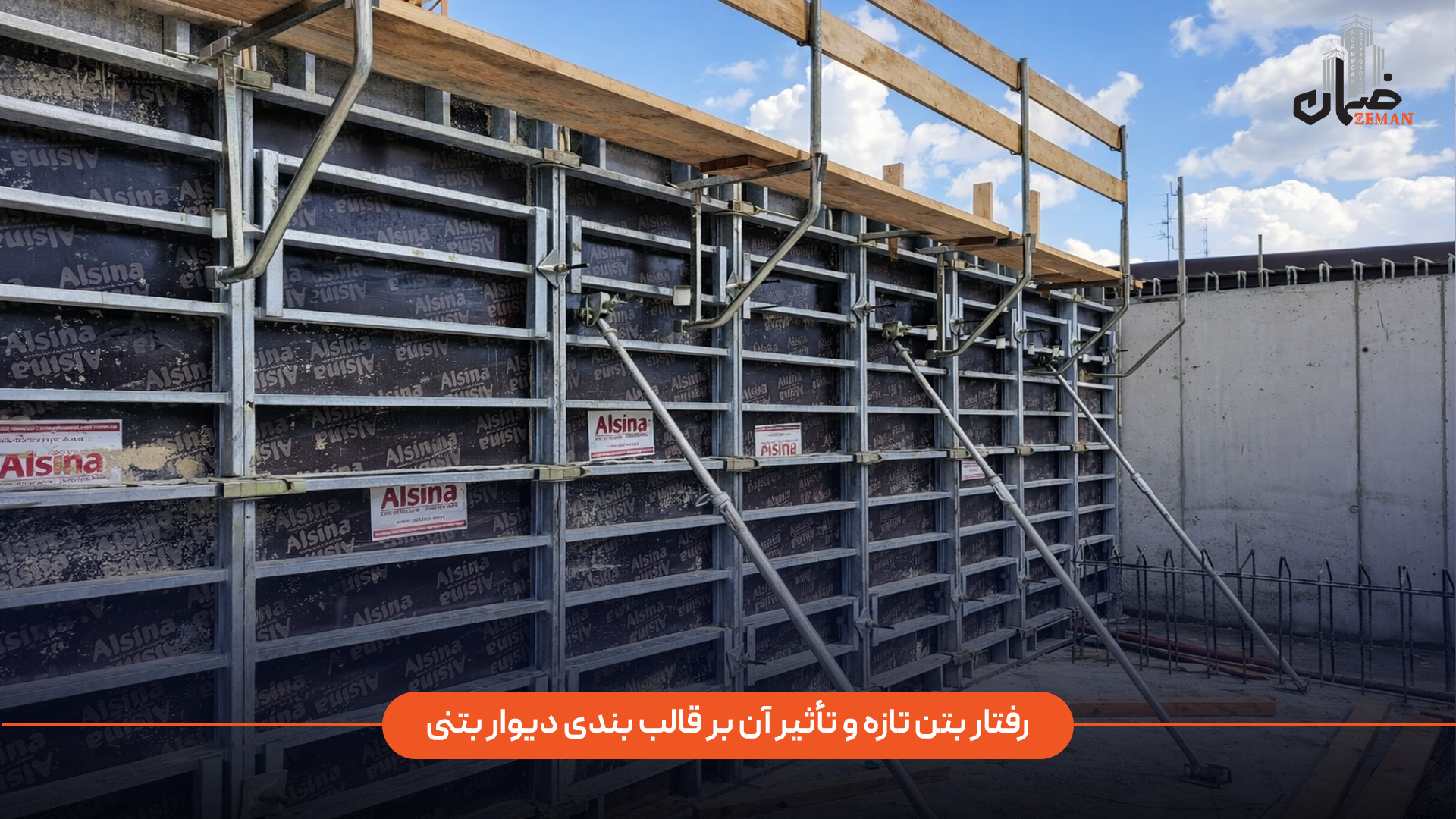
To understand the importance of formwork, the behavior of fresh concrete must first be understood. During placement, fresh concrete behaves like a heavy fluid and exerts significant lateral pressure on vertical surfaces. This pressure:
- Increases with wall height
- Depends on the rate of concrete placement
- Is affected by ambient temperature and concrete slump
In concrete walls, this lateral pressure is the primary factor in designing formwork systems. If the formwork does not have adequate capacity, panel bending, connection failure, or even formwork collapse may occur, leading to serious technical and safety consequences.
Available Types of Concrete Wall Formwork Systems
Double-Sided Concrete Wall Formwork (Classic and Economical System):
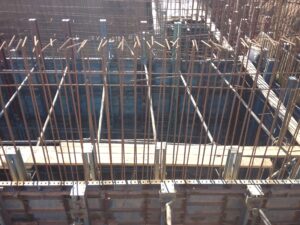
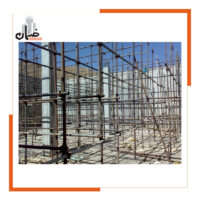
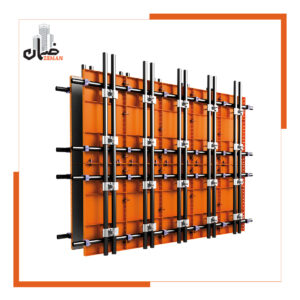
Double-sided formwork is the most common method for executing concrete walls, where concrete pressure is restrained by tie rods passing through both opposing panels.
Applications:
- Internal structural walls
- Shear walls
- Perimeter and boundary walls
Features:
- Fast installation
- Cost-effective solution
- Use of modular steel panels
- Reusable across multiple projects
Suitable for projects with access to both sides of the wall.
Single-Sided Concrete Wall Formwork (For Special Projects):
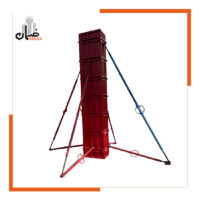
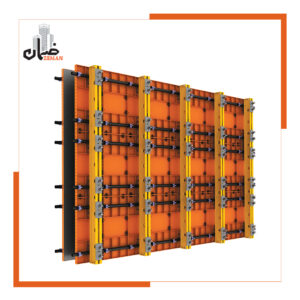
In projects where double-sided formwork is not feasible, single-sided wall formwork systems are used. In this system, concrete pressure is transferred to the foundation or a stable structural element through engineered support trusses and anchorage systems.
Applications:
- Retaining walls
- Deep excavations
- Adjacent boundary conditions
- Underground walls
Distinctive Features:
- Project-specific engineered design
- High resistance to concrete pressure
- Enhanced execution safety
This system requires precise structural design and is installed under technical supervision.
Curved (Arched) Wall Formwork:
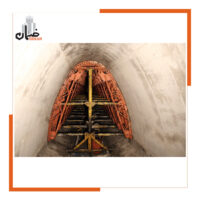
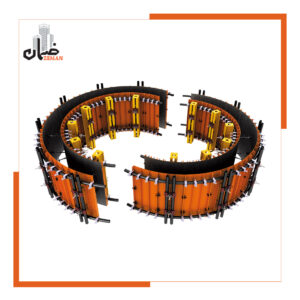
For projects with special geometries, curved wall formwork is executed using specialized systems. This type of formwork requires high accuracy in curve radius control and concrete pressure distribution.
Applications:
- Parking ramps
- Curved perimeter walls
- Architectural special structures
- Tanks and curved structures
Execution Methods:
- Use of narrow modular panels
- Custom-made formwork for tight radii
- Formwork bracing design adapted to curve radius
The final result is a completely uniform wall with precisely controlled curvature.
Architectural Exposed Concrete Wall Formwork:
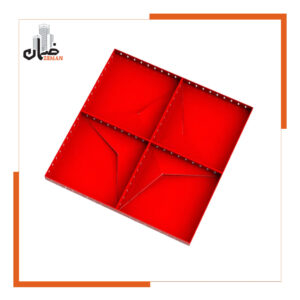
In exposed concrete wall applications, the concrete surface itself represents the final finish of the project, and even the smallest defect remains fully visible. Therefore, the formwork of these walls is executed with exceptional precision and sensitivity.
Features:
- Perfectly smooth and uniform surface finish
- Precise control of tie-rod locations
- Capability for plain or patterned architectural finishes
- High-quality exposed concrete (fair-faced concrete)
Applications:
- Modern building façades
- Commercial and industrial projects
- Architectural perimeter walls
Suitable for projects where the visual quality of concrete façades is of critical importance.
Main Components of Concrete Wall Formwork Systems
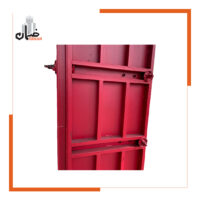
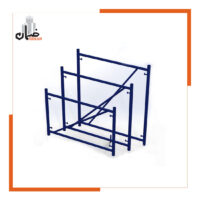
1. Formwork Panels:
Panels are the elements in direct contact with concrete and play the primary role in shaping the wall. In concrete wall formwork, the following are commonly used:
- Steel formwork panels
- Modular formwork systems
- Project-specific special formwork
Key panel characteristics include:
- Sufficient resistance to concrete pressure
- Smooth and uniform surface finish
- Proper connectivity with walers and braces
- Reusability across multiple projects
2. Horizontal and Vertical Walers:
Walers transfer pressure from the formwork surface to the load-bearing components of the system. These members:
- Prevent panel deflection
- Distribute loads evenly
- Play a critical role in overall system stability
The spacing and arrangement of walers must be determined based on calculated lateral concrete pressure.
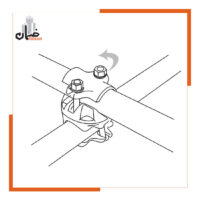
3. Tie Rods and Connections (Double-Sided Systems):
In double-sided wall formwork, through tie rods are the key force-balancing elements. These ties:
- Connect opposing formwork panels
- Resist concrete pressure on both sides
- Must have sufficient tensile capacity
The use of sleeves, cones, and bearing plates is essential to prevent concrete penetration and facilitate formwork removal.
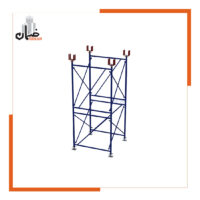
4. Support Trusses and Bracing (Single-Sided Systems):
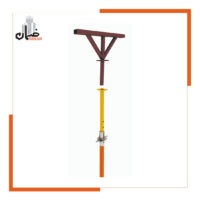
In single-sided wall formwork, support trusses perform the primary load-bearing function. These trusses:
- Convert lateral concrete pressure into tensile and compressive forces
- Are anchored to foundations or concrete slabs
- Allow precise vertical alignment adjustment of the wall
Proper design and installation of these trusses are essential requirements for system safety.
5. Anchorage Systems:
Anchorage systems represent the final load-transfer element in concrete wall formwork. Anchors may consist of:
- Mechanical anchors
- Chemical anchors
- Embedded reinforcing bars
Foundation strength, concrete quality, and anchor embedment depth directly affect overall system performance.
Stages of Concrete Wall Formwork Execution
Step 1: Review of Drawings and Project Conditions
Before formwork installation, the following must be carefully evaluated:
- Wall height and thickness
- Type of formwork system
- Site access conditions
- Formwork assembly and dismantling sequence
Step 2: Formwork System Design
At this stage, based on concrete pressure, wall height, and project requirements:
- Panel type is selected
- Waler spacing is determined
- The number of tie rods or support trusses is calculated
- Any simplification at this stage can result in serious execution hazards
Step 3: Installation of Panels and Walers
Formwork installation must be perfectly level, plumb, and in strict accordance with drawings. Even the smallest deviation may become visible on the final concrete surface.
Step 4: Pre-Concrete Placement Inspections
Prior to concrete placement:
- All connections must be checked
- The concrete placement sequence must be defined
- The bracing system must be reviewed
Step 5: Concrete Placement and System Monitoring
Concrete placement must:
- Be carried out in stages
- Follow the placement rate assumed in pressure calculations
- Be accompanied by continuous monitoring of formwork deformation
Step 6: Formwork Stripping
After the concrete reaches sufficient strength:
- Tie rods or bracing elements are released
- Panels are removed methodically
- Damage to the concrete surface is minimized
Key Safety Considerations in Concrete Wall Formwork
- Use of sound and standardized equipment
- Proper training of execution personnel
- Avoiding increased concrete placement speed without verification
- Continuous formwork inspection during execution
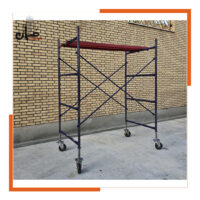
- Use of safe working platforms and ladders
Safety in wall formwork is directly linked to the lives of site workers.
The Role of Formwork in Final Concrete Wall Quality
A properly designed formwork system ensures:
- Uniform concrete surface quality
- Reduced need for post-construction repairs
- Increased durability of the wall
- Prevention of structural defects
The cost invested in proper formwork execution is, in fact, an investment in the overall quality of the entire project.
Why Zeman Concrete Wall Formwork?
- Project-specific engineering design based on wall height, concrete pressure, and site conditions
- Sale and rental of wall formwork systems for short-term and long-term projects
- Excellent concrete surface quality achieved through sound panels, proper release agents, and precise execution
- Technical support throughout the concreting process
- Fast delivery of equipment tailored for time-sensitive projects
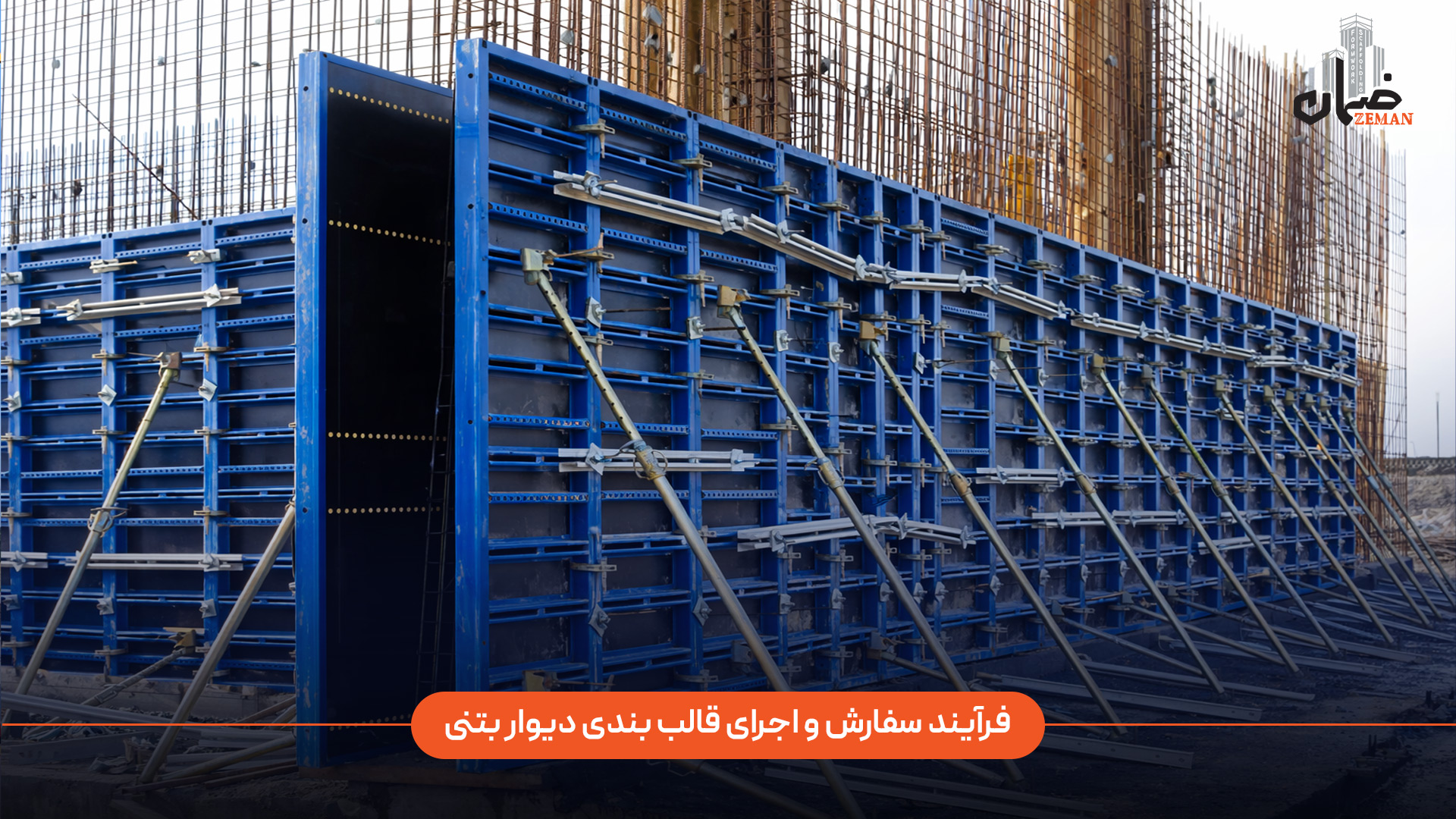
Concrete Wall Formwork Ordering and Execution Process
- Submission of drawings or project specifications
- Technical review and formwork system design
- Price quotation and scheduling
- Supply and delivery of equipment to site
- On-site technical support until wall execution is completed
How Is the Price of Concrete Wall Formwork Calculated?
The final price is determined based on the following factors:
- Type of system (double-sided, single-sided, curved, architectural)
- Wall area and height
- Project duration
- Sale or rental of formwork systems
To receive an accurate quotation, a technical evaluation of the project is required.
Frequently Asked Questions About Concrete Wall Formwork
Is it possible to rent wall formwork systems?
Yes, concrete wall formwork systems are available for both sale and rental.
Do you also execute curved wall formwork?
Yes, both modular panel systems and custom-made formwork are available.
Is quality guaranteed for architectural exposed concrete walls?
Yes, through precise execution control and the use of standardized equipment.
Price Inquiry for Various Concrete Wall Formwork Systems
If you require safe, precise, and cost-effective concrete wall formwork for your construction project, simply submit your project specifications and our technical team will contact you in the shortest possible time.
Final Summary
Concrete wall formwork is one of the most sensitive and specialized stages in the execution of concrete structures. Proper system selection, engineering design, precise execution, and strict safety compliance are the key factors that guarantee project success.
In simple projects, double-sided systems are sufficient; however, in modern urban and underground projects, single-sided wall formwork becomes an unavoidable solution. In all cases, the use of standardized and engineered systems plays a critical role in enhancing structural quality and safety.