




Traditional Scaffolding Connection
Scaffolding connections are one of the most critical elements in ensuring the safety and performance of temporary structures in construction projects. Below is an overview of the principal methods used for scaffold connection:
Types of Scaffolding Connection Methods:
- Tube & Coupler Connections:
The most common traditional method. Steel tubes and metal couplers are used to create both vertical and horizontal connections. The couplers include double couplers (fixed and swivel), spigot pins, and adjustable couplers. - Hammer Scaffolding (Cuplock / Ringlock):
A fast and secure connection system utilizing a central locking mechanism. It is well suited for large-scale and complex structures. The components are manufactured in a modular form, allowing for faster and easier assembly. - Triangular or Modular Scaffolding:
Primarily used for light-duty applications such as façade works. This system is assembled using prefabricated triangular frames and pin-type connections. - Suspended Scaffolding:
Designed for work at great heights, such as on towers and bridges. It is connected to the structure by means of cables or mechanical hoisting systems.
Traditional Scaffolding Connection
Introduction: Traditional Scaffolding Connections, a Temporary Structure with a Critical Role
Scaffolding systems, as temporary structures, are considered the backbone of safety and accessibility in every civil and construction project. Their primary purpose is to create a safe and stable working platform that allows workers to access heights beyond normal reach. These temporary structures have a wide range of applications, including façade installation, painting, building maintenance, pile bracing, slab formwork support, as well as the erection of exhibition booths and the installation of banners.
Among various scaffolding systems, traditional metal scaffolding remains the most widely used option due to its high strength and flexibility. However, the safety and stability of this structure are highly dependent on the way its components are connected. In fact, connections in traditional scaffolding play a role far beyond that of a simple linkage; they act as the beating heart of the system, responsible for load transfer, resistance to lateral forces, and maintaining overall structural integrity.
Anatomy of a Traditional Scaffolding System: Key Terminology and Components
To better understand how scaffolding connections function, it is essential to first become familiar with the main components of a traditional scaffolding system. This structure consists of a set of steel tubes and fittings, each serving a specific purpose:
- Standard (Vertical): These are vertical steel tubes responsible for carrying the primary loads of the structure and the workers. Common standards are made from welded steel tubes with an external diameter of 48.3 mm and a thickness of 2 to 2.5 mm.
- Ledger: Horizontal tubes that connect the vertical standards longitudinally, forming a horizontal framework.
- Transom: Horizontal tubes installed transversely, connecting the standards across the width of the scaffold and serving as the main support for working platforms.
- Brace: Diagonal tubes installed in crossed or inclined arrangements. These components significantly enhance lateral stability and resistance against wind and side loads.
- Base Plate: A flat square metal plate placed beneath the vertical standards to distribute scaffold loads evenly onto the ground. On soft ground, steel sheets or timber sole boards are used beneath the base plates to improve stability.
- Plank: Wooden or metal boards that form the working platform for worker movement and task execution. These planks must meet standard requirements for thickness and width.
- Coupler: The smallest yet most critical component of scaffolding, responsible for connecting tubes together. Different types of couplers serve different functions, and the correct selection directly impacts the overall safety of the structure.
The Paradox of Simplicity in Traditional Scaffolding: From Component to System
At first glance, traditional scaffolding may appear to be a simple and primitive structure composed of tubes and couplers. This apparent simplicity often creates the misconception that its erection does not require specialized expertise. However, this simplified view conceals a hidden layer of technical and safety complexity, neglect of which may result in catastrophic consequences. Each scaffolding component individually performs a specific and limited function, but transforming these individual parts into a stable, integrated, and safe structure is the responsibility of the connections and installation methods.
Selecting the wrong type of coupler for a specific connection, or failing to comply with technical installation standards, can create weak points that expose the entire structure to the risk of collapse. For example, while right-angle couplers are ideal for 90-degree connections, swivel couplers are essential for diagonal bracing. This difference in application demonstrates that scaffolding is a precise engineering system in which even the smallest component—a single coupler—directly affects the strength and safety of the entire structure. Therefore, despite its simple appearance, scaffolding erection is a science–art discipline that only trained specialists can properly execute.
Types of Scaffolding Couplers: The Core of Safety
Scaffolding couplers play a central role in connecting tubes and creating a rigid and stable structural network. Understanding the different types of couplers and their specific applications is critical to ensuring project safety.
90-Degree Couplers: The Backbone of Connections
These couplers are the most widely used connections in traditional scaffolding systems and are designed to join tubes at perpendicular (90-degree) angles.
- Right-Angle (Double) Coupler: The most common and widely used coupler, designed to create fixed right-angle connections between scaffold tubes. This coupler consists of two half clamps and a body, secured with four bolts, nuts, and washers. Its typical weight ranges from 1,300 to 1,650 grams.
- Two-Bolt Coupler: Similar in application to the four-bolt coupler, but faster to install. It also offers acceptable tensile and compressive strength.
Flexible Couplers: Creative Structural Solutions
These couplers allow scaffold tubes to be connected at unconventional angles and positions.
- Swivel Coupler (360°): Also known as a 360-degree coupler, this fitting allows tubes to be connected at any angle. Swivel couplers are particularly essential for diagonal bracing and increasing lateral structural strength. They are available in 2-, 4-, 6-, and 8-bolt types, with an approximate weight of 1,750 grams.
- H Coupler (Girder Clamp): Specifically designed to connect scaffolding to steel beams or main structural members, offering exceptional resistance against heavy loads.
Specialized and Functional Couplers
In addition to primary couplers, other connections are used for specific scaffolding applications:
- Spigot Joint Pin: Made from ductile (nodular) cast iron, these joints reinforce the vertical alignment of stacked standards. The use of spigot pins is mandatory for scaffolding exceeding 6 meters in height to ensure overall stability.
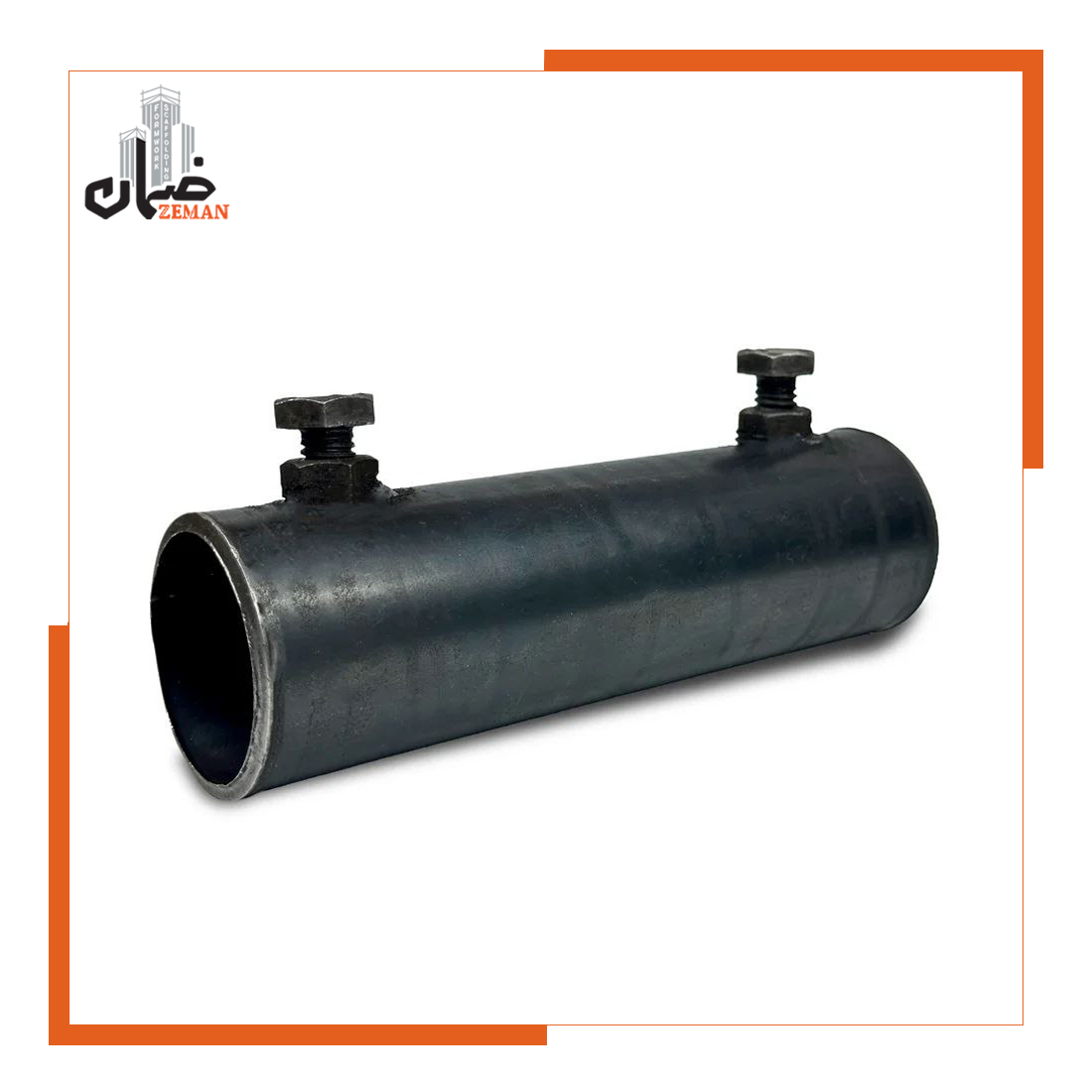
- Sleeve Coupler: Used to connect two tubes end-to-end in a straight alignment. These couplers are commonly available in 17 cm and 20 cm lengths.
- Board Retaining Coupler: Used to secure working platform planks to scaffolding tubes, preventing movement or slipping and significantly enhancing worker safety.
Durability Versus Cost: Forged vs. Cast Couplers
Choosing the material of scaffolding couplers is a critical decision that directly impacts initial cost, durability, and—most importantly—project safety. Two main types of couplers exist in the market based on manufacturing processes:
- Cast couplers (made of cast iron)
- Forged couplers (made of forged steel)
Some sources promote cast iron couplers as a cost-reduction option. Casting involves melting metal and pouring it into molds. In contrast, forged couplers are manufactured through hot forging, where heated steel is shaped under intense pressure and impact.
At first glance, cast iron couplers may appear attractive due to their lower price. However, deeper analysis reveals a critical reality: cast iron couplers are brittle under impact and prone to cracking or breaking when dropped. This represents a serious safety risk in high-elevation work environments. Forged steel couplers, on the other hand, offer significantly higher mechanical strength and durability. When subjected to impact or heavy loads, they tend to deform rather than fracture.
This critical difference highlights a contradiction in available information: while some sources permit cast iron couplers for minor projects, safety regulations explicitly state that scaffolding couplers must not be made of cast iron. A professional contractor understands that short-term cost savings achieved by selecting cast couplers may result in increased accident risks, higher maintenance and replacement costs, and ultimately severe legal and financial consequences. Therefore, choosing forged steel couplers is an investment in long-term safety, durability, and liability reduction.
Comprehensive Comparison Table of Scaffolding Couplers
| Coupler Type | Main Application | Typical Material | Approx. Weight (g) | Advantages | Limitations |
|---|---|---|---|---|---|
| Right-Angle Coupler | Connecting two tubes at 90 degrees | Forged Steel / Cast Iron | 1,300–1,650 | Highly common, strong connection | Slower installation compared to other types |
| Swivel Coupler | Connections at any angle, diagonal bracing | Forged Steel / Cast Iron | ~1,750 | High flexibility, ideal for complex structures | Heavier and more expensive than right-angle couplers |
| H Coupler | Connecting scaffolding to steel beams | Forged Steel | Variable by size | Very high load resistance | Limited and specialized application |
| Spigot Joint Pin | Reinforcing vertical tube joints | Ductile Cast Iron | ~800 | Improves stability at greater heights | Applicable only to vertical tubes |
| Sleeve Coupler | End-to-end tube connection | Forged Steel / Cast Iron | 650–800 | Easy alignment of straight joints | Limited to linear connections |
| Board Retaining Coupler | Securing work platform planks | Forged Steel / Cast Iron | Variable by size | Improves platform safety | Used only for working platforms |
Step-by-Step Guide to Scaffolding Installation Using Couplers
Proper scaffolding installation is a precise and specialized process that requires strict adherence to technical standards and step-by-step procedures.
Preparation: The First Step Toward Safety
Before commencing installation, the scaffolding location must be carefully surveyed and prepared. This includes evaluating ground conditions and ensuring sufficient firmness. On soft or uneven surfaces, steel plates or timber sole boards must be placed beneath base plates to evenly distribute loads and prevent settlement. A safe distance from high-voltage power lines must also be maintained. After site preparation, all required components and tools—including tubes, couplers, planks, and ladders—should be organized on-site and inspected to ensure compliance and integrity.
Erection: From Base to Working Platform
- Installation of Base Plates and Standards: Installation begins by placing base plates on the ground and positioning vertical standards into them. Standards must be aligned vertically and leveled to form a stable structural backbone.
- Installation of Horizontal Members (Ledgers and Transoms): After the first row of standards is erected, horizontal tubes are installed. Ledgers must be securely connected to at least three standards to ensure adequate stability. Transoms are then installed across the width, providing direct support for the working platform.
- Bracing and Ties: To enhance stability and prevent movement, diagonal braces are installed using swivel couplers. Bracing should be applied regularly and securely tied to the main structure at strategic locations.
Completion: Platform and Access Installation
- Installation of Working Platforms: Planks must be firmly placed on transoms. Platform width must not be less than 0.5 meters. Planks should be free from cracks, decay, and inconsistent thickness. Gaps between planks must not exceed 5 cm.
- Installation of Guardrails and Toe Boards: Guardrails must be installed around platforms to prevent worker falls. Mid-rails should be installed at a height of 55 cm, and top rails at 110 cm above platform level. Toe boards must also be installed to prevent falling objects.
- Installation of Ladders: Safe, standard ladders must be used to access different scaffold levels. Ladders must not be improvised, and the angle of inclination should be approximately 75 degrees.
Safety in Scaffolding Connections: Beyond a Technical Choice
Scaffold stability depends not only on component quality but also on strict compliance with technical and dimensional requirements. These requirements play a vital role in ensuring safety and defining the legal responsibilities of both employers and contractors.
Dimensional Standards and Permissible Spacing
- Standard Spacing: For heavy-duty work, spacing between vertical standards must not exceed 1.8 meters, and for light-duty work, 2.3 meters.
- Ledger Vertical Spacing: Maximum allowable vertical distance between horizontal ledgers must not exceed 2 meters.
- Platform Width: Working platform width must not be less than 0.5 meters.
- Clearance from Power Lines: Scaffolding must maintain a safe distance from electrical lines—at least 1 meter for voltages below 300 volts and at least 3 meters for voltages between 300 and 50,000 volts.
From Traditional Trade to Regulated Industry
In the past, scaffolding was often viewed as an experience-based and informal activity. Today, however, it is governed by strict national regulations. Codes such as Chapter 12 of the National Building Regulations and labor safety standards clearly define dimensions, materials, and installation procedures.
More importantly, these regulations clearly assign responsibility to employers. Article 135 of the Occupational Safety Regulation explicitly states that “the responsibility for compliance with these regulations lies with the employer, and in the event of any incident caused by failure to meet legal requirements, compensation for damages shall be obligatory.” This legal framework demonstrates that any accident resulting from defective couplers or improper installation is not merely an incident, but a legal violation with serious financial and legal consequences.
This reality has transformed scaffolding from a craft-based activity into a specialized and accountable industry. Employing a certified and qualified person trained in safe scaffolding practices is not a recommendation but a legal requirement. Selecting compliant components and an expert installation team is therefore a vital strategy for risk management and legal liability control.
Table of Dimensional and Technical Scaffolding Requirements (Based on Regulations)
| Criterion | Standard Requirement | Reference |
|---|---|---|
| Working Platform Width | Minimum 0.5 m | National Building Codes – Chapter 12 |
| Vertical Ledger Spacing | Maximum 2 m | National Building Codes |
| Horizontal Standard Spacing (Heavy Work) | Maximum 1.8 m | National Building Codes |
| Horizontal Standard Spacing (Light Work) | Maximum 2.3 m | National Building Codes |
| Platform Plank Thickness | Minimum 5 cm | National Building Codes |
| Distance from Power Lines (<300 V) | Minimum 1 m | Ministry of Labor Safety Code |
| Distance from Power Lines (300–50,000 V) | Minimum 3 m | Ministry of Labor Safety Code |
Service Life, Maintenance, and Comparison with Modular Scaffolding
The service life of traditional steel scaffolding depends on several factors. Generally, the lifespan of steel scaffold tubes is estimated between 5 and 10 years. Material quality, environmental conditions (humidity, chemicals), and usage and maintenance practices significantly influence this lifespan.
To extend service life and performance, the following maintenance practices are essential:
- Regular Inspection: All components, especially couplers and tubes, must be periodically inspected and replaced or repaired immediately if cracks, deformation, or corrosion are detected.
- Cleaning: Tubes and couplers must be kept clean and free from contaminants and corrosive substances to prevent rust.
- Proper Storage: Scaffolding components should be stored in covered, dry environments away from moisture and mechanical stress to preserve quality and extend lifespan.
A deeper cost analysis shows that decisions based solely on initial purchase price may increase long-term project costs and safety risks. As discussed earlier, cast iron couplers may be cheaper initially but offer lower durability and strength. Using low-quality couplers increases the risk of breakage and frequent replacement, raising maintenance costs and accident probability.
A single construction site accident can result in severe financial losses, workforce injuries, and project delays. Therefore, procurement decisions based solely on unit price must be evaluated against total project cost, including safety risks, maintenance expenses, and liability exposure. In this context, standard, durable forged steel couplers represent the most economical and responsible choice.
Traditional vs. Modular Scaffolding: Project-Based Selection
With the emergence of modular scaffolding systems, many contractors ask whether traditional or modular scaffolding is the better option. The answer depends entirely on project requirements.
- Traditional Scaffolding: Highly flexible in shape and adaptable to complex architectural designs. It typically has a lower initial cost but requires more time and skilled labor for installation. Safety heavily depends on installer expertise.
- Modular Scaffolding: Consists of prefabricated components with standardized connections, enabling rapid assembly and dismantling. Due to its standardized structure, it offers higher inherent safety and load capacity, but with higher initial cost and reduced flexibility for complex geometries.
Choice between systems depends on project type. Modular scaffolding is better suited for large-scale projects with simple geometry and high speed requirements, while traditional scaffolding remains ideal for architecturally complex structures requiring flexibility.
Conclusion and Zaman Company’s Competitive Advantage
Scaffolding connections are far more than simple components; they are the core of safety and stability in any temporary structure. Selecting the right components, adhering strictly to standards, and ensuring installation by qualified professionals is not merely a technical decision but a strategic necessity for project success. In today’s highly regulated construction environment, neglecting these principles can lead to severe legal, financial, and human consequences. Professional contractors understand that higher upfront investment in standard components and skilled installation is a long-term investment in risk reduction and safety assurance.
Zaman Company, leveraging extensive technical expertise and years of experience, has built its competitive advantage on delivering products that exceed prevailing market standards. By supplying high-quality, standard-compliant couplers and tubes, offering expert consultancy aligned with the latest national regulations, and providing comprehensive safety solutions, we help contractors complete their projects with the highest levels of confidence and safety.
Frequently Asked Questions about Traditional Scaffolding Connections
Which is better: right-angle coupler or swivel coupler?
These couplers serve different purposes. Right-angle couplers are used for fixed 90-degree connections and provide high rigidity, while swivel couplers are designed for angled connections and diagonal bracing, offering greater flexibility.
Are cast iron couplers standard-compliant?
Although some sources suggest cast iron couplers for cost reduction, they are brittle under impact and offer lower mechanical resistance than forged steel couplers. Safety regulations explicitly state that scaffold couplers must not be made of cast iron due to increased accident risk in case of failure.
What permits are required for scaffolding installation?
Erecting scaffolding requires approval from relevant authorities and must be inspected and approved by a qualified professional prior to installation.
What is the service life of scaffolding?
The service life of steel scaffolding tubes typically ranges between 5 and 10 years, depending on environmental conditions, usage, and maintenance quality. Proper care and regular inspections can significantly extend this lifespan.
What is the correct method for storing scaffolding components?
Scaffolding components should be cleaned before storage and kept in covered, dry locations away from moisture and corrosive materials. Proper storage prevents corrosion and extends service life.
Get expert advice
Our sales experts at Zaman are ready to provide guidance and advice before your purchase.

Reviews
There are no reviews yet.