



The Critical Role of Formwork Stripping Scheduling in Construction
The timing of concrete formwork removal is one of the most sensitive and consequential stages in the construction process, directly influencing the overall project schedule, execution costs, and structural safety. This operation—also referred to as formwork stripping or deshuttering—is carried out once the concrete has attained the minimum required strength to safely support construction loads from upper floors as well as its own dead load, without experiencing excessive deformation or collapse. This process lies at the intersection of two opposing forces:
- On one hand, the need to ensure the structural integrity of the newly formed concrete member
- And on the other hand, economic and scheduling pressures to advance the project.
The fundamental principle in this regard is entirely clear:
Formwork may only be removed once the concrete has achieved sufficient strength to carry its own weight and the imposed loads without undergoing unacceptable deformation or damage. Specifically, concrete must be capable of withstanding a stress at least twice the stress applied to it at the moment of formwork removal. This principle forms the core of all technical regulations and design guidelines.
Disregarding this principle leads to two major risks:
- The first risk is premature formwork removal, which can result in catastrophic consequences, including cracking, permanent deformation (excessive deflection), physical damage to the surface and edges of the concrete member, and in the worst cases, structural collapse. Such incidents not only jeopardize site safety but also impose substantial repair or reconstruction costs on the project.
- The second risk is delayed formwork removal. Although this approach is more conservative from a safety standpoint, it carries negative economic consequences. Delayed stripping results in expensive capital assets (formwork and scaffolding systems) remaining idle when they could be utilized elsewhere in the project. This leads to reduced workflow efficiency, prolonged project duration, and ultimately higher execution costs.
Therefore, determining the optimal stripping time is fundamentally a risk management process. The supervising engineer or project manager does not merely follow a predefined timetable; instead, they continuously balance the measurable risk of structural failure against the financial risk of project delay. This complex decision-making process requires a deep understanding of material science, environmental conditions, and regulatory requirements, all of which are discussed in detail in the following sections.
Understanding the Determining Factors of the Minimum Concrete Formwork Removal Time
- Determining the minimum formwork removal time is based on a universal safety rule: the concrete strength must be at least twice the stress acting on it after formwork removal. This safety factor significantly reduces the risk of cracking, surface spalling, or unacceptable deformation.
For example, the use of rapid-hardening cements (such as Type III cement in the United States or accelerated cements) can dramatically reduce stripping time to approximately 3/7 of standard durations. Conversely, pozzolanic or low-heat cements—which harden more slowly—require longer curing periods, potentially increasing stripping time to 10/7 of standard durations.
Ambient temperature is also a critical factor. In colder seasons, hydration reactions slow down, thereby extending formwork removal time. In contrast, higher temperatures accelerate this process.
The dimensions of the concrete member are equally important. Horizontal members such as slabs and beams, which are subjected to bending and carry higher loads, require more time to gain sufficient strength than vertical members such as walls and columns. For instance, longer spans require higher concrete strength to prevent excessive deflection.
International and national standards provide general recommended timelines as guidance.
According to IS 456:2000 and other widely referenced sources, standard stripping times for ordinary Portland cement are as follows:
- Vertical formwork (walls and columns) can typically be removed after 24 to 48 hours.
- For slab soffits that remain supported by props, the duration is typically 3 days.
- The removal of props itself is more time-consuming and may take between 14 and 21 days, depending on the span.
- For beams and arches, prop removal may range from 14 to 28 days.
These figures are indicative only. In practice, final approval must be based on strength tests conducted on concrete samples (cylindrical or cubic) that have been cured under identical conditions to the actual structural members. The use of wireless sensors to monitor concrete temperature and calculate maturity is an emerging technology that can reduce formwork retention time by up to 30% and eliminate guesswork. Ultimately, the optimal time for formwork removal must be determined under the supervision of a structural engineer and in compliance with local regulations and project specifications.
The Hydration Process: The Driving Engine of Concrete Strength
To make an informed decision regarding formwork removal timing, it is essential to understand the scientific principles governing concrete strength development. This seemingly simple process is the result of a complex chemical reaction and a set of physical variables that determine both its rate and ultimate quality.
Concrete gains strength through a chemical reaction between cement and water known as hydration, which begins immediately upon the addition of water to the dry mix. During this reaction, silicate and aluminate compounds in the cement form needle-shaped crystals and gel-like structures that gradually fill the voids between aggregates and bind them together. This evolving crystalline network is the primary driver behind concrete hardening and strength gain.
Factors Affecting the Minimum Concrete Formwork Removal Time
The rate and quality of the hydration process—and therefore the rate of concrete strength development—are influenced by numerous factors that may individually or collectively alter the final outcome.
Concrete Mix Design and Water–Cement Ratio (w/c)
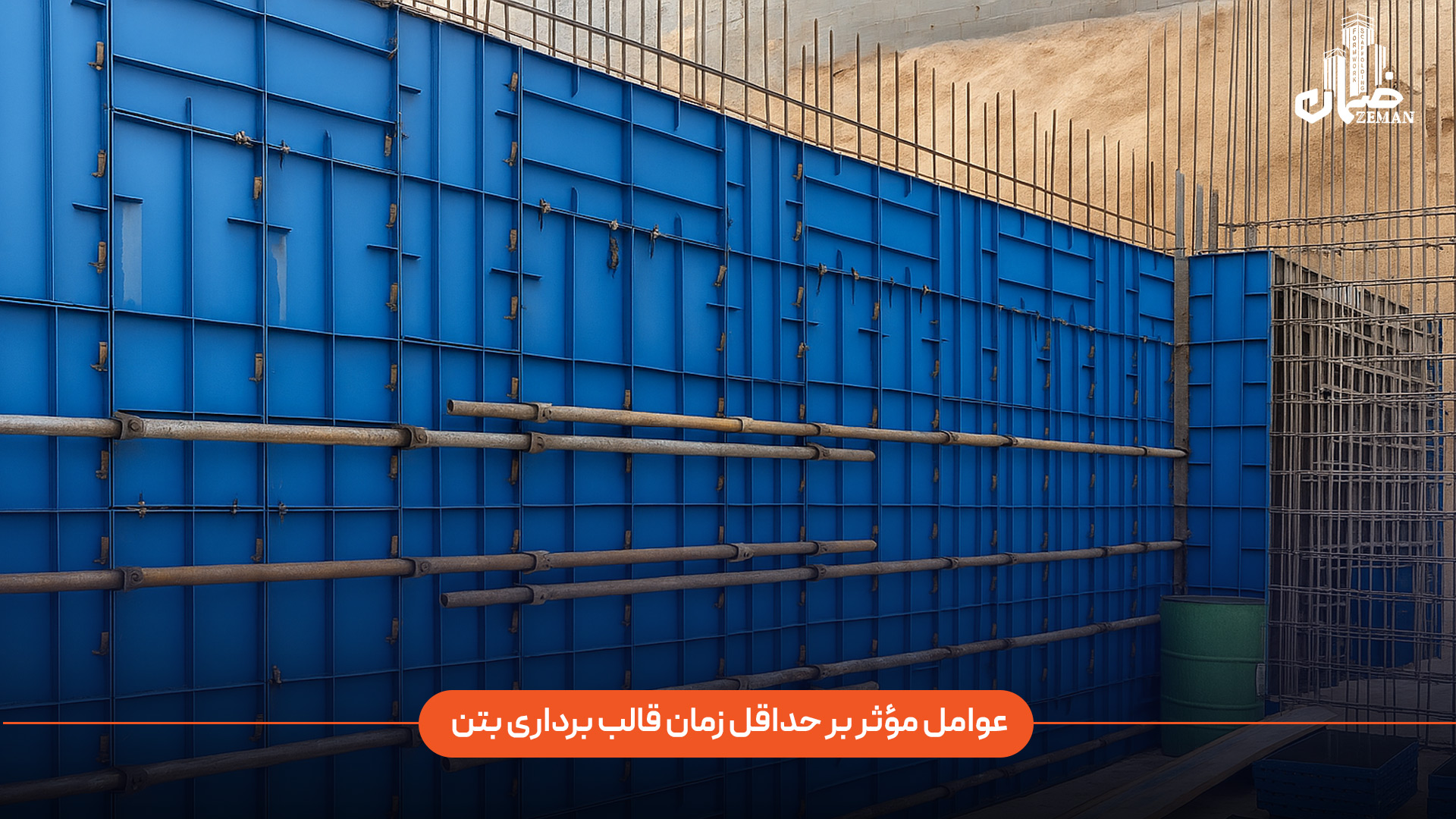
This ratio is one of the most critical variables in mix design. A lower water–cement ratio results in higher strength and faster strength gain, as cement particles are closer together and form a denser crystalline network. However, such concrete has lower workability and is more difficult to place and compact. Conversely, a higher water–cement ratio delays setting and reduces final strength due to increased porosity in the hardened concrete.
Type of Cement
The type of cement used directly affects the minimum formwork removal time. Type I ordinary Portland cement typically allows vertical formwork stripping within 12 to 24 hours, whereas rapid-hardening cements can reduce this time to as little as 8 hours. Higher cement content also shortens stripping time due to faster compressive strength development.
Concrete admixtures such as accelerators also play a key role. For example, calcium-based admixtures can significantly reduce stripping time in fast-track projects. Nevertheless, stripping time must always be confirmed through strength testing. At Zamanan Company, equipment such as high-elevation formwork systems enables concrete placement under varied conditions to optimize stripping schedules.
Environmental Conditions
Temperature: Temperature is one of the most influential factors. Higher temperatures accelerate setting and reduce minimum stripping time. For instance, at temperatures above 24°C, vertical formwork may be removed in as little as 9 hours. Conversely, in cold or freezing conditions, stripping time must be extended. According to ACI standards, at temperatures below 5°C, formwork removal may require 72 hours or more.
Humidity also affects stripping time. In humid environments, stripping time may be shorter due to reduced moisture evaporation and improved hydration. In dry conditions, protective measures such as surface covering are essential. Zamanan’s advanced systems, including concrete wall formwork, help manage stripping time under diverse environmental conditions.
Curing and Moisture: Hydration requires continuous water presence. Concrete curing refers to measures taken to maintain proper moisture and temperature in fresh concrete. If water evaporates too quickly due to high temperature, low humidity, or wind, hydration stops and concrete never reaches its design strength. Crucially, high temperature is only beneficial if adequate moisture is maintained; otherwise, concrete hardens rapidly but remains weak and brittle.
Chemical Admixtures
Chemical admixtures are used to control and optimize setting time. Accelerators increase hydration speed and are suitable for cold weather concreting or fast construction cycles. Retarders slow hydration and are essential in hot climates to prevent premature setting before placement and finishing are completed.
Dimensions of the Concrete Member
Larger concrete members (such as massive foundations) retain hydration heat more effectively due to their volume. This “self-heating” effect accelerates curing at the core compared to thinner members.
It is important to note the non-linear nature of concrete strength development. Concrete gains a large portion of its final strength during the first few days (approximately 70% within the first 7 days), after which the rate slows significantly until reaching 28-day design strength. This means that even a few hours’ difference in stripping time during early ages has a far greater impact on structural safety than the same difference weeks later.
Structural Type and Load Conditions
The type of structural member influences minimum stripping time. For columns and walls, stripping time is usually shorter (24–48 hours), whereas for large-span beams and slabs it may extend to 21 days. Load conditions are also critical; load-bearing members require longer support until concrete reaches at least 70% of its characteristic strength.
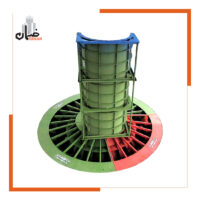
In advanced projects such as post-tensioned structures, stripping time must be calculated with greater precision. Zamanan products, including circular column formwork, assist in meeting stripping requirements across different structural types while ensuring safety.
Standards Governing Minimum Concrete Formwork Removal Time
Compliance with national and international standards is essential when determining minimum stripping time. These standards define stripping schedules based on testing and empirical evidence.
Minimum Formwork Removal Time According to Iran’s National Building Regulations (Part 9)
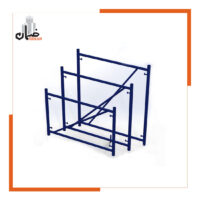
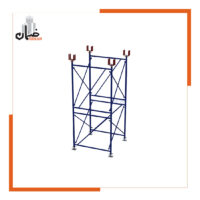
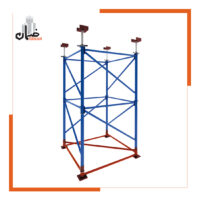
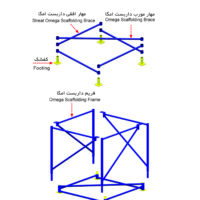
Part 9 of Iran’s National Building Regulations specifies minimum stripping times for various members. For vertical surfaces, the minimum stripping time ranges from 12 to 30 hours depending on temperature. For slab soffits, the range is 3 to 7 days, and for beams up to 21 days. These standards emphasize that stripping is permitted only after sufficient strength has been achieved. In freezing conditions, stripping time must be extended by the duration of freezing exposure. Zamanan’s triangular shoring systems provide the necessary support to comply with these requirements in Iranian projects.
ACI International Standards for Minimum Formwork Removal Time
ACI 318 defines stripping time based on compressive strength. For normal concrete, formwork may be removed after 24–48 hours, while admixtures can reduce this to 12 hours. ACI 347R provides tabulated stripping times for different temperatures.
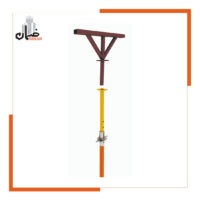
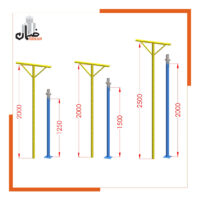
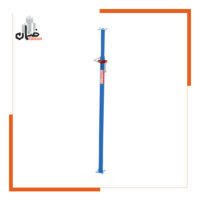
In large-scale projects, stripping time must be confirmed through in-situ testing. By using Zamanan equipment such as the Simple Ceiling Jack, ACI-compliant stripping procedures can be safely implemented.
Practical Guide to Formwork Removal Scheduling for Structural Members
This section integrates scientific principles and code requirements to provide a practical guide for determining formwork removal timing for different structural components. It serves as a quick, field-ready reference for engineers and site supervisors.
Vertical (Non-Load-Bearing) Formwork
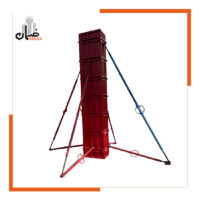
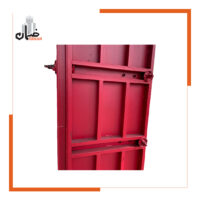
Members: This category includes side forms of walls (two-sided wall formwork, one-sided wall formwork, architectural wall formwork, curved wall formwork), columns (rectangular, square, and circular column formwork), and side faces of foundations and beams.
Scheduling: These forms do not carry significant load after initial setting. Their primary function is to maintain shape until the concrete can support its own weight without collapse. Consequently, vertical formwork is stripped much earlier than horizontal formwork—typically 12 to 48 hours after concreting, depending heavily on ambient temperature. Tables in the older 2013 edition of Part 9 remain useful guidance for these components.
Floor (Load-Bearing) Formwork
Members: Soffit formwork beneath slabs and beams.
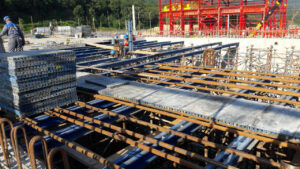
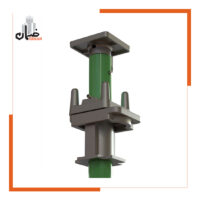
Key distinction: A critical distinction must be made between removing soffit panels and removing supporting props (shores or jacks). Panels may be removed after several days (e.g., 3–7 days), but support components such as wall and column support jacks must remain in place until the concrete can independently support its own weight and construction loads from upper floors.
Scheduling: This period depends strongly on span length, section thickness, and applied loads. Longer spans require significantly more time. In general, stripping ranges from 7 days for short spans to 21 days or more for longer spans.
Special Structures
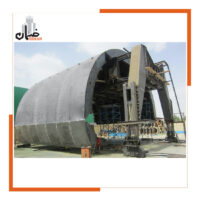
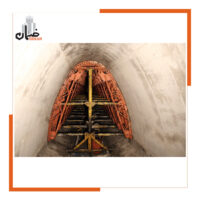
Tunnel Formwork: These systems use advanced, mobile formwork. Stripping schedules follow system-specific designs and project sequencing.
Precast Concrete Moulds: In factory-controlled environments, accelerated curing techniques (e.g., steam curing) allow sufficient early strength to be achieved within hours, enabling formwork removal in less than 24 hours.
—
Comprehensive Formwork Removal Time Table
The table below combines prescriptive data from older codes and general performance-based guidance to provide an overview of minimum stripping times. It is emphasized that this table is indicative only and final decisions must be based on strength testing and engineering judgment.
| Structural Member Type | Formwork Removal Time |
|---|---|
| Vertical forms (walls, columns, beam sides) | 9 hours |
| Slab soffit formwork (span < 4.5 m) | 3 days |
| Slab safety props (span < 4.5 m) | 7 days |
| Beam soffit formwork (span < 6 m) | 7 days |
| Beam safety props (span < 6 m) | 10 days |
| Soffit and safety props (longer spans) | 14–21 days (depending on span) |
In-Situ Strength Verification: From Estimation to Evidence
Modern performance-based codes emphasize that reliance on time alone is insufficient. Engineers must measure and document the actual strength achieved by concrete on site using standardized methods, which are classified into destructive and non-destructive tests.
Destructive Testing (Gold Standard)
The most reliable method for determining concrete compressive strength is destructive testing of standard specimens. Cylindrical or cubic samples are cast using the same concrete as the structural member and cured under identical temperature and moisture conditions. These samples are tested at different ages (e.g., 3, 7, 14, and 28 days) using a compression-testing machine to determine failure strength.
Application: Load-bearing formwork may be removed only when field-cured test results confirm that concrete has reached the required strength (e.g., 70% of 28-day strength).
Non-Destructive Testing (NDT) – Practical Tools
Non-destructive tests provide fast, efficient in-situ assessment without damaging the structure.
Schmidt Rebound Hammer: This widely used tool measures surface hardness by recording the rebound of a spring-loaded mass. Standardized in ASTM C805, its use involves surface preparation, multiple impacts, and averaging rebound numbers. Limitations include:
- It assesses only the surface layer (approximately 30 mm depth).
- Results are affected by surface moisture, carbonation, aggregate type, and finish.
- It provides an estimate and cannot replace compressive failure testing.
Its best application is evaluating uniformity across the structure and estimating the appropriate timing for more definitive tests.
Ultrasonic Pulse Velocity (UPV): Measures wave transmission time through concrete to assess uniformity, detect voids and cracks, and estimate elastic modulus and strength.
An effective engineering approach combines these methods: use rebound hammer testing for rapid screening, followed by confirmatory destructive testing once target strength is approached.
Best Practices and Common Mistakes in Formwork Removal
Formwork removal demands as much care as installation. Improper stripping can severely damage well-cured concrete.
Correct Dismantling Procedures
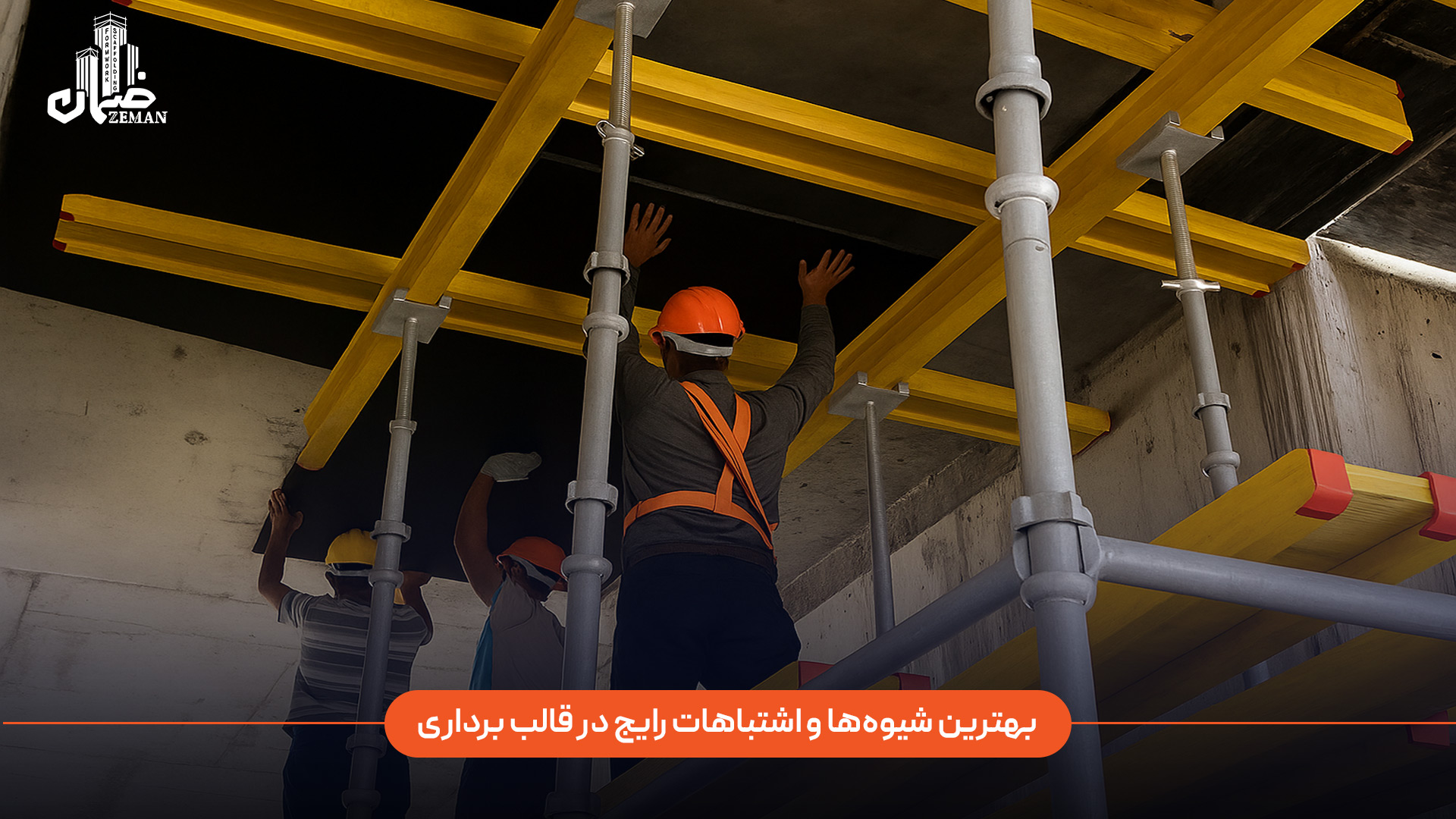
- Gradual and impact-free: Stripping should be carried out slowly, in stages, and without sudden shocks. Wooden wedges are preferable to heavy hammer blows.
- Correct sequence: Prop removal order is critical. For slabs, removal should proceed from mid-span toward supports. For cantilevers, remove supports from the free end toward the fixed support.
Common Mistakes and How to Avoid Them
- Ignoring cold weather: Freezing periods must be added to curing time; hydration stops below freezing and such time must not be counted.
- Premature removal of lower-floor props: In multi-story buildings, supports must remain until upper-floor concrete gains sufficient strength.
- Rapid loading: Avoid stacking heavy materials immediately after stripping; early-age concrete remains vulnerable to concentrated loads.
- Poor formwork maintenance: Failure to clean and oil forms reduces equipment lifespan and surface quality.
- Weak formwork design and execution: Inadequate bracing, poor sealing, or lack of plumb alignment can cause bulging, leakage, and defective members.
Conclusion: An Engineering Decision for a Safe and Efficient Structure
Determining the minimum formwork removal time is not a simple calendar-based task but a complex engineering judgment rooted in concrete behavior and risk management. This analysis shows that the decision rests on three pillars: material science, regulatory compliance, and practical experience.
The key conclusion is that strength—not time—is the ultimate criterion. While time serves as an approximate indicator, variables such as temperature, mix design, cement type, and curing conditions can drastically alter outcomes. The shift toward performance-based codes reinforces the responsibility of engineers to make evidence-based decisions.
A successful project achieves both safety and economic efficiency. This requires technical expertise, use of modern monitoring tools, and strict adherence to site procedures. Optimized formwork cycles not only enhance structural safety but also reduce overall project duration and costs.
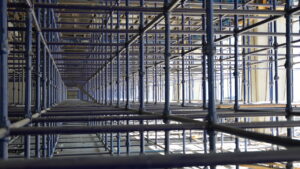
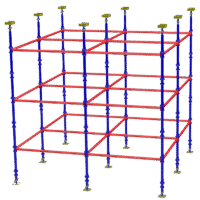
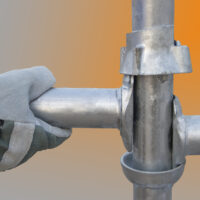
As demonstrated, modular systems—especially aluminum formwork—can reduce execution time by up to 50% and offer long service life, making them ideal for repetitive and high-rise projects. However, their high initial cost can be challenging. Advanced support systems such as Zamanan’s Cuplock Scaffolding offer a smart, cost-effective alternative by combining rapid installation, high load capacity, and exceptional durability.
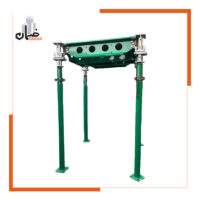
A key advantage is enabling early striking. Using components such as dropheads, slab panels can be removed within 3–4 days, while supporting systems remain until concrete reaches full strength (typically 10–14 days).
This enables a 7-day working cycle, allowing rapid formwork reuse while structural safety is maintained—reducing overall project time and indirect labor and equipment costs.
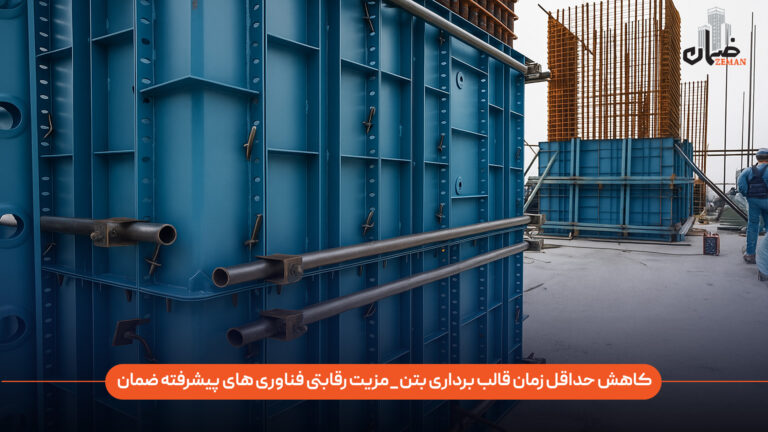
Zamanan’s competitive advantage lies in providing a fully integrated solution: an advanced support system that not only ensures stability but actively optimizes construction time and reduces concrete formwork removal duration. For contractors seeking higher productivity, lower costs, and timely delivery, adopting Zamanan’s advanced technologies is a strategic and intelligent choice.