




The accessories of traditional scaffolding (tube and coupler scaffolding) consist of a set of metal components used for assembling the scaffold. Below, I have outlined the most important components and accessories of this type of scaffolding for you:
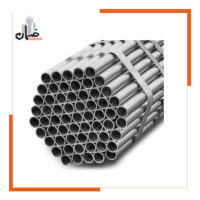
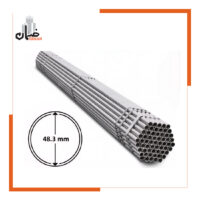
- Scaffold Pipe / Tube made of steel or galvanized steel. Common lengths: 3, 4, and 6 meters. Standard diameter: 48 millimeters.
- Couplers / Clamps:
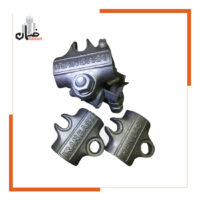
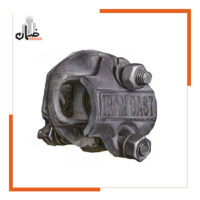
a. Double (Fixed) Coupler: Used for horizontal connection between two aligned tubes.
b. Swivel Coupler: Allows connection of tubes at adjustable angles (rotational).
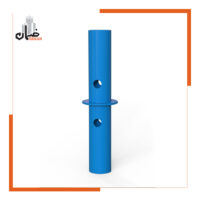
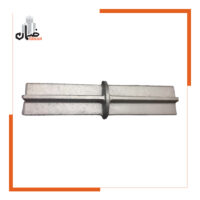
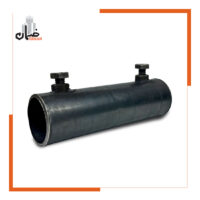
c. Sleeve Coupler: Used to connect two tubes end-to-end (splicing).
d. Right-Angle (Cross or Fixed) Coupler: Used for perpendicular connections between two tubes (90 degrees).
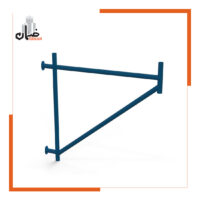
- Horizontal and diagonal braces (ties) used to maintain scaffold stability against lateral forces. These are typically installed using scaffold tubes and swivel couplers.
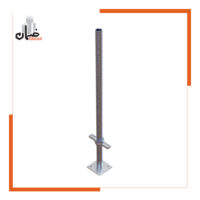
- Base Plate: A metal plate placed at the bottom of the scaffold to distribute the load evenly onto the ground. Some models are adjustable to compensate for sloped or uneven surfaces.
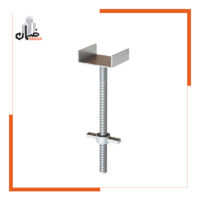
- Adjustable Base Jack: Used to adjust the scaffold height on uneven ground conditions.
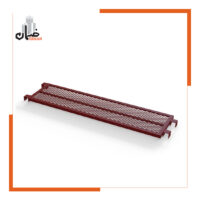
- Scaffold Board / Foot Plank: Wooden or metal planks installed on the scaffold to provide a standing surface for workers. Today, metal (galvanized) boards are more common and offer higher safety.
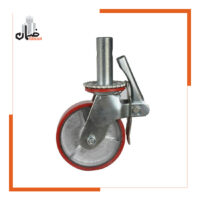
- Scaffold Wheels (for mobile scaffolding): Used when relocation is required. These must be equipped with locking brakes.
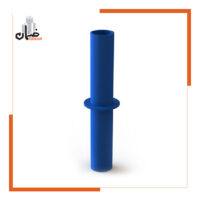
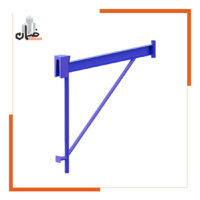
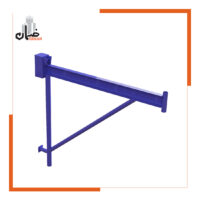
Showing all 14 results
Introduction: The Anatomy of a Scaffolding System
Scaffolding is far more than a temporary structure; it is a critical engineering system designed to ensure safety and efficiency in the construction industry. Its primary purpose is to provide safe access to elevated and hard-to-reach areas in construction, industrial, and maintenance projects. A deep understanding of the components and design philosophy of these systems is essential for every engineer, contractor, and worker who operates at height. In general, there are two main approaches to scaffolding design, each with its own advantages and applications:
1. Traditional Scaffolding (Tube and Coupler System)
This system, often regarded as an art within the industry, is built upon unparalleled flexibility. In this non-modular approach, there are no predefined connection points; the exact location of each joint, its angle, and the type of coupler used are all determined on-site by the skilled scaffolder. This characteristic enables scaffolding to be erected around the most complex geometries. However, at the same time, the overall strength and safety of the structure are directly dependent on the skill, precision, and experience of the installation team.
2. Modular Scaffolding Systems (Modern Systems)
This category includes systems such as hammer (ringlock/rosette) scaffolding and cuplock (cup system) scaffolding, which are designed to increase speed, simplicity, and reduce human error. These systems feature pre-engineered and fixed connection points that significantly accelerate the assembly process and provide a higher level of standardized safety.
The purpose of this report is to present a comprehensive and technical analysis of every scaffolding component, from the most fundamental element—the tube—to the most advanced safety components. This guide helps professionals make informed and conscious decisions when selecting, using, and maintaining these vital systems.
The Structural Skeleton – An In-Depth Analysis of Scaffold Tubes
The primary skeleton of any scaffolding structure is formed by steel tubes. The technical specifications of these tubes—particularly diameter, wall thickness, and material—play a direct role in determining the load-bearing capacity and overall safety of the system.
Technical Specifications and Key Standards
The main framework of any scaffolding structure consists of steel tubes. The technical characteristics of these tubes, including diameter, wall thickness, and steel grade, directly affect the load-bearing capacity and safety of the entire system.
Technical Specifications and Key Standards
Global Standard Diameter: The common and globally accepted standard diameter for scaffold tubes is 48.3 mm (equivalent to 1.5 inches). In the Iranian market, these tubes are commonly referred to as “No. 5 pipes.” Adhering to this standard is critically important, as it ensures full compatibility between tubes and couplers from different manufacturers, thereby maintaining system integrity.
Material and Steel Grade: Scaffold tubes are primarily manufactured from structural steel grades such as Q235, S235J0H, or ST37, which provide adequate tensile strength and durability. These tubes are typically supplied in two forms:
- Black Steel Tubes (Ungalvanized): More economical and commonly used for short-term projects.
- Hot-Dip Galvanized Tubes: Corrosion-resistant, suitable for long-term projects or harsh environmental conditions.
Manufacturing Process:
- Welded Tubes: Manufactured by welding steel plates; more common and cost-effective.
- Seamless Tubes: Produced from solid steel billets without a weld seam; stronger and suitable for critical applications where safety is the top priority.
Standard Lengths: These tubes are generally produced in standard lengths of 3 meters and 6 meters. This standardization simplifies transportation, storage, and project planning.
Wall Thickness: The Decisive Factor in Load-Bearing Capacity
One of the most important—and at the same time most confusing—specifications of scaffold tubes is wall thickness. Various sources cite thicknesses ranging from 2 mm to over 5 mm. This variation is not arbitrary; each thickness is designed for a different load class. Understanding this distinction is critical to preventing structural failure. In practice, the term “standard” in the scaffolding industry primarily refers to the external diameter of 48.3 mm, which ensures compatibility with couplers. Wall thickness, however, is a variable parameter and an engineering decision directly related to load-bearing capacity and intended use. Using a light-duty tube where engineering calculations require a heavy-duty tube can result in buckling and catastrophic structural collapse. Therefore, the key question before purchasing is not “Which tube is standard?” but rather “What load-bearing capacity is required?”
Light-Duty Class
Typically with a wall thickness of 2 to 2.5 mm and an approximate weight of 14.5 to 17.5 kg for a 6-meter tube. These tubes are suitable for light-duty tasks such as painting, façade work, or projects with minimal applied loads.
Heavy-Duty Class
Typically with a wall thickness of 3 to 4 mm or more and an approximate weight of 21 kg and above for a 6-meter tube. The use of these tubes is mandatory for supporting heavy material loads, accommodating simultaneous movement of multiple workers, or serving as primary standards in tall scaffolding structures.
International Standards
Recognized standards such as BS 1139 / EN 39 specify minimum wall thicknesses (e.g., 3.2, 3.6, or 4.0 mm) for load-bearing and engineered applications to ensure safe performance.
| Classification | Wall Thickness (mm) | Approx. Weight (6 m) (kg) | Typical Application | Reference Standard |
|---|---|---|---|---|
| Light-Duty | 2.0 - 2.5 | 14.5 − 17.5 | Façade work, painting, light tasks | General Use |
| Heavy-Duty | 3.0 - 4.0+ | 21+ | General construction, heavy loads, formwork | BS 1139 / EN 39 |
The Art of Connection – A Comprehensive Guide to Scaffold Couplers
If tubes form the skeleton of scaffolding, couplers are its vital joints. Selecting the appropriate coupler is not merely a technical decision; it reflects a contractor’s commitment to safety. The quality, material, and type of coupler determine the overall strength of the structure.
Forged vs. Cast: A Critical Distinction in Safety and Durability
The most important factor in choosing a coupler is its manufacturing method, which directly affects its failure behavior under load:
Cast Couplers
These couplers are produced by pouring molten cast iron into molds. While they are more affordable, they are inherently brittle. Under impact or sudden loads (such as a fall from height), they are prone to sudden and catastrophic failure, posing a serious safety risk. For this reason, many safety regulations prohibit their use in primary load-bearing connections.
Forged Couplers
These couplers are formed through a forging process that applies heavy pressure and impacts to heated steel. This process aligns the metal’s molecular structure, producing a much stronger and more ductile product. Under excessive load, a forged coupler will deform rather than break, providing a visual warning of an issue and preventing sudden collapse. These couplers are often made from ductile iron, which exhibits properties similar to forged steel.
Standards such as EN 74 and BS 1139 ensure the material quality and performance of couplers and serve as benchmarks for selecting safe products.
Complete Coupler Catalog
Each type of coupler is designed to solve a specific engineering challenge. Understanding the exact application of each is essential for erecting a safe and efficient scaffold.
Right-Angle (Double) Coupler
This is the most commonly used and fundamental scaffolding connection. It is used to connect two tubes at a precise 90-degree angle, forming the rigid grid structure of the scaffold. It consists of two clamp plates and a central body, fastened together with four bolts, nuts, and washers. Its typical weight ranges from 1,300 to 1,650 grams.
Swivel Coupler
This coupler provides the solution for connecting tubes at non-standard angles. It allows two tubes to be connected at any angle up to 360 degrees and is essential for installing diagonal braces and scaffolding around curved or irregular structures. It is heavier than the fixed coupler, weighing approximately 1,750 grams.
Sleeve Coupler
This coupler is used exclusively to connect two tubes end-to-end, extending their length while maintaining axial alignment. The use of sleeve couplers for vertical standards in scaffolds exceeding 6 meters in height is essential for maintaining structural integrity. Its typical weight ranges from 650 to 800 grams.
Putlog (Single/Double Bolt) Coupler
This coupler is designed to connect horizontal transoms to main tubes at a 90-degree angle. It is faster to install than a right-angle coupler and is suitable for medium-load applications. Its weight typically ranges from 1,000 to 1,400 grams. Single-bolt versions are used only for very light, non-load-bearing applications such as exhibition stands.
Beam (Girder) Coupler
A specialized heavy-duty coupler used to directly connect scaffold tubes to structural steel beams (I-beams). This connection is critical for tying scaffolding to the main structure, particularly in industrial environments such as refineries.
Board Retaining Clip (Toe Board Clip)
This small but critical component is used to secure scaffold boards to the underlying transoms. It prevents boards from slipping, lifting due to wind, or shifting, thereby ensuring a stable and safe working platform. Its use is a safety requirement, and its weight is approximately 750 grams.
| Coupler Type | Main Application | Typical Material | Approx. Weight (g) | Key Feature |
|---|---|---|---|---|
| Right-Angle (Double) | 90° Connection | Forged Steel / Ductile Iron | 1300-1650 | Maximum strength and rigidity |
| Swivel | Any-angle connection | Forged Steel / Ductile Iron | ~1750 | Maximum flexibility |
| Sleeve | End-to-end tube connection | Steel | ~800 | Extends tube length |
| Putlog (Double Bolt) | Quick 90° connection | Forged Steel / Ductile Iron | ~1400 | Fast installation |
| Beam Coupler | Connection to steel beams | Forged Steel | Heavy | Tie-in to main structure |
| Board Clip | Securing platform boards | Steel | ~750 | Platform safety |
Foundation – Ensuring Stability from Ground Level
The fate of any tall structure is determined by its foundation. A scaffold erected on an unstable or uneven base represents a “hidden failure” waiting to happen. Loads applied to such a structure are unevenly distributed, potentially leading to overstressed couplers, buckling of standards, and eventual collapse.
Base Plates
Function: The primary role of a base plate is to distribute the concentrated load from the bottom of a vertical tube over a wider surface area, preventing it from sinking into the ground. This component represents the first and most important step in ensuring stability.
Material and Types: A base plate is typically a square steel plate, approximately 140 mm on each side, with a short tube welded to it.
Sole Boards
The use of solid timber sole boards beneath steel base plates—especially on soft or uneven ground such as soil—is a mandatory safety requirement. This practice significantly increases the load distribution area.
Adjustable Screw Jacks
Function: This component addresses one of the greatest challenges on construction sites: uneven ground. Adjustable jacks allow precise height adjustment of each vertical standard individually, ensuring the entire scaffold is perfectly level and plumb before further assembly. They are an essential engineering tool for managing real-world ground risks, not merely a convenience.
Components: An adjustable jack consists of a threaded steel rod (bolt), a large wing nut for adjustment, and either a base plate at the bottom (Base Jack) or a U-shaped head at the top (U-Head Jack) for supporting beams.
Specifications: Jacks are available in various lengths (40, 50, 60, 70, and 80 cm) to accommodate different degrees of ground unevenness, with weights typically ranging from approximately 5 to 9 kg as length increases.
Working Platform – Platforms and Protective Measures
The working platform is the primary area where workers perform their tasks and must provide a safe, stable, and fall-free environment. This safety is achieved only through the correct selection of boards and the installation of complete fall protection systems.
Comparative Analysis of Scaffold Boards
Timber Boards: Traditionally made from softwood such as pine.
Advantages: Lower initial cost, lighter weight, and easy availability.
Disadvantages: Vulnerable to moisture, rot, cracking, and fire. Shorter service life and lower load capacity compared to metal boards. Increased risk of slipping when wet or oily.
Metal Boards: Manufactured from galvanized steel or aluminum.
Advantages: Extremely high durability and strength, long service life, resistance to weather and fire, anti-slip surfaces (often perforated), and high load capacity.
Disadvantages: Higher initial cost and greater weight (especially steel).
Standard Dimensions: Regulations typically mandate a minimum width of 25 cm and a thickness of 5 cm for timber boards. The overall platform width also has defined minimums depending on use (e.g., 60 cm for access, 80 cm for material placement).
Comparison of Scaffold Board Materials
| Material | Durability / Lifespan | Weight | Initial Cost | Weather Resistance | Best Application |
|---|---|---|---|---|---|
| Timber | Low | Medium | Low | Poor | Short-term projects, limited budgets |
| Galvanized Steel | High | High | Medium | Excellent | Long-term projects, heavy loads |
| Aluminum | High | Low | High | Excellent | Mobile scaffolds, frequent relocation |
Essential Fall Protection Systems
A working platform without protective components is incomplete and unsafe. These elements form an integrated fall protection system, with each part addressing a specific risk. Guardrails prevent workers from falling, while toe boards prevent tools and materials from falling onto people below.
- Guardrails: A system of horizontal tubes installed along open edges of platforms. A double-rail system is a global safety requirement.
- Top Rail: Installed at a height of 90 to 110 cm above the platform.
- Mid Rail: Installed midway between the top rail and the platform, typically at a height of around 55 cm.
- Toe Boards: A vertical barrier with a standard height of 15 cm installed at the platform edge. Its vital function is to prevent tools, materials, and debris from falling.
Structural Rigidity – The Science of Bracing and Tying-In
A simple grid of vertical and horizontal tubes is inherently unstable and susceptible to deformation under lateral forces such as wind. Bracing and tying the scaffold to the structure transform this grid into a rigid and safe three-dimensional system.
The Role of Bracing
- Ledgers: Main horizontal tubes installed parallel to the building façade, connecting vertical standards along the length of the scaffold.
- Transoms: Shorter horizontal tubes installed perpendicular to the building façade, connecting inner and outer standards. They also serve as the primary support for platform boards.
- Diagonal Braces: The most critical element for stability. Installed diagonally within scaffold bays using swivel couplers, they prevent rectangular bays from deforming under lateral loads and provide exceptional rigidity. Their use is mandatory in tall scaffolding structures.
Ties and Connections to the Structure
Even a fully braced scaffold can overturn if it is not tied to the main structure. Tying-in ensures final stability.
- Ties: Assemblies that connect the scaffold to the building, typically consisting of a tube extending from the scaffold to an anchorage point on the structure.
- Anchors: Secure fixing points on the building itself. These may be dedicated anchor bolts, or the tie may pass through an opening such as a window and be secured from inside. The stability of the entire scaffold depends on the strength and proper spacing of these connections.
The Evolution of Scaffolding – An Introduction to Modular Systems
Modular systems respond to the industry’s need for increased speed, safety, and reduced reliance on individual skills. In these systems, key engineering decisions (connection locations and angles) are made at the factory, and on-site work is limited to assembling standardized components. This creates the fundamental difference between the unlimited flexibility of traditional scaffolding and the high speed and safety of modular systems.
Hammer (Ringlock/Rosette) System
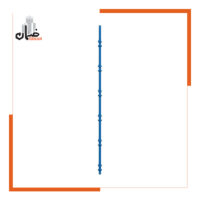
Components: Vertical standards at regular intervals (typically 50 cm) are fitted with steel rosettes (rings or stars). Horizontal members have wedge-shaped ends that fit into the rosettes and are secured with a hammer strike.
Advantages: Extremely fast assembly and dismantling, no need for separate tools or fasteners (bolts and nuts), reduced requirement for highly skilled labor, and high safety due to positive locking of connections.
Cuplock System
Components: Vertical standards feature fixed lower cups and movable upper cups. The ends of horizontal members are placed in the lower cup, after which the upper cup is lowered and rotated to simultaneously and securely lock up to four connections.
Advantages: High speed and safety similar to the hammer system. This system is renowned for its rigidity and very high load-bearing capacity, making it ideal for heavy-duty applications such as formwork.
Triangle (Frame) System
Components: Consists of prefabricated triangular frames that are easily connected via male and female joints.
Advantages: Exceptional load-bearing capacity, very simple and fast installation, and ideal for shoring and supporting heavy concrete slabs and bridge decks.
Traditional vs. Modular Scaffolding at a Glance
| Criterion | Traditional Scaffolding (Tube & Coupler) | Modular Scaffolding (Hammer/Cuplock) |
|---|---|---|
| Installation Speed | Slow | Very Fast |
| Skill Requirement | High (Skilled Scaffolder) | Low (General Labor) |
| Geometric Flexibility | Unlimited | Limited to fixed angles |
| Safety | Installer-dependent | High (Engineered connections) |
| Component Management | Many small, separate parts | Fewer, integrated components |
| Ideal Application | Complex, irregular structures | Large, uniform structures |
Safety Governance – Standards, Inspection, and Maintenance
Component quality alone is not sufficient. Compliance with standards, regular inspections, and proper maintenance ensure safe scaffold performance throughout the project lifecycle.
Overview of Key Scaffolding Standards
- BS / EN Standards (UK/Europe): Standards such as BS 1139 and EN 39 (tubes), EN 74 (couplers), and EN 12811 (performance requirements) are recognized globally as gold standards for quality and safety.
- OSHA Standard (USA): An operational regulation focusing on occupational safety and health requirements for scaffolding work environments.
- Iranian National Standards: Standards such as ISIRI 15443 and 10305 ensure compliance with domestic technical and safety requirements.
Best Practices for Inspection and Maintenance
- Pre-use inspection: All components must be inspected for damage (severe corrosion, cracks, deformation) before being dispatched to site.
- On-site inspection: A qualified and competent person must inspect the scaffold before first use, after any modifications, and periodically (e.g., weekly).
- Scafftag system: The use of visual tagging systems (green for “safe to use,” red for “unsafe”) is an effective method for communicating scaffold status on busy sites.
Proper Storage and Handling of Components
- Cleaning: All components must be cleaned of concrete, mortar, and debris after use. Hardened materials can conceal defects and interfere with future connections.
- Storage Environment: Tubes and couplers should be stored in a covered, dry environment, away from moisture and elevated above ground level to prevent corrosion.
- Organization: Organized storage by type and size prevents damage and improves inventory management and preparation for future projects.
Conclusion: Building with Confidence – The Synergy of Quality Components and Expertise
This comprehensive guide demonstrates that scaffolding is a complex, engineered system whose safety and success depend on far more than the sum of its parts. Each component—from tubes and couplers to base plates and boards—plays a defined role in the integrity of the overall structure, and incorrect selection or improper use of any element can have catastrophic consequences.
Final safety and project success are built upon the synergy of three key factors:
- Selection of high-quality, standards-compliant components: As detailed in this guide, choosing appropriate materials (e.g., forged couplers instead of cast) and correct technical specifications (e.g., tube thickness matched to load requirements) is the first and most fundamental step.
- Proper engineering design of the scaffold: The scaffold structure must be accurately designed and calculated based on applied loads, environmental conditions, and project geometry.
- Employment of trained and experienced personnel: Even the best components can become hazardous if installed, inspected, or dismantled by unqualified individuals. The skill and experience of the execution team form the final link in the safety chain.
With a deep understanding of these three principles, scaffolding can be utilized not as a risk, but as a powerful tool for safe, fast, and efficient construction.