




Modular formwork refers to systems used for concrete forming in construction projects. These systems consist of multiple separate components that can be easily assembled and dismantled. Due to their modular structure, high flexibility, and reusability across different projects, modular formwork systems are widely recognized and highly popular within the construction industry.
This system is highly cost-effective owing to its versatile application in the execution of all types of concrete structures, including walls, columns, beams, slabs, and foundations. The modular formwork system comprises modular panels, bracing members (pipes, profiles, and soldiers), connection components (pin and wedge, clamps), tie rod assemblies (tie rods, washers, wing nuts), and special accessories for work at height, such as brackets and plumbing jacks.
Showing all 8 results
What Is a Modular Formwork System?
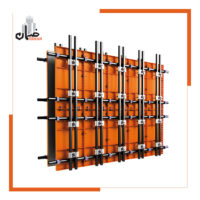
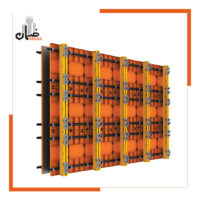
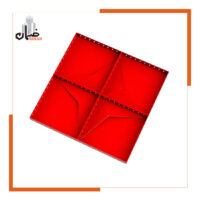
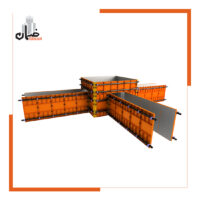
Modular formwork is a prefabricated and flexible formwork system composed of steel panels with standard dimensions and dedicated connection components. These panels can be easily assembled and dismantled, allowing dimensional adjustment and configuration changes. The main components of a modular formwork system include:
Steel Panels: These panels are typically manufactured from steel with a painted surface coating and are available in various dimensions and thicknesses.
Connections: Different types of connectors such as pin and wedge, clamps, and bolts are used to connect panels to each other and to the structure.
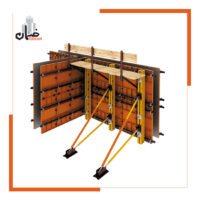
Accessories: Including components such as walers, braces, jacks, and similar items that are used to reinforce and stabilize the formwork during concreting.
Modular panels can be easily connected to or separated from one another. In repetitive and similar projects, these panels can be preassembled as integrated units and installed in position using a crane; however, depending on project conditions, installation may also be carried out manually. After formwork removal, the concrete surface will be smooth and high-quality, with only the panel joints visible.
These formwork systems are reusable, and their service life depends on proper handling and maintenance. With appropriate care and without damage or falling from height, the panels can be reused at least 60 times without deformation or distortion.
At Beton Sazeh Zeman Company, modular panels, soldiers, and all accessories—including pin and wedge, clamps, washers, pipes, and perforated angles—are manufactured from first-grade ST37 steel sheets supplied by Mobarakeh Steel Company of Isfahan.
Modular formwork systems, also known as universal or multi-purpose formwork, are designed and manufactured based on 5 cm modular widths (multiples of five). These systems are produced in a wide range of sizes and are widely used for formwork of various concrete structural elements. Modular panels are available in widths of 10, 15, 20, 25, 30, 35, 40, and 50 cm, and lengths of 100, 150, and 200 cm. Custom dimensions can also be manufactured according to client requirements.
Modular Formwork Dimensions
Modular formwork systems are produced in various sizes. Common dimensions include:
Width: 30, 60, 90, 120 cm
Height: 30, 60, 90, 120 cm
Length: 150, 240, 300 cm
The selection of appropriate dimensions and modular formwork types depends on the structural system and project requirements.
Technical Specifications of Modular Formwork
Modular formwork systems are connected using pin-and-wedge fasteners and are available in two types: bent-edge (pressed) and welded-edge panels. Both types typically have lengths between 1 and 2 meters and widths ranging from 10 to 50 cm. The facing sheet thickness is approximately 3 mm, while the side stiffeners are about 5 to 6 mm thick (dimensions vary in multiples of 5). The standard weight of a modular panel is approximately 40 kg. Due to its high reusability, this system is highly economical.
Zeman Company manufactures formwork panels in various thicknesses, lengths, and widths, ensuring sufficient structural strength during execution and guaranteeing the quality and load-bearing performance of concrete structures.
Advantages of Modular Formwork
Modular formwork systems offer numerous advantages that have led to their widespread use in construction projects. These benefits include rapid installation and relocation, reduced production and maintenance costs, compatibility with various project types, and enhanced jobsite safety.
Applications of Modular Formwork
Modular formwork is one of the most essential tools in the construction industry, used for shaping concrete and constructing concrete structures with high accuracy and speed. Due to its mobility and reusability, it is widely applied in residential, commercial, industrial, and infrastructure projects.
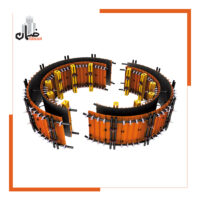
Modular formwork is particularly effective in large-scale projects that require high execution speed and superior surface quality. Its flexibility also allows use in a wide range of structural elements, including walls, columns, beams, slabs, and even curved or special structures.
Thanks to its adjustability and flexibility, steel modular formwork is suitable for a broad spectrum of construction projects:
Residential and Commercial Buildings
- Walls: Suitable for forming internal and external walls with various thicknesses and heights.
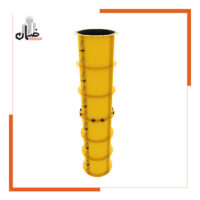
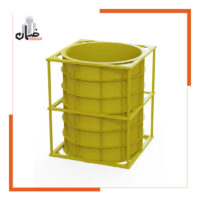
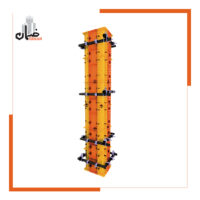
- Columns: Modular column formwork systems are available for square, rectangular, and circular columns of different dimensions and heights.
- Slabs: Applicable for beam-and-block slabs and solid concrete slabs.
- Foundations: Modular foundation formwork is used for strip and raft foundations.
Industrial Structures
- Silos: Used for constructing storage silos for grain, cement, and other bulk materials.
- Tanks: Suitable for water, oil, gas, and chemical storage tanks.
- Bridges: Applicable for bridge piers, columns, and deck construction.
Infrastructure Projects
- Dams: Used in the construction of sections of earthfill, concrete, and rockfill dams.
- Channels: Irrigation, water transfer, and wastewater channels.
- Treatment Plants: Construction of tanks, basins, and concrete structures in water and wastewater treatment facilities.
In general, due to its high adaptability and flexibility, modular formwork can be used in any construction project requiring concrete structures of varying shapes and dimensions.
Types of Steel Modular Formwork
Steel modular formwork is among the most efficient formwork systems in modern construction, widely used due to its flexibility, speed of execution, and durability. It consists of prefabricated steel components that can be easily assembled to form molds for columns, walls, beams, slabs, and other structural elements.
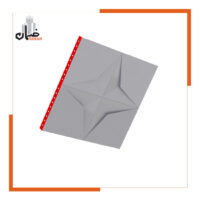
Pressed (Bent-Edge) Panels
These panels feature bent and pressed edges and are suitable for a wide range of construction applications.
Welded (Strip-Type) Panels
These panels are connected by welding and are used in projects requiring higher dimensional accuracy and rigidity.
Modular Concrete Formwork Connections
Proper and standard connectors are essential for the correct performance of modular formwork systems. These components securely hold formwork elements together and prevent displacement or separation during concreting, thereby improving concrete surface quality and execution speed.
Pin and Wedge
Pin-and-wedge connectors are used to join formwork panels together and are designed for quick installation and removal.
Corner Elements
Corner components are used to connect panels at various angles, stabilizing the formwork and preventing movement.
Formwork Clamps
Formwork clamps are used to firmly secure panels in place and are manufactured from high-strength steel.
Frog Clamp
Frog clamps are used to apply pressure and tightly connect formwork components, ensuring accurate and secure joints.