



H-Frame Scaffolding Connector
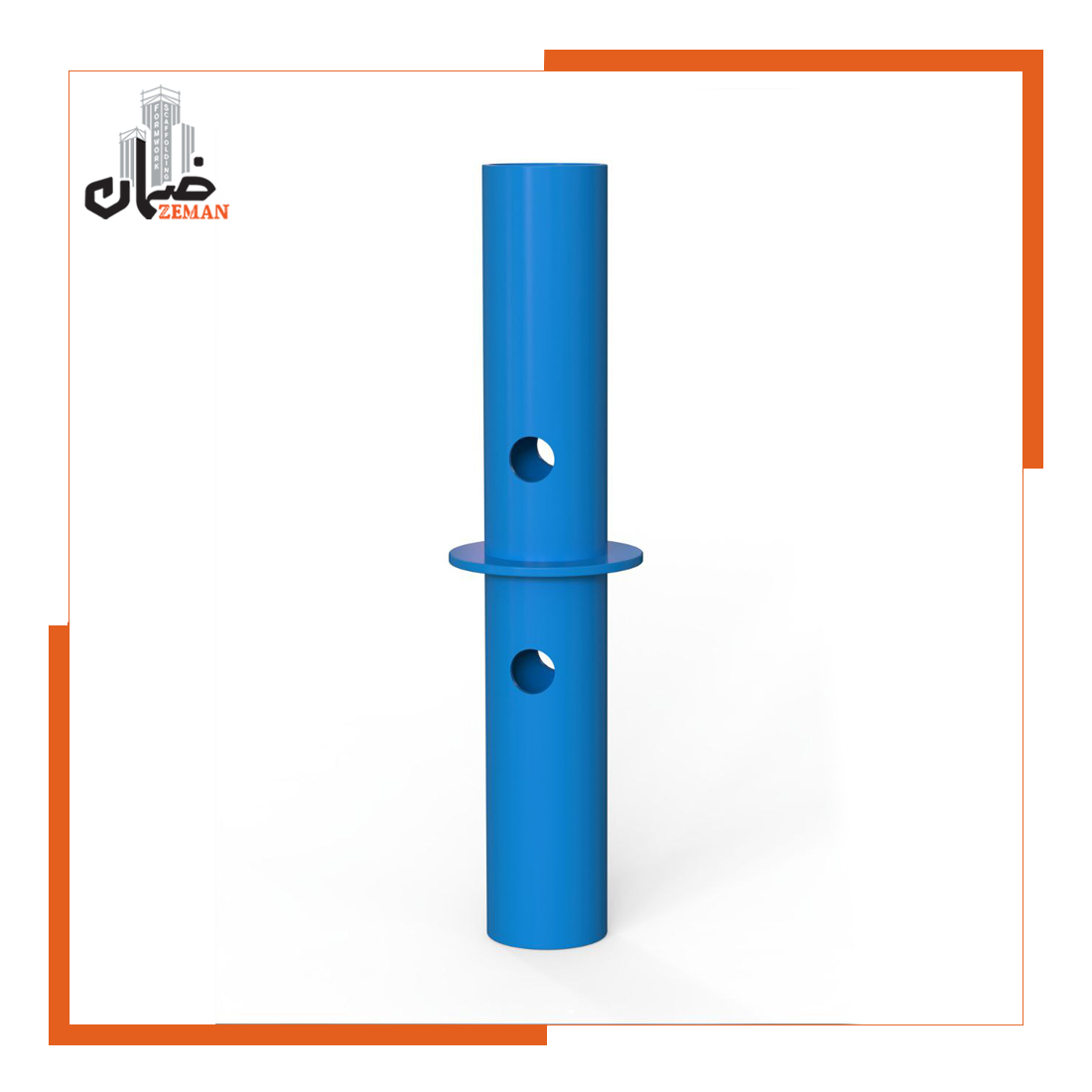
This metal component is manufactured from a 48.3 mm diameter steel tube and is used as a connecting element to join H-frames to one another, enabling an increase in the overall height of the scaffolding system.
H-Frame Scaffolding Connector
Introduction: The Integration of Strength and Precision at the Core of Temporary Structures
In the fast-paced world of modern construction, where every second and every degree of structural stability can directly impact project progress and workforce safety, selecting the right equipment is of critical importance. Scaffolding, as a temporary yet fundamental structure, serves as the backbone of safe access at height, and its efficiency, speed, and safety are directly dependent on the quality and precision of its components. Among modern scaffolding systems, the modular H-frame system is recognized as a symbol of contemporary engineering due to its rapid erection, substantial load-bearing capacity, and reusability.
At the heart of this system lies a small yet exceptionally vital component known as the H-frame scaffolding connector. This component is responsible for creating the structural link between the H-shaped frames and the horizontal and diagonal braces, playing a central role in forming a stable and integrated structure. However, within the construction equipment market, there is a common ambiguity in naming and application. Many contractors and professionals mistakenly confuse the term “H-frame connector” with the “H coupler” or “I-beam clamp,” which is designed to connect scaffolding tubes to steel beams.
Clarifying this distinction not only facilitates accurate product selection but also reflects the technical expertise and precision of a manufacturer that understands the practical concerns of its users. This report aims to clearly define these differences, examine technical specifications and competitive advantages in detail, and provide a comprehensive selection guide, serving as a reliable reference for industry professionals. For a broader overview of the product range, further information on Scaffolding Systems and Concrete Formwork Systems is available.
Technical Identification: H-Frame Scaffolding Connector Versus Other Scaffolding Connectors
To fully understand the role and significance of the H-frame scaffolding connector, it is essential to distinguish it from other types of scaffolding connectors, each of which serves a specific function. These distinctions may not be immediately apparent, yet they are critical to proper product selection and safe project execution.
H-Frame Scaffolding Connector
This component is a key element of the modular H-frame scaffolding system. The structure consists of vertical H-shaped frames connected by horizontal and diagonal braces. Specifically designed to connect these frames and braces, this connector differs fundamentally from tubular connectors used to extend scaffolding tubes with a standard diameter of 48.3 mm.
Its connection mechanism typically utilizes pins or wedges, which, unlike traditional couplers, eliminates the need for multiple bolts and nuts and significantly increases erection speed. The primary application of this connector is in modular scaffolding systems for high-rise façades, slab shoring, and various industrial structures.
Tubular Connector
Also known as a “spigot,” this component is designed for a specific purpose: extending the length of scaffolding tubes. Tubular connectors join two tubes aligned end to end. This connection is typically achieved using bolts and nuts at both ends or through an internal spigot inserted into the tubes. This component is widely used in traditional tube-and-coupler scaffolding systems, where extended lengths beyond 6 meters are required.
H Coupler
The H coupler, also known as an “I-beam clamp” or “steel beam coupler,” is a completely different type of fitting, named after its H-shaped profile. Its sole and primary function is to connect scaffolding tubes to steel beams or other existing steel structures. This coupler is used in projects where ground-based supports are not feasible, such as refineries, petrochemical plants, drilling rigs, or bridges, serving as a strong, base-free anchoring solution. These couplers are typically manufactured from ductile cast iron, offering high resistance to bending, tension, and torsional forces.
Specialized Comparison Table of Scaffolding Connectors
| Component Name | Primary Application | Connection Mechanism | System Type | Key Advantage |
|---|---|---|---|---|
| H-Frame Connector | Connecting H-frames and braces | Pin and wedge | Modular | High speed and safety |
| Tubular Connector | Extending traditional tubes | Bolts and nuts | Non-modular | Secure longitudinal connection |
| H Coupler (Beam Clamp) | Connecting tubes to steel beams | Bolts and nuts | Non-modular | Base-free structural support |
Technical Specifications of the H-Frame Scaffolding Connector: A Guarantee of Outstanding Quality
In the construction equipment industry, quality takes precedence. However, quality is not merely a claim; it is the outcome of a precise and standardized manufacturing process. Zeman Company, as the only manufacturer of H-frame scaffolding using a fully robotic production method in Iran, offers its customers a unique competitive advantage. This manufacturing approach directly influences the product’s technical characteristics and functional benefits.
Key Advantages of Robotic Manufacturing
- Flawless Dimensional Accuracy:
Robots are capable of producing components with micron-level precision. This high accuracy ensures that every H-frame connector manufactured by Zeman conforms exactly to standard dimensions. During assembly, this precision translates into a tangible advantage: connections fit smoothly without the need for hammering or excessive force. This not only significantly reduces installation time but also minimizes the risk of component damage. - Superior Weld Strength and Consistency:
In robotic production, welding is carried out with exceptional uniformity and strength. Robots execute each weld with precise and consistent pressure and heat, resulting in a substantial increase in load-bearing capacity and overall structural stability. This feature ensures long-term safety and durability. - High Quality and Durability:
Robotic manufacturing eliminates human error and guarantees consistent quality across all products. These connectors are manufactured from high-grade steel and coated with corrosion- and rust-resistant surface treatments. This resistance to harsh environmental conditions extends product lifespan and makes it suitable for repeated use across multiple projects.
Practical and Economic Advantages of the H-Frame Scaffolding Connector: Value Creation in Practice
Selecting construction equipment goes beyond purchasing a product; it is a strategic decision aimed at improving efficiency and minimizing project risk. The Zeman H-frame scaffolding connector delivers substantial practical and economic value through its unique features.
Time Savings and Reduced Labor Costs
The simple and precise connection mechanism of the H-frame connector, combined with robotically controlled manufacturing, significantly reduces the time required for scaffold erection and dismantling. This time reduction directly translates into lower labor costs, one of the primary concerns for contractors in large-scale projects.
Guaranteed Safety
The high strength of the H-frame connector ensures the stability and rigidity of the entire structure. These components are engineered to distribute forces efficiently and prevent excessive vibration or unintended movement of the scaffold. Enhanced safety minimizes the risk of falls and injuries, creating a safer working environment.
Reusability and Long-Term Durability
Thanks to their high resistance to wear and corrosion, Zeman scaffolding connectors can be reused across multiple projects. This characteristic significantly reduces long-term costs and transforms the product from a consumable item into a sustainable investment.
Wide-Ranging and Specialized Applications of the H-Frame Scaffolding Connector
The H-frame scaffolding connector, owing to the modular structure and flexibility it provides, is suitable for a wide range of projects and industries.
- High-rise construction projects: Ideal for façade scaffolding, glass installation, façade works, and painting in tall buildings and towers.
- Shoring and formwork support: The H-frame system serves as a robust and cost-effective support structure for concrete formwork in slabs, bridges, and foundations. Complementary products such as concrete formwork systems, shoring props, and plywood and timber beams may also be used.
- Heavy and sensitive industries: In oil and gas, petrochemical, and bridge construction projects requiring access to complex and elevated areas, this system provides a reliable temporary access solution.
- Temporary structures: Beyond industrial uses, the H-frame connector is applied in temporary structures such as metal greenhouses, exhibition booths, and workshop support structures.
Practical Guide: Installation, Maintenance, and Key Safety Considerations
Step-by-Step Installation Procedure
- Site preparation: The ground beneath the scaffold must be leveled and cleared of obstacles. Maintaining a safe distance from overhead power lines is essential.
- Erection of frames: Vertical posts and H-shaped frames are installed according to the scaffold layout plan.
- Brace connection: Horizontal and diagonal braces are connected to the frames using H-frame connectors and secured with pins or wedges.
- Completion of the working platform: After assembling the main structure, work platforms, stairways, and guardrails are installed.
Critical Safety Measures
- Routine inspection: All components, particularly connectors and braces, must be inspected daily for wear, damage, or corrosion.
- Correct loading: Ensure all connections are secure and the scaffold is capable of supporting the intended load before use.
- Personal protective equipment: The use of safety helmets and harnesses is mandatory for all workers during installation and operation.
Conclusion: Why Zeman Is Your Reliable Choice
The analysis demonstrates that the Zeman H-frame scaffolding connector is far more than a simple component; it is an advanced engineering solution addressing the core concerns of contractors and project managers. Its exclusive competitive advantage—fully robotic manufacturing—directly results in flawless dimensional accuracy and exceptional weld strength, ultimately ensuring erection speed, safety, and long-term durability.
This approach underscores that Zeman goes beyond product sales, positioning itself as a strategic partner in project success. By offering comprehensive solutions including concrete formwork systems, scaffolding systems, and related accessories, Zeman has become a unified reference for construction needs. Choosing this product means benefiting from nearly five decades of industry experience and collaboration with an engineering team ready to provide expert consultation and technical support at every project stage.
| Project Type | Recommended Zeman Solution | Key Advantage |
|---|---|---|
| High-rise construction | H-frame scaffolding | High speed and safety |
| Slab and bridge shoring | H-frame scaffolding + shoring props | High load capacity and cost efficiency |
| Heavy industry and petrochemical projects | H-frame scaffolding + beam clamps | Strength and flexibility |
| Temporary structures | H-frame scaffolding | Fast and easy installation and dismantling |
Get expert advice
Our sales experts at Zaman are ready to provide guidance and advice before your purchase.

Reviews
There are no reviews yet.