




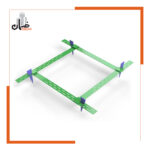
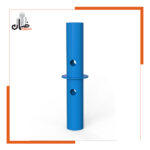
Cuplock Scaffolding Connector
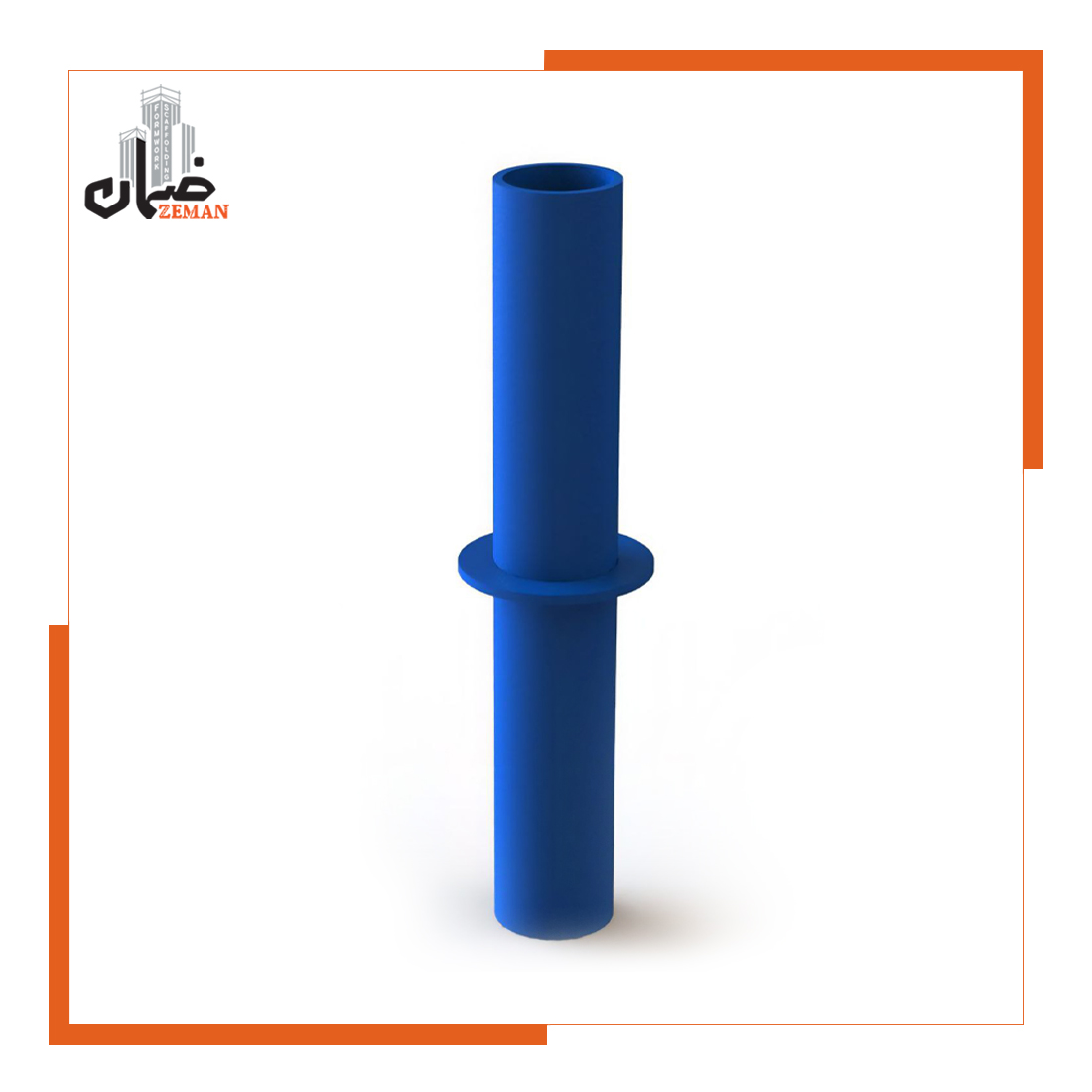
The Cuplock scaffolding connector is a key metal component with a diameter of 38 mm, serving as a connecting element between vertical standards to increase the overall height of the scaffolding system. This connector, available as a steel tube in various wall thicknesses (such as 2.3 mm), enables longitudinal connection of the tubes and significantly contributes to the stability and safety of the scaffolding structure. The use of this connector is particularly essential in projects that require increased height or width. With its firm and reliable connection, this component ensures worker safety when operating at height.
Cuplock Scaffolding Connector
Introduction: A Transformation in Modern Construction with the Cuplock Scaffolding Connector
In the dynamic landscape of the construction industry, where speed, efficiency, and safety are paramount, traditional construction methods are gradually giving way to modern prefabricated systems. Conventional scaffolding, based on steel tubes and bolted couplers, despite its past effectiveness, no longer meets the demands of contemporary projects due to complex installation procedures, time-consuming assembly, and a high potential for human error.
This necessity has led to the emergence of a new generation of scaffolding systems, known as modular scaffolding. With engineered designs and prefabricated components, these systems significantly accelerate installation while substantially enhancing on-site safety.
Among modular scaffolding systems, Cuplock scaffolding stands out as one of the most advanced and efficient solutions, rapidly gaining the attention of engineers, contractors, and construction professionals. By completely eliminating bolts and nuts from the assembly process, this system delivers a cost-effective and reliable solution for a wide range of construction applications. In the following sections, we will examine the Cuplock scaffolding connector in detail, focusing on its technical and operational advantages.
What Is a Cuplock Scaffolding Connector? Understanding a Key Component
The Cuplock scaffolding connector is a fundamental and critical component within the Cuplock scaffolding system. Its primary function is to create a secure connection between horizontal tubes (ledgers) and vertical standards. The innovative mechanism of this connector, which has revolutionized the connection process, is based on a simple yet exceptionally strong cup-locking system.
This locking mechanism consists of two main parts: a fixed bottom cup welded onto the vertical standard, and a movable top cup that is locked into place with a single hammer blow. This intelligent design ensures fast, secure, and repeatable connections.
The Cuplock scaffolding system is composed of several main elements, among which the connector plays the role of the structural backbone of all connections:
Vertical Standards
These steel tubes form the main load-bearing columns of the scaffolding structure. Fixed bottom cups are welded onto the standards at regular and predefined intervals, typically every 0.5 meters (50 cm), allowing connection nodes to be formed at various heights.
Horizontal Tubes (Ledgers)
These tubes are connected to the vertical standards using the cup-lock mechanism and form working platforms, walkways, or stair structures.
Cuplock Joint (Cup Lock)
This component is the most critical element of the Cuplock system. Its circular node design allows up to four horizontal members to be connected simultaneously to a single vertical standard, creating a highly rigid and stable joint.
This bolt-free connection system completely eliminates the need for specialized tools such as spanners or wrenches, transforming installation into a fast and straightforward operation that requires only a simple hammer.
Outstanding Advantages of Cuplock Connectors: Beyond a Simple Connection
Choosing Cuplock scaffolding connectors provides numerous advantages for construction projects—benefits that go far beyond basic connectivity and directly impact safety, speed, and overall project efficiency.
Superior Safety and Exceptional Strength
One of the primary concerns in any construction project is worker safety and the stability of temporary scaffolding structures. The Cuplock locking mechanism is designed so that a single hammer strike securely fixes the connection without slippage, preventing accidental loosening of components.
This feature significantly reduces the risk of falls or unintended movement of scaffolding elements, providing greater confidence in high-risk working environments.
In addition, Cuplock scaffolding is manufactured from high-grade steel tubes with a diameter of 48.3 mm and a wall thickness of 3 mm, enabling the system to withstand substantial vertical and horizontal loads. The node-based design transfers forces axially, greatly enhancing the rigidity and overall structural stability of the scaffold.
According to BS standards, this system is capable of supporting load capacities of up to 6,150 kilograms per standard section, making it highly suitable for heavy-duty and high-rise applications.
Fast and Easy Installation and Dismantling
In construction projects, time directly translates into cost. By completely eliminating bolts and nuts, Cuplock scaffolding dramatically simplifies erection and dismantling processes. Without the need for specialized tools, installation and disassembly can be performed up to two to three times faster than traditional scaffolding systems.
This results in a significant reduction in project duration and labor costs, as fewer highly skilled workers are required to assemble and dismantle the structure.
Reduced Long-Term Operational Costs
Investing in Cuplock scaffolding is a smart long-term decision. The components are manufactured from durable steel and are typically protected with a galvanized coating, ensuring high resistance to corrosion, rust, and harsh weather conditions.
This durability allows the equipment to be reused across multiple projects, eliminating frequent replacement costs. Furthermore, the integrated design and elimination of small loose components simplify storage and reduce space requirements. These lowered hidden costs significantly increase return on investment over time.
Analytical Comparison: Cuplock Versus Other Scaffolding Systems
To better understand the advantages of Cuplock scaffolding, it is essential to compare it with other commonly used systems in the market, each of which has its own characteristics and applications:
- Traditional scaffolding (tube and coupler): Uses steel tubes and various bolted couplers. Installation is time-consuming and requires skilled labor and specialized tools. While structurally strong, these systems are prone to losing small components and bolt wear.
- Hammer-lock scaffolding: Similar to Cuplock in terms of hammer-based installation, offering relatively high speed and ease of use.
- Triangle scaffolding: Consists of prefabricated triangular frames and is mainly used for heavy-duty shoring and slab support in projects such as bridges. While load capacity is extremely high, design flexibility is limited.
Wide-Ranging Applications of the Cuplock Scaffolding Connector
The flexibility, strength, and rapid installation of Cuplock scaffolding make it an ideal solution for a wide range of applications across various industries:
- Building construction: Provides safe working platforms and height access for residential and commercial projects, especially in façade works and installations above 2 meters.
- Slab and floor formwork: Widely used as shoring support for concrete slabs, particularly in table formwork systems where precision and speed are critical.
- Industrial projects: Commonly applied in factories, refineries, oil and gas facilities, and bridge construction as a reliable temporary access structure.
- Maintenance and rehabilitation: An efficient solution for repair, renovation, and maintenance of building façades, bridges, and large structures.
The ability to be adapted to curved and non-symmetrical designs makes Cuplock scaffolding particularly attractive for architecturally complex projects, giving it a notable competitive advantage over frame-based systems.
Fully Robotic Manufacturing by Zeman: A Defining Quality Advantage
In a highly competitive construction equipment market, Zeman distinguishes itself as the only manufacturer of fully robotic Cuplock scaffolding in Iran. This is not merely a marketing claim, but a tangible guarantee of superior quality and safety rooted in the production process.
Fully robotic welding ensures that all weld points—particularly the fixed cups on vertical standards—are executed with exceptional uniformity and precision. Unlike manual or semi-automatic welding, robotic welding eliminates human error and fatigue, resulting in consistently strong and defect-free joints.
This precision leads directly to higher load-bearing capacity, increased structural stability, and enhanced safety. Additionally, robotic production guarantees exact dimensional accuracy, particularly in the 0.5-meter cup spacing, enabling error-free and time-efficient installation on-site.
With a daily production capacity exceeding 10 tons, Zeman is fully capable of supporting large-scale projects while ensuring timely delivery to clients.
Buying Guide for Cuplock Scaffolding Connectors: Smart Selection Criteria
Selecting scaffolding equipment is a decision directly linked to safety and project success. Beyond cost considerations, technical and quality factors must also be evaluated. For a smart purchase, the following criteria should be carefully reviewed:
- Material and coating: Ensure the components are made from high-quality steel with corrosion-resistant coatings such as galvanization.
- Technical specifications: Pay attention to tube diameter and thickness, particularly the 38 mm internal connectors used for joining standards vertically.
- Manufacturing standards and supplier credibility: Choose a manufacturer with proven experience and compliance with international standards.
Frequently Asked Questions (FAQ)
1. What is a Cuplock scaffolding connector and what is its purpose?
A Cuplock scaffolding connector is a 38 mm metal component used to connect vertical standards and increase the overall height of the Cuplock scaffolding system. It plays a crucial role in maintaining structural stability and safety.
2. What material is the Cuplock scaffolding connector made of?
This connector is typically manufactured from steel tubing and is lighter than external couplers, making handling and installation easier.
3. Why is fully robotic production important?
Fully robotic production ensures uniform, high-precision welding, eliminates human error, and significantly enhances the strength and safety of the final product—critical for heavy-load applications.
4. What is the main advantage of Cuplock scaffolding over traditional systems?
Cuplock scaffolding requires no bolts, nuts, or specialized tools. Assembly and dismantling are performed using only a hammer, leading to faster installation, reduced costs, and easier transportation.
Conclusion: A Reliable Choice for Successful Projects
The Cuplock scaffolding connector represents a major advancement in modular scaffolding systems. With superior safety, exceptional installation speed, design flexibility, and reduced operational costs, it has become a smart choice for modern construction projects.
By leveraging fully robotic manufacturing technology, Zeman sets a new benchmark in quality and precision. As the sole producer of this system in Iran using such advanced methods, Zeman offers unmatched consistency, load capacity, and safety. For sustainable and successful projects, selecting equipment built on modern engineering expertise and innovation is essential. Zeman’s technical team is ready to provide professional consultation and ensure a confident and reliable choice.
Get expert advice
Our sales experts at Zaman are ready to provide guidance and advice before your purchase.

Reviews
There are no reviews yet.