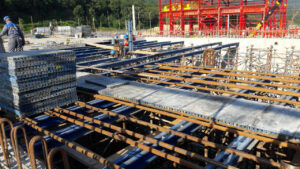




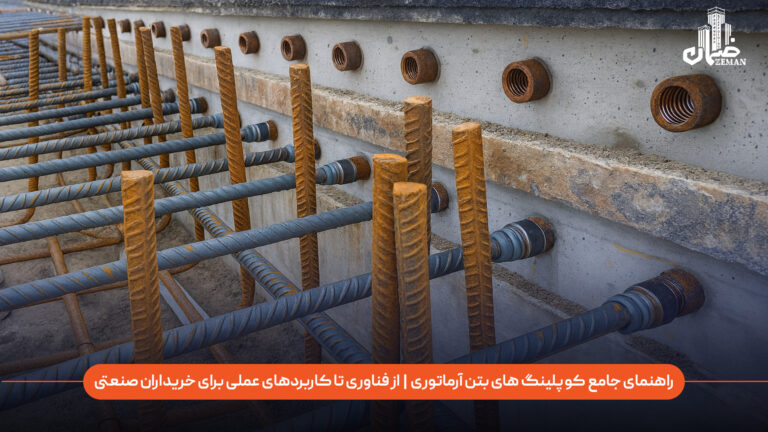
In the world of modern construction, reinforced concrete couplings have emerged as a key technology for connecting reinforcing bars (rebars). This mechanical method, commonly known as a rebar coupler system, serves as an efficient alternative to traditional techniques such as lap splicing (overlapping) or forging (butt welding). A coupler is a hollow cylindrical steel component equipped with internal threads or screw-like grooves that mechanically connect the ends of reinforcing bars. This type of connection not only preserves structural strength, but also significantly reduces material consumption and increases construction speed.
In this article, we provide a complete and comprehensive overview of rebar couplers—from definition and history to types, advantages, disadvantages, installation methods, standards, applications, comparisons with other techniques, case studies, and future trends. This guide is designed for engineers, contractors, and construction industry professionals, and is SEO-optimized with a focus on keywords such as “rebar coupler,” “types of rebar couplers,” and “rebar coupler installation.”
Types of Rebar Couplers – Designed for Different Requirements
Rebar couplers are classified into various types based on their structure and application. Selecting the appropriate type depends on installation conditions, rebar diameter, and whether bar rotation is possible. The table below presents the main types:
| Coupler Type | Description | Applications | Key Advantages |
| Standard (Right-Hand Thread) | Right-hand threaded connection for bars of the same diameter; requires rotation of one rebar | Columns, walls, locations where bar rotation is possible | Simple and economical, suitable for most structural elements |
| Position (Left & Right Thread) | Double-threaded ends for fixed bars without rotation | Repairs, fixed connections inside concrete | Ideal for confined spaces, reduced installation time |
| Reducer (Transition) | Used to connect different bar diameters; larger bar is inserted first | Diameter transitions in columns or beams | Design flexibility, reduced need for multiple bar sizes |
| Grouted | Filled with grout mortar, mainly for precast elements | Precast structures and precast concrete components | Excellent seismic performance, high strength after curing |
| Weldable | Designed to connect rebars to steel elements without direct welding | Connections to steel plates in foundations | Prevents thermal damage to rebar |
| Compression | Designed for compressive loads; diameters from 20 to 50 mm | Compression reinforcement networks | Single-person installation, high speed in precast works |
| Locking (Bolted) | No rebar threading required; secured with locking bolts | Repair works, concrete strengthening | Suitable for rebars shorter than 200 mm |
| End Anchorage | Eliminates the need for 90-degree bending at bar ends | Beams and columns | Up to 60% reduction in congestion, easier concrete placement |
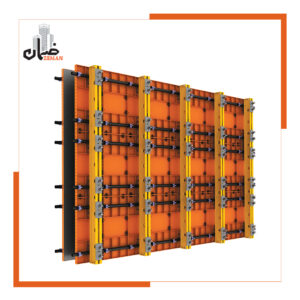
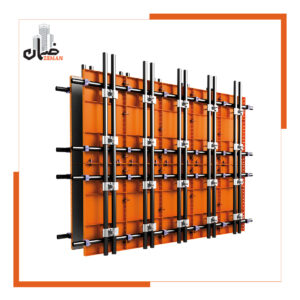
These coupler types are designed in accordance with international standards such as BS 8597, and each is optimized for specific scenarios such as one-sided wall formwork or double-sided wall formwork.
Advantages and Disadvantages of Rebar Couplers – A Balanced Evaluation
The use of rebar couplers offers numerous advantages, making them a popular choice in modern construction.
- First, rebar consumption is reduced by approximately 20–30%, as the need for long lap lengths is eliminated.
- Second, construction speed increases significantly, since installation is simpler than welding and allows for prefabrication of elements such as beams.
- Third, reduced reinforcement congestion allows concrete to flow more freely and achieve more uniform coverage, which is critical in
(
Cast-in-Place Concrete Applications
).
Additional benefits include improved seismic safety, reduced structural weight, and the ability to use larger-diameter rebars in smaller columns.
However, there are also disadvantages. The initial cost of couplers is higher than lap splicing, and the need for threading equipment can be challenging. According to ACI 318, couplers are not permitted for rebars larger than 36 mm in certain conditions, and improper installation may lead to premature wear.
This evaluation demonstrates that for large-scale projects, the advantages outweigh the disadvantages—especially when combined with tools such as a
Concrete Mixer Machine
| Feature | Lap Splicing | Welding | Rebar Couplers |
| Connection Mechanism | Overlapping two rebars and transferring forces through concrete | Physical and metallurgical bonding through heat and pressure | Direct mechanical connection between two rebars |
| Dependence on Concrete | Very high; performance depends on concrete quality | None; the connection is independent of concrete | None; performance is independent of concrete |
| Reinforcement Congestion | Very high; leads to voids and air pockets in concrete | Can be high, but generally better than lap splicing | Very low; significantly reduces reinforcement congestion |
| Seismic Performance | Poor; severely restricted in seismic zones | Good; but requires highly skilled welders and special testing | Excellent; dedicated seismic-rated systems are specifically designed for this purpose |
| Initial Cost | Lowest cost; no special equipment required | Highest cost; requires expensive equipment and skilled labor | High; includes product cost and threading preparation |
| Installation Speed | Slow; requires lap length calculation and wire tying | Very slow; due to welding, cleaning, and cooling processes | Fast; easy installation using simple tools |
| Skill Requirement | Low; no special skills required | Very high; requires trained and certified welders | Medium to high; requires training to work with specialized equipment |
| Reliability | Low; dependent on concrete quality in the lap zone | High; but dependent on weld quality and workmanship | Very high; independent of concrete with predictable performance |
Welding, while offering high connection strength, has more limited applicability. This method requires skilled welders, expensive equipment, and time-consuming procedures. High electricity consumption and the need for strict quality control make welding uneconomical for many projects. In addition, the generation of toxic gases and fire-related safety risks impose further limitations. In contrast, rebar couplers, despite their higher initial cost, offer significant economic advantages in large projects and when used with larger-diameter rebars. Reduced rebar consumption, faster installation, and lower labor requirements can quickly offset the initial product cost.
Moreover, their reliable and concrete-independent performance makes them the preferred choice for critical projects, seismic regions, and space-restricted structures such as high-rise towers. Ultimately, the difference between lap splicing and couplers is not merely a technical distinction, but a fundamental shift in construction philosophy—from a concrete-dependent approach to an independent, engineered, and reliable connection method. This shift justifies the growing importance of couplers in high-value projects aimed at sustainable and safe construction.
Types, Mechanisms, and Specialized Applications of Coupling Technology
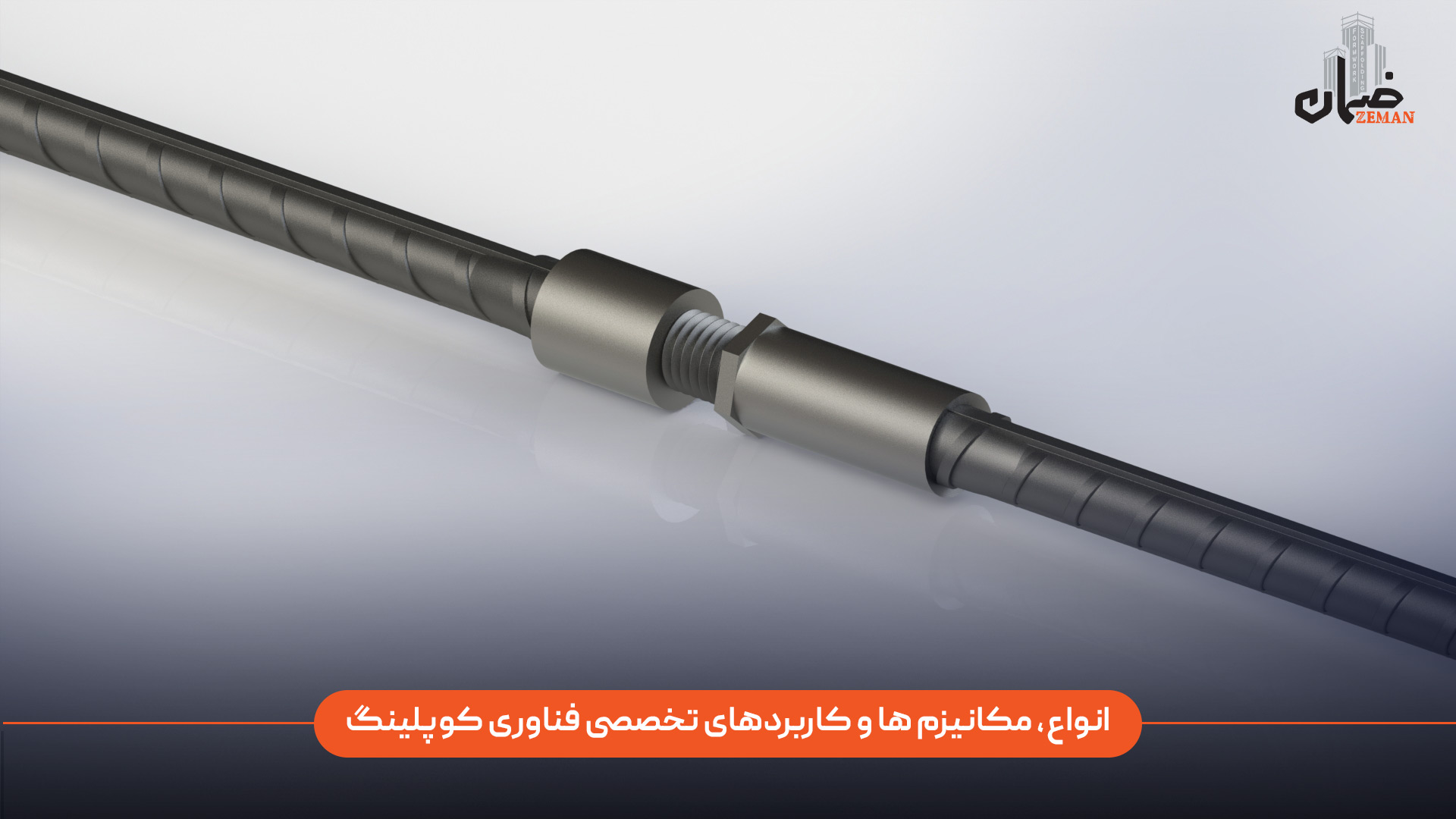
Coupling technology is not limited to a single product; rather, it encompasses a wide range of systems, each with its own mechanism, application, and advantages. For engineers and industrial buyers, understanding these differences is crucial, as the correct selection can directly impact project performance and success. Couplers can be categorized based on the type of force they transfer:
- Compression connections are used in areas subjected only to compressive forces, such as column bases. A well-known example is the Speed Sleeve system.
- Tension connections are designed for areas subjected primarily to tensile forces, such as beam or shear wall reinforcement. The Quick Wedge system falls into this category.
- Tension–compression connections can resist both forces and are used in large and critical structures, such as Taper-Threaded Splices and Cadweld systems.
From the connection mechanism perspective, couplers are classified into several types:
- Threaded couplers, the most common type, manufactured in tapered or straight-thread versions. Tapered-thread systems such as nVent LENTON offer simple installation and high safety.
- Swaged couplers, in which a steel sleeve is mechanically compressed around the rebar; systems like Leviat require no special bar-end preparation.
- Grout-filled couplers, filled with specialized cementitious grout and widely used in precast concrete connections.
- Metal-filled couplers, in which an exothermic reaction melts metal that is poured into the coupler cavity; systems such as Cadweld are used in highly sensitive projects, including nuclear power facilities.
Some systems are designed specifically for specialized applications:
- Form Saver systems eliminate protruding rebars from formwork and improve job-site safety.
- Terminator systems reduce reinforcement congestion and eliminate the need for bending rebars.
- MBT Couplers, which are installed using bolts and nuts without rotating the rebar, making them ideal for confined spaces.
Ultimately, selecting the appropriate coupler must be based on force type, structural conditions, construction speed, and available workspace—since no single coupler type is suitable for all projects.
Economic Analysis and Operational Efficiency – Beyond Initial Cost
The economic evaluation of couplers in Iran should not be limited to their initial price. Although a coupler may appear costly at first glance, it often leads to significant savings in other areas of the project and reduces the overall final cost.
These savings are observed in three main areas:
- Reduced rebar consumption (materials)
- Lower labor and equipment costs
- Reduction of hidden costs and rework
From a materials perspective, using couplers eliminates the need for lap lengths, significantly reducing rebar consumption. This saving can exceed 70% for large-diameter rebars (e.g., size 25 mm and above). Domestic project reports indicate that coupler usage has reduced total rebar consumption by approximately 20%. Furthermore, minimized cutting waste reduces both final cost and steel scrap volume.
Operationally, coupler installation is significantly faster than traditional methods such as lap splicing. Experience from Iranian construction projects shows that coupler usage can reduce rebar installation time by approximately 30–50%. The installation process does not require complex calculations or highly specialized skills, thereby lowering labor costs. Reduced reinforcement congestion also results in concrete savings and less reliance on cranes or heavy equipment.
Nevertheless, couplers may not be economically viable for small-diameter rebars or small-scale projects due to higher initial costs. Some coupler types, particularly threaded models, require specialized machinery such as threading lathes or cold-forging equipment, whose purchase or rental costs must be included in the economic analysis.
Ultimately, the decision to use couplers should be based on a life-cycle cost analysis rather than initial product price alone. In large-scale projects such as high-rise towers, bridges, and heavy concrete structures, couplers typically result in material savings, faster execution, reduced labor demands, and overall economic efficiency.
Standards, Validation, and Technical Confidence
Despite the many advantages of couplers, their use in critical projects—such as large-scale structures or seismic regions—requires reliable quality assurance and verified performance. International standards play a vital role in this process, enabling engineers and contractors to adopt coupler systems with confidence.
One of the most important standards is ISO 15835, which evaluates coupler performance and classifies them into Groups I, II, and III based on strength, ductility, and reliability. Many national standards, including the Chinese GB/T JGJ 107, are also developed based on these principles and require comprehensive technical testing.
These tests include:
- Strength test: verifying resistance to forces equal to 1.25 times the rebar strength
- Ductility (elongation) test: evaluating deformation capacity without failure
- Slip test: ensuring no movement occurs under load
- Fatigue test: assessing resistance to repeated loading
- Seismic load test: evaluating performance under sudden and extreme forces
Successfully passing these tests confirms that the coupler is reliable in terms of safety and durability.
In Iran, as in other countries, on-site quality control and product verification are critically important. Each coupler must carry a unique serial number and be supported by production and laboratory test reports to ensure full traceability.
Additionally, couplers must be installed strictly in accordance with the manufacturer’s instructions. For threaded couplers, the use of a calibrated torque wrench is essential to ensure proper tightening. Upon completion, all joints and fasteners must be thoroughly inspected.
Finally, industrial buyers should select products supported by valid certification reports (such as ESR reports) and complete traceability. Compliance with these requirements ensures that couplers deliver the high level of safety required for large-scale and critical projects.
Challenges, Practical Considerations, and Integration with Modular Systems
Despite their advantages, couplers also present challenges that industrial decision-makers must consider. The most significant challenges include higher initial costs, the need for specialized equipment, and site-specific execution conditions.
The initial price of couplers is higher than traditional connection methods, particularly for small-diameter rebars. However, economic analyses indicate that couplers become cost-effective when used for larger-diameter rebars (typically 20 mm and above) and in large-scale projects.
Many coupler types—especially threaded models—require specialized equipment for rebar-end preparation, such as threading machines, cold-forging devices, and auxiliary tools. The cost of purchasing or renting this equipment must be included in the economic evaluation, as it may increase execution difficulty in small or remote projects.
From an execution standpoint, installing couplers in confined areas or locations with limited access for heavy equipment can be challenging. Therefore, coupler selection must be based on project type, site conditions, and a comprehensive cost–benefit analysis. In large projects, the advantages of couplers generally outweigh their costs and limitations, while in small projects, simpler methods may remain more economical.
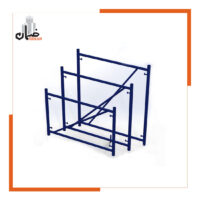
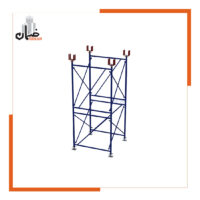
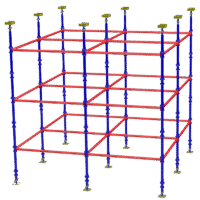
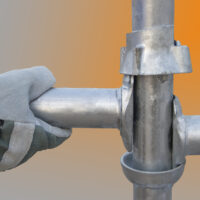
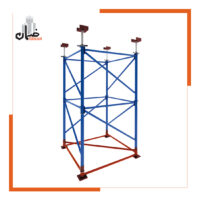
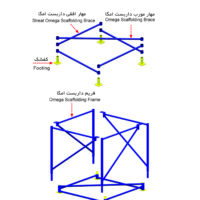
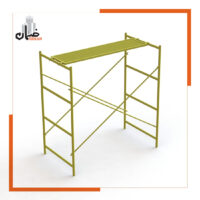
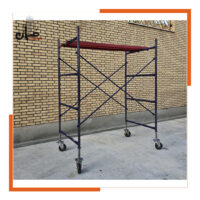
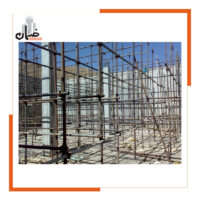
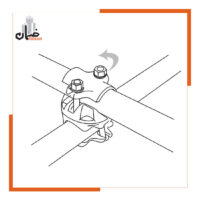
On the other hand, integrating couplers with modern construction technologies presents significant opportunities to enhance speed and productivity. For example, Form Saver systems are compatible with modular scaffolding and shoring systems such as H-frame and Cuplock, improving construction speed and site safety. By installing protective housings within formwork, these systems eliminate the need for drilling panels or leaving hazardous protruding rebars.
Such integration not only accelerates and secures execution processes, but also enables the delivery of integrated solutions on construction sites. For example, using threaded couplers can facilitate faster installation of slab or wall jacks, as long development lengths for anchorage are no longer required. Ultimately, this combination reduces construction time, improves productivity, and optimizes the overall construction process.
Conclusion – A Shift in Engineering Philosophy
The transition from lap splicing to couplers represents far more than a mere technical upgrade; it is a fundamental shift in engineering philosophy. Construction is moving away from a force-intensive, concrete-dependent approach toward a precise, engineered, predictable, and independent connection methodology. This transformation turns structural connections from a potential weakness into a reliable strength, ultimately leading to stronger, more economical, and more earthquake-resistant structures.
With this transformation occurring within the hidden arteries of our structures, are we truly building safer and more sustainable cities for future generations? The answer increasingly appears to be yes.