




Circular Column Formwork
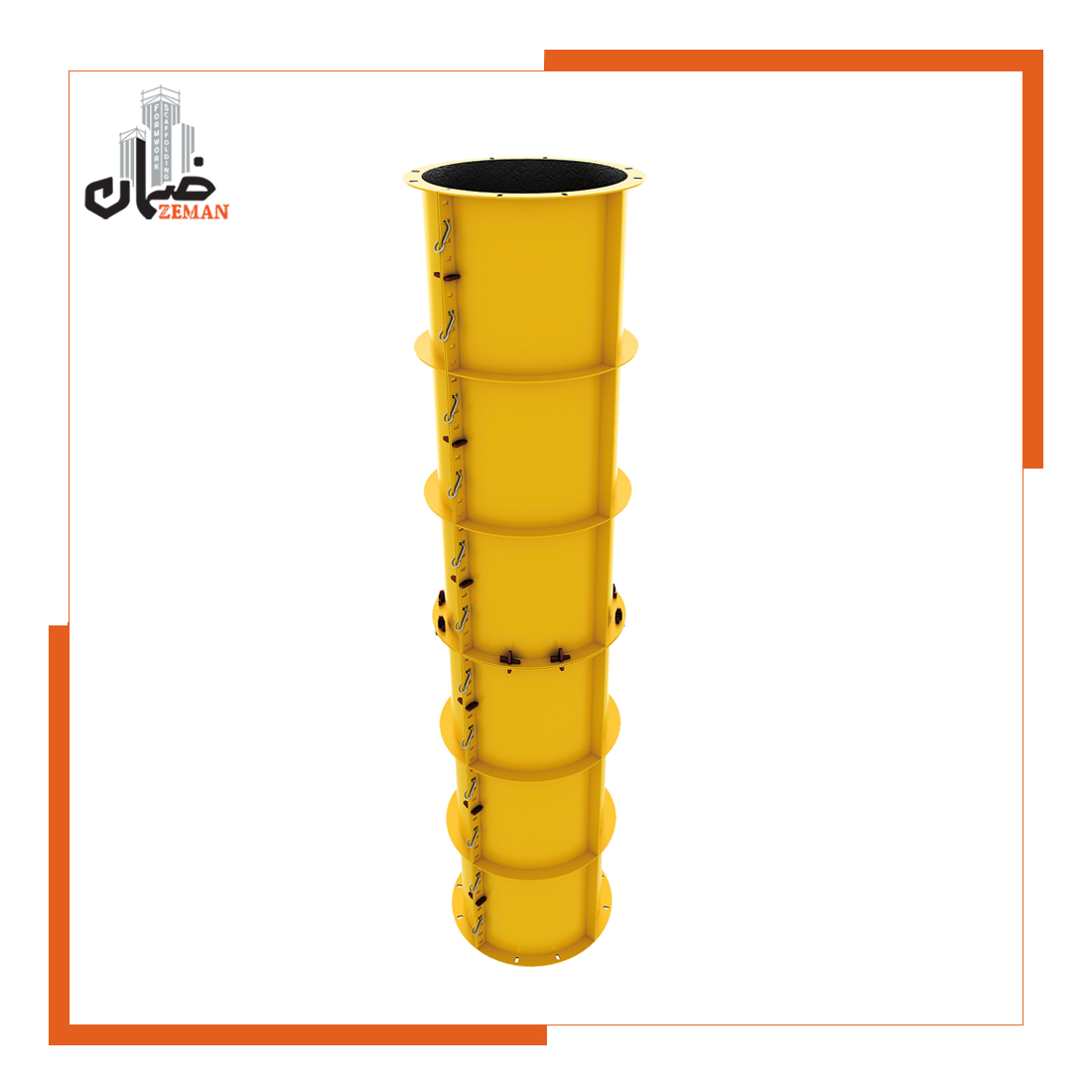
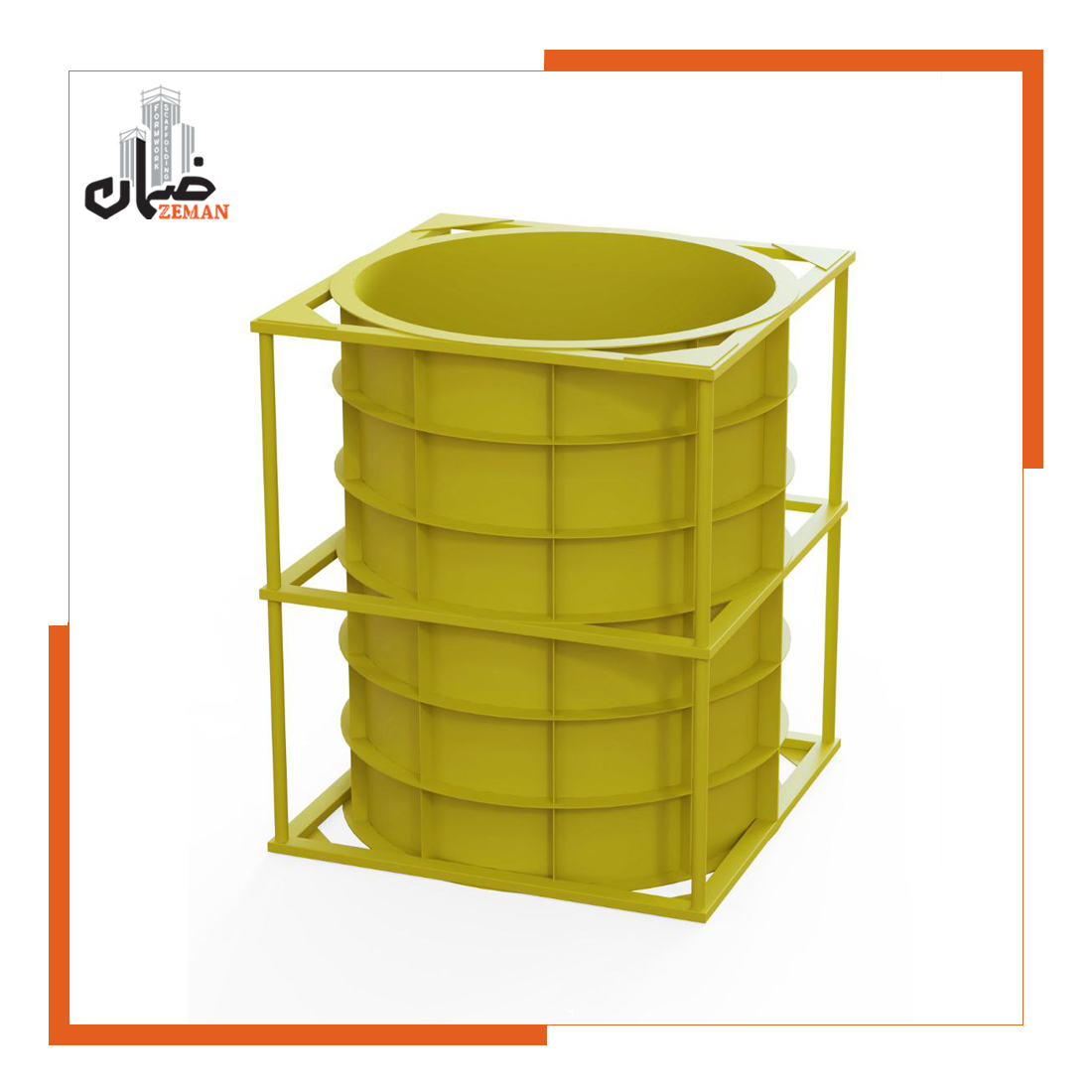
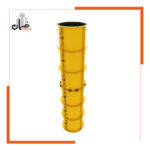
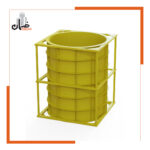
Circular column formwork is manufactured and assembled in two types—metal and plastic—and is produced in three size ranges: small, medium, and large. Circular column formwork is designed for concreting circular column sections at various heights. For the execution of circular columns, specific formwork systems are designed and manufactured according to the column diameter and height. These systems typically consist of two 180‑degree semicircular panels with standard heights of 1.0 meter or 1.5 meters, which are connected to each other using steel clamps as well as pin and wedge connections.
Circular Column Formwork
Circular column formwork is one of the specialized types of formwork systems and is also known as curved or circular formwork. This type of formwork is manufactured from steel sheets with thicknesses of 3 and 4 mm in various dimensions, and its primary application is in the construction of circular concrete columns with an internal diameter of less than 2 meters. Due to its specific curved geometry and structural characteristics, this formwork has limited application in other areas such as slab or foundation construction and is used exclusively for the execution of circular columns.
Circular column formwork is an advanced modular system designed for forming circular concrete columns with a wide range of diameters, from 150 to 1200 mm. The system consists of semi-circular panels made of steel or composite materials, enabling fast, accurate, and efficient assembly. Its adjustable and modular design effectively resists the hydrostatic pressure of fresh concrete and produces smooth, Class 1 exposed concrete surfaces, minimizing the need for post-pouring repair or finishing operations.
With high flexibility, this formwork system is suitable for various projects, ranging from high-rise buildings to bridges and industrial structures. Integrated safety equipment enhances productivity and jobsite safety. The materials used—such as high-strength steel or lightweight composites—offer superior durability and resistance to corrosion and weather conditions compared to traditional timber formwork. Utilizing this system accelerates the circular column formwork process, reduces labor requirements, and ensures high-quality surface finishes for concrete columns.
Applications of Circular Column Formwork
Due to the special structure and variable dimensions of circular column formwork designed to create curved concrete surfaces, it is widely used in structures such as bridges, parking facilities, hotels, towers, and large-scale heavy concrete constructions with heights exceeding 5 meters, where increased stability and structural integrity are required. These formworks are designed for easy installation and execution, contributing to faster construction progress. Furthermore, they prevent the leakage of cement slurry during concrete placement.
Circular column formwork is applied in a wide range of building and infrastructure projects, particularly in the construction of circular columns. It is commonly used in residential, commercial, industrial, and infrastructure projects such as bridges and tunnels. Thanks to its adjustable diameter capability, this system is ideal for complex and diverse structural designs.
In circular column formwork operations, the use of modular panels and the elimination of complex connections significantly increase assembly and dismantling speed. This feature is especially beneficial for projects with tight schedules, such as high-rise buildings and bridges. In addition, circular columns perform exceptionally well in seismic regions due to uniform load distribution, providing high resistance against lateral forces and torsional moments. By using circular column formwork, contractors can achieve high-quality concrete surfaces without the need for additional finishing works.
Components of the Circular Column Formwork System
Semi-Circular Panels
These panels form the core of the circular column formwork system and are manufactured from high-quality steel or composite materials. They are available in various diameters ranging from 150 to 1200 mm and are designed to accommodate circular columns with heights from 3.66 to 11 meters. Their lightweight structure and connection-free design facilitate easy transportation and installation, while their smooth surfaces produce high-quality exposed concrete finishes.
Connection Systems
These systems include high-strength rods and connectors that ensure formwork stability during concreting. Their precise design provides tight, leak-free connections and full compatibility with circular column formwork panels. Quick installation of these components reduces assembly time and enhances overall safety.
Brackets and Bracing Elements
Brackets are designed to support and stabilize the panels in various positions. Made from durable materials with anti-corrosion coatings, they ensure long-term performance and reliability. These brackets are suitable for circular columns with different diameters and significantly improve alignment accuracy and structural stability.
Safety Platforms
These platforms are equipped with integrated guardrails to enhance worker safety. Constructed from weather-resistant materials, they allow fast installation with minimal equipment. Their compatibility with panels and brackets makes them an efficient solution for large-scale construction projects.
Spacers and Reinforcing Connections
Spacers and reinforcing connectors are used to ensure the precise positioning of reinforcement bars within the formwork. These components maintain the correct spacing between reinforcement and formwork and prevent displacement during concreting, contributing to the production of high-strength circular columns.
Types of Circular Column Formwork
Circular column formworks are produced and assembled in two main types—metal and plastic—and are available in three size categories: small, medium, and large. These formworks differ significantly in material composition, structural behavior, and load-bearing capacity, which results in varying performance levels across different projects. Since circular formwork is typically used in heavy structures for column execution, selecting the appropriate type is of critical importance.
Metal Circular Column Formwork
Circular column formwork was initially manufactured from metal using steel sheets. Due to early applications in columns with diameters of up to 180 cm, metal was selected for its high resistance and dimensional stability under large concrete volumes. Compared to other types, metal formwork offers superior durability and safety in the execution of circular columns, and with proper use and maintenance, it can be utilized for an extended period.
Plastic Circular Column Formwork
With the advancement of the construction industry and the introduction of plastic formwork systems, circular and curved plastic formworks have also been developed. Plastic column formworks are typically produced as single-piece units in smaller dimensions and require additional bracing for proper execution. Compared to metal formwork, plastic systems have lower durability and stability and must be adequately supported to achieve the required strength and rigidity.
Step-by-Step Installation Method for Circular Column Formwork
Installation of this formwork is straightforward but requires precision to ensure safety and quality. The following guide is based on best construction practices:
- Preparation: After installing the reinforcement, place the spacers and apply formwork release oil to the panels to prevent concrete adhesion.
- Panel Assembly: Connect the two semi-circular panels using pins, wedges, or clamps. For diameters exceeding 1 meter, use stiffeners.
- Fixing and Alignment: Install brackets and braces, and adjust the formwork to ensure proper leveling and vertical alignment.
- Concrete Placement: For low heights, pour concrete in one stage; for heights exceeding 7 meters, pour in two stages with a 30–60 minute interval.
- Stripping: After 24 hours, carefully dismantle and clean the formwork.
Note: For heights greater than 3 meters, keep the top and bottom connections adjustable to maintain accurate alignment.
Used (Second-Hand) Circular Column Formwork
Used circular column formwork is a cost-effective option in the construction industry for concreting circular columns. This modular system—often made of metal or plastic—allows the production of smooth and durable concrete surfaces and is suitable for projects ranging from small buildings to medium-scale structures. Choosing second-hand formwork can significantly reduce costs, provided that quality inspection and proper maintenance are performed to ensure safety and durability.
Advantages of Using Second-Hand Circular Column Formwork
Industry studies and practical experience indicate that well-maintained used circular formworks provide uniform load distribution and seismic resistance comparable to new systems. Key advantages include:
- Cost savings: Reduction in construction costs by up to 50% compared to new formwork, suitable for budget-limited projects.
- Reusability: Even after second-hand purchase, formworks can be reused multiple times and later resold with minimal depreciation.
- Fast installation: Simple assembly without the need for complex equipment, similar to new systems.
- Concrete surface quality: Smooth Class 1 finishes with minimal repair requirements, provided the formwork is in good condition.
- Safety and strength: Capable of withstanding the hydrostatic pressure of concrete, subject to inspection of welds and connections.
However, potential disadvantages include reduced service life due to prior use, the possibility of corrosion or deformation, and repair costs that may reduce overall economic benefits.
Applications of Second-Hand Circular Column Formwork
These formworks are primarily used for columns with diameters ranging from 150 to 1200 mm and heights of up to 11 meters; however, in second-hand condition, they are generally recommended for smaller projects. Common applications include:
- Residential and commercial buildings with limited budgets where both aesthetics and strength are required.
- Small industrial projects and parking structures requiring uniform load distribution.
- Medium-scale structures that demand exposed concrete surfaces without significant capital investment.
Conclusion
Circular column formwork is one of the most important and specialized formwork tools in concrete construction projects, playing a decisive role in the execution of high-quality, durable, and safe circular columns. Whether metal or plastic, these formworks—due to their curved and modular design—enable precise, fast, and standardized column construction. Their high resistance to concrete pressure, ease of assembly and dismantling, prevention of concrete slurry leakage, and ability to produce smooth finished surfaces have made them widely used in large and critical projects such as towers, bridges, industrial structures, and high-rise buildings.
Proper arrangement of components such as panels, brackets, braces, and spacers, along with adherence to standard installation procedures, ensures the final quality of the structure. Selecting the appropriate formwork type (metal for heavy-duty projects and plastic for smaller diameters) significantly influences performance and safety. Overall, circular column formwork is an efficient, precise, and economical solution that increases execution speed while substantially improving the strength and durability of concrete columns.
Get expert advice
Our sales experts at Zaman are ready to provide guidance and advice before your purchase.

Reviews
There are no reviews yet.