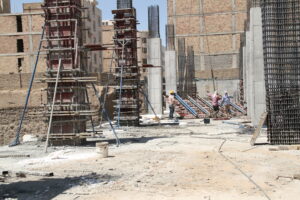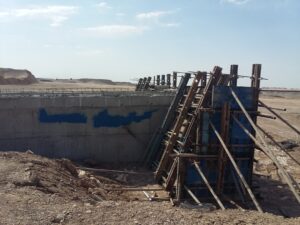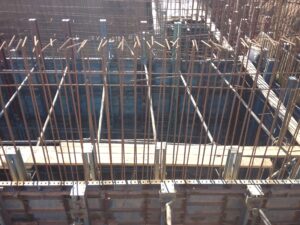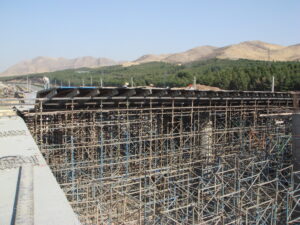




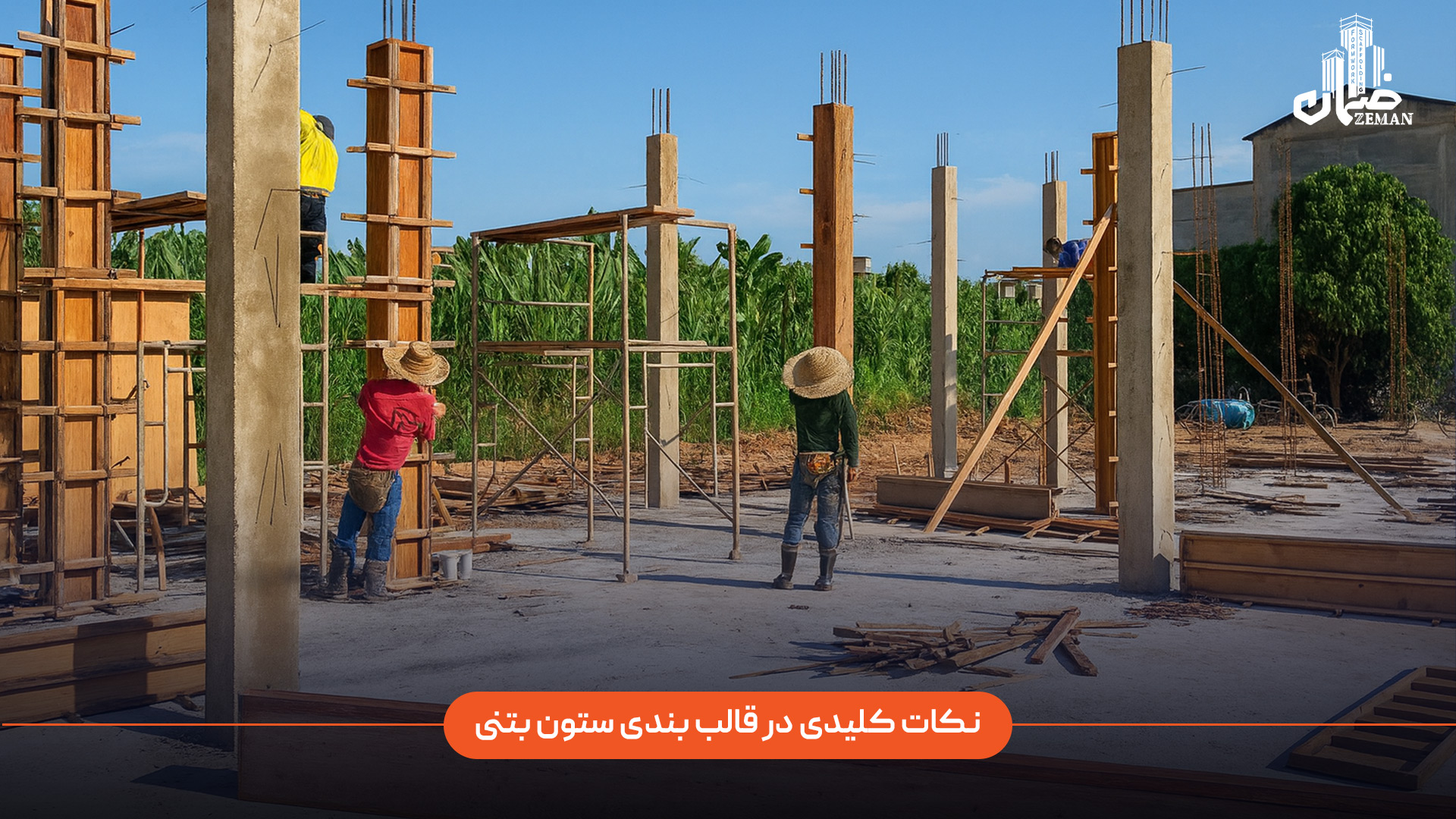
Concrete column formwork is one of the key stages that directly affects the quality, safety, and durability of a structure. Concrete columns act as the backbone of buildings, and proper formwork ensures that the concrete hardens in an accurate and defect-free shape. This process not only involves selecting suitable materials, but also requires technical expertise, precise tools, and strict adherence to safety standards.
In this comprehensive article, we examine all aspects of concrete column formwork, including types of formwork systems, execution stages, practical tips, calculations, required equipment, and even pricing. This content has been prepared based on the review of reliable sources and hands-on experience, with the aim of providing a complete guide for engineers, contractors, and professionals interested in the construction industry.
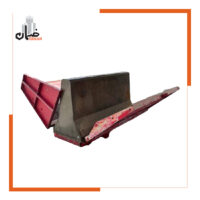
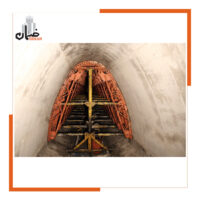
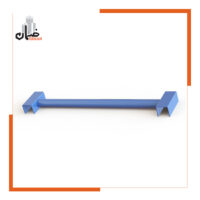
Zeman Company, as one of the leading manufacturers of concrete formwork systems, offers ideal solutions for your projects with products such as bent (pressed) metal formwork and various types of soldiers. In addition, to view real executed projects, refer to the Solat Hotel Shiraz Project, in which advanced Zeman equipment has been used.
The Importance of Concrete Column Formwork in Construction
Concrete column formwork is a process that holds freshly poured concrete in its intended position and shape until it gains sufficient strength. Without proper formwork, concrete may deform, crack, or even collapse. According to Chapter 9 of Iran’s National Building Regulations, formwork systems must be capable of withstanding the hydrostatic pressure of concrete, which can reach up to 25 kN per square meter. This pressure depends on the height of concrete placement, casting speed, and ambient temperature.
In large-scale projects such as bridges or high-rise buildings, improper formwork can lead to significant repair costs. For example, in concrete structures, columns carry approximately 20–30% of the total building load. Therefore, selecting the appropriate formwork not only enhances safety but also shortens project timelines. Zeman Company, by manufacturing ribbed (welded) metal formwork, provides solutions that can be reused up to 200 times, resulting in considerable economic savings.
In addition, concrete column formwork has a direct impact on the final appearance of the structure. Smooth and flawless surfaces reduce the need for finishing operations such as plastering. In the following sections, we examine the main components of this process.
Main Components of Concrete Column Formwork
Concrete column formwork consists of several components, each playing a specific role. Understanding these elements is essential for successful execution:
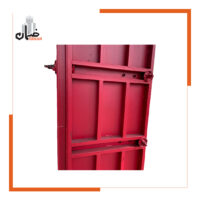
Formwork Panels: These are the main surfaces in contact with the concrete. In metal formwork systems, panels are manufactured from 3–5 mm thick steel sheets. For example, Zeman plywood frame formwork is a combination of steel and wood that offers high strength.
Pin and Wedge: Used to connect panels together. Pins are cylindrical, and wedges are applied for fine adjustment. Zeman manufactures various types of pins and wedges that prevent concrete leakage.
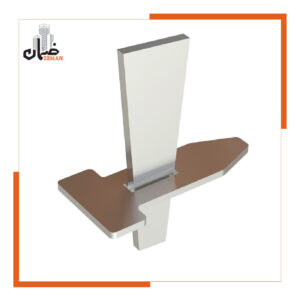
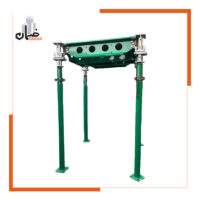
Bracings and Supporting Pipes: Used to prevent deformation of the formwork under pressure. Typically, scaffolding pipes are installed at 1-meter intervals. Zeman’s double-pipe washers are especially useful in this section.
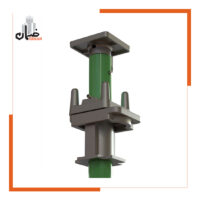
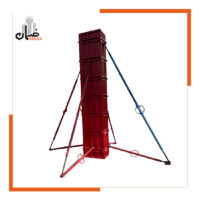
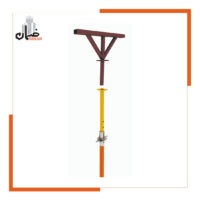
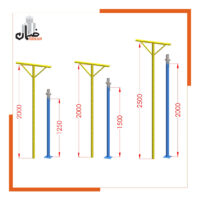
Inclined Props and Plumbing Jacks: Used to keep the column perfectly vertical. Zeman support props allow precise and accurate adjustment.
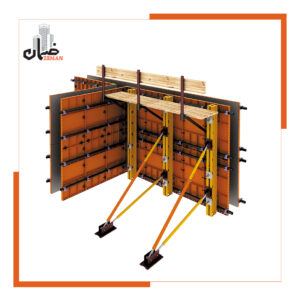
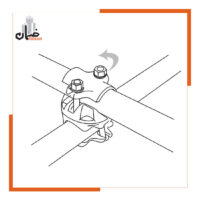
Clamps and Bolts: Clamps are used for firm connections, and bolts are applied to control the spacing between panels. Zeman clamps and bolts are high-quality and reliable options.
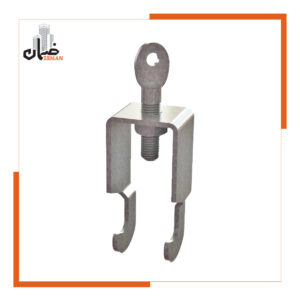
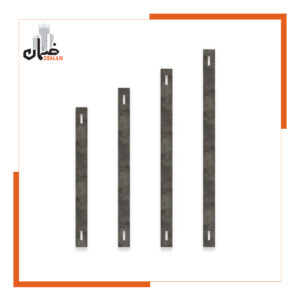
Corners: Used to create precise angles in square or rectangular columns. Common sizes include 5×5 cm and 10×10 cm corners.
For a 3-meter-high column with a 40×40 cm cross-section, approximately 12 panels, 8 corners, and 75 pairs of pins may be required. These components can be supplied through Zeman’s Concrete Formwork Equipment.
Types of Concrete Column Formwork
- Formwork systems are classified based on material and shape.
- Choosing the appropriate type depends on factors such as budget, height, and climatic conditions.
Wooden Formwork
- Constructed from 2.5–3 cm thick boards, timber, and square-cut lumber.
- Advantages: Inexpensive, lightweight, resistant to temperature variations.
- Disadvantages: Short service life (up to 10 uses), moisture absorption, and maintenance requirements. Suitable for small projects.
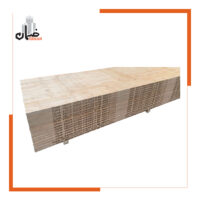
For more information, refer to Zeman formwork boards, including various three-ply and square-cut options.
Metal Formwork
- Made of steel or aluminum (although aluminum is less recommended due to chemical reactions with cement).
- Advantages: High durability (up to 200 uses), fast execution, smooth surfaces, and fire resistance.
- Disadvantages: Heavy and expensive. Zeman bent metal formwork is a good example, ideal for tall columns.
Plastic or Polymeric Formwork
- Manufactured from PVC or polyethylene.
- Advantages: Lightweight, water-resistant, no deformation.
- Disadvantages: Moderate cost, limited performance under very high pressures. Suitable for humid environments.
Modular Formwork
- Interchangeable panels suitable for various shapes.
- Advantages: Flexible and quick to assemble.
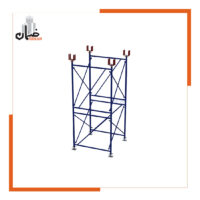
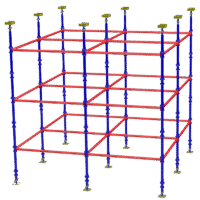
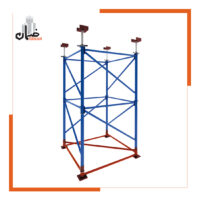
- Zeman modular scaffolding systems can be used in combination with this type of formwork.
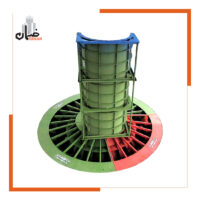
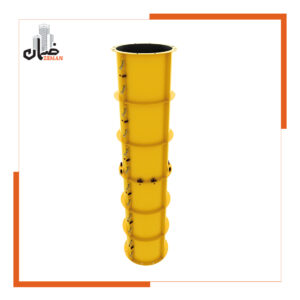
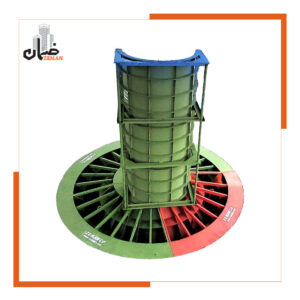
Circular or Cylindrical Formwork
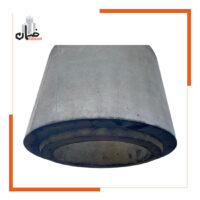
- Used for circular columns, made from rolled steel sheets.
- Advantages: Architectural aesthetics and uniform load distribution.
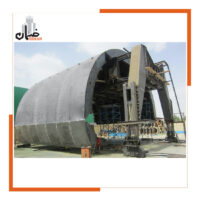
- Such formwork systems were used in the Al-Zawraa Sports Complex project in Baghdad.
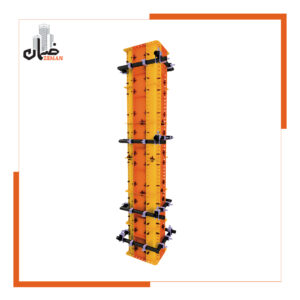
Square or Rectangular Column Formwork
Comparison Table of Concrete Column Formwork Types
| Formwork Type | Advantages | Disadvantages | Main Application | Approximate Reuse Count | Approximate Cost (per m²) |
| Wooden | Inexpensive, lightweight, temperature-flexible | Short lifespan, moisture absorption, requires maintenance | Small and temporary projects | 5–10 times | 200,000–400,000 IRR |
| Metal | Smooth surfaces, fire-resistant | Heavy, expensive, requires handling equipment | Large-scale and high-rise projects | 100–200 times | 800,000–1,500,000 IRR |
| Plastic | Water-resistant, dimensionally stable | Moderate cost, less suitable for high pressures | Humid environments | 50–100 times | 500,000–900,000 IRR |
| Modular | Flexible, fast installation | Requires precision components | Complex structures | 150+ times | 1,000,000–2,000,000 IRR |
| Circular | Aesthetic appearance, uniform load distribution | Complex fabrication, high cost | Modern architecture | 50–100 times | 1,200,000–2,500,000 IRR |
This table is based on standard industry data and may vary depending on market conditions.
Stages of Concrete Column Formwork Execution
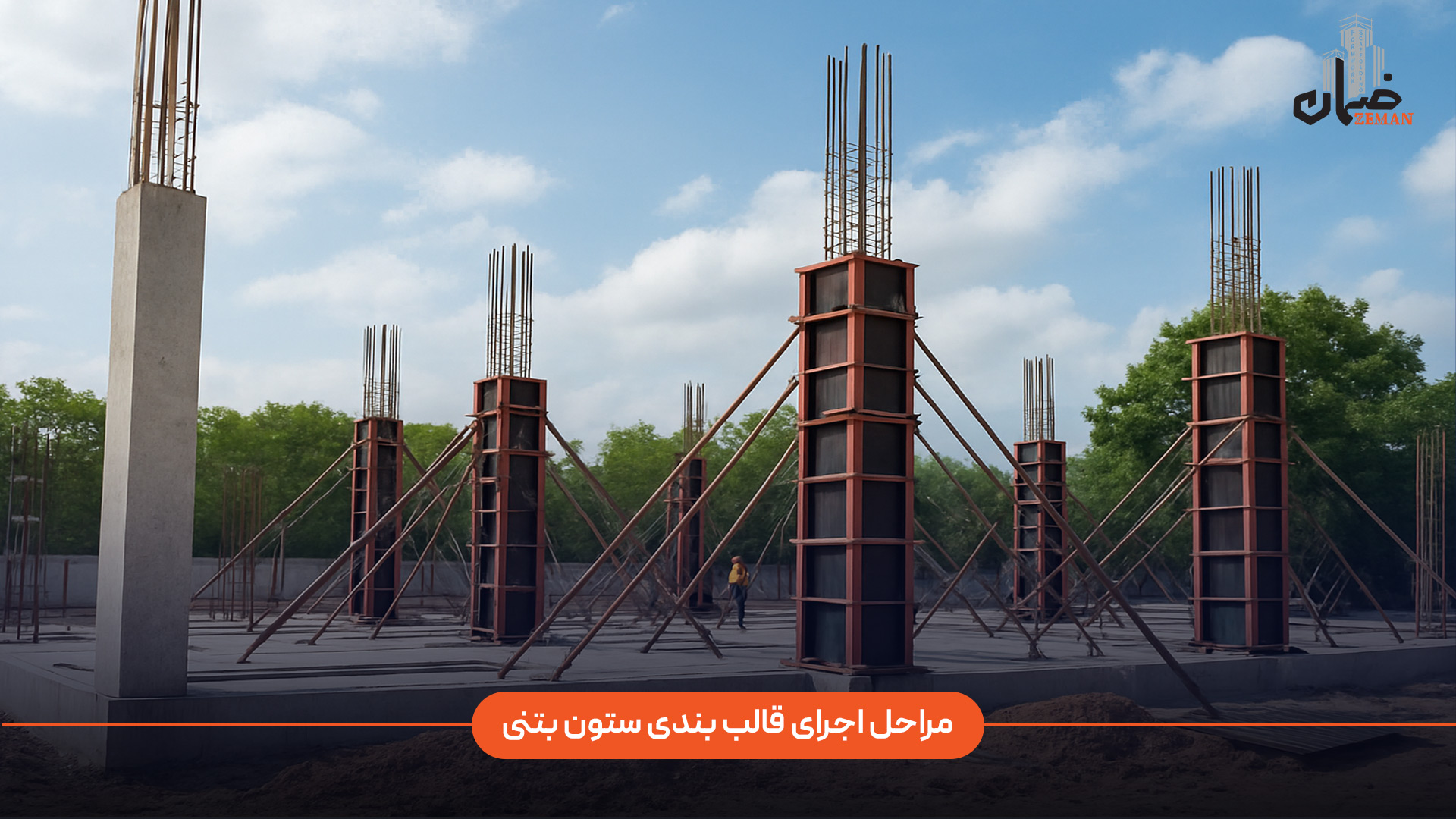
Concrete column formwork is executed in 6–8 stages. Observing the correct sequence is essential:
- Site preparation: Pouring a kicker (10 cm concrete base) to guide the formwork. Using rebar for leveling.
- Preparation and cleaning of formwork: Selecting from reputable suppliers such as Zeman. Cleaning old cement residue using a wire brush.
- Oiling: Applying release oil (such as a mixture of diesel and used oil) to prevent adhesion. This step ensures smooth surfaces.
- Assembly and fastening of formwork: Connecting panels using Zeman pin and wedge systems. For wide columns, use bolt straps.
- Plumbing and leveling: Using plumb tools (string and weight) or laser equipment.
- Out-of-plumb tolerance according to Chapter 9: Maximum 6 mm over 3 meters height. Zeman plumbing jacks are highly effective.
- Installation of bracing and supports: Scaffolding pipes at 1-meter intervals. For edge columns, frog clamps should be used.
- Sealing of joints: Using gypsum mortar or sealing tape to prevent concrete leakage.
- Final inspection and concreting: Safety checks followed by layered concrete pouring using vibrators.
For tall columns (over 6 meters), concreting should be carried out in stages, and vibration openings should be provided at 3-meter heights.
Observing Concrete Cover in Formwork
Concrete cover is the minimum distance between transverse reinforcement and the nearest exposed concrete surface and is usually considered at least 5 cm. If it exceeds 10 cm, the concrete element is classified as an unreinforced structure. Its importance includes preventing reinforcement corrosion by blocking moisture penetration, preserving mechanical properties under stress, and preventing cracking. Measurement is based on recesses and protrusions.
To maintain proper cover during formwork, plastic or concrete spacers should be used, and unsuitable materials such as broken bricks must be avoided, as they increase moisture penetration risk. When calculating stirrup dimensions, a 5 cm cover must be deducted from each side (example: for a 40×50 cm column, the stirrup size is 30×40 cm). The spacing of the first and last stirrups from the concrete joint must be 5 cm, and stirrups must fully enclose longitudinal rebars.
For more information about stirrups, please read this guide: What Is a Stirrups?
Formwork Bracing and Assembly
Formwork assembly includes preparation by applying release agents (used oil + diesel) and sealants (such as gypsum at the base to prevent slurry leakage from uneven ground gaps). For wooden formwork, yokes (wooden battens) are used, and for metal formwork, pins, wedges, or clamps (including scaffolding pipes) are applied. After assembly, plumbing must be carried out. Bracing is essential to withstand the hydrostatic pressure of concrete and includes connecting formwork panels with yokes or clamps and anchoring them to the surrounding floor using bolts, walers, jacks, and dedicated wires.
For edge columns, it is not possible to install walers and jacks from both sides; therefore, frog clamps and carpentry wire are used. Hooks are fixed into the slab, and the wire is tightened using frog clamps so the formwork is restrained from one side. For corner formwork, proper bracing prevents edge blowout or honeycombing. In three-sided formwork (adjacent to a wall), the missing side is filled with polystyrene and braced. All openings and bases of assembled formwork must be restrained to prevent displacement and leakage.
Sealants and Release Agents in Formwork
Release agents (form oils) are generally petroleum-based and composed of special oil compounds. They are applied to metal, plastic, and wooden formwork to ensure easy separation of formwork from concrete and to allow clean, quick, and damage-free stripping.
Common types include polyvinyl alcohol (PVA), silicone oils (with high resistance to extreme temperatures and low surface tension), and synthetic resins.
Application: Before installing the formwork, a thin and uniform layer of release agent is applied to the inner surface to prevent concrete adhesion without contaminating the reinforcement or reducing concrete surface quality.
Important note: The use of diesel fuel or used oil is prohibited, as it reduces concrete bond strength, causes staining, and decreases structural resistance.
Sealant Materials in Formwork
Sealant materials include plastic sheets (nylon) or polyethylene films used to cover contact surfaces in brick formwork. Applying a cement–sand layer on inner mold surfaces and wetting the bricks to prevent absorption of concrete slurry are also common practices.
Application: These materials are used in brick formwork to prevent slurry leakage, loss of concrete workability, and surface pinholes. Additionally, they help retain moisture at the concrete interface and improve final concrete surface quality.
Best Practices
- Apply release agents evenly and in thin layers
- Construct brick formwork with a minimum thickness of 20 cm
- Use cement–sand mortar in brickwork for proper waterproofing
- Moisten brick formwork before concrete pouring
- Perform precise plumbing and leveling checks before and after concreting
Plumbing of Concrete Columns
Plumbing is carried out in two stages: before concreting for initial alignment and afterward to check possible formwork displacement. The formwork panels should be firmly secured using jacks, and the base should be supported with gypsum and bricks to prevent bending. For corner columns where jacks cannot be used, reinforcement reinforcement wires or threaded rods with carpentry wire and rebars should be used. Hooks should be installed in the slab near the column prior to concreting.
- Traditional method: A string with a small weight is suspended from the top of the formwork element, and the distance to the formwork should be equal throughout. For larger columns, two plumb lines should be used on one side.
- Advanced method: A surveying instrument (theodolite) is positioned parallel to the column, and alignment at the top and bottom edges is checked. Tolerance: 6 mm per 3 meters or a maximum of 75 mm for the total height; exceeding this causes instability.
Important Execution Tips in Concrete Column Formwork
- Safety: Always use personal protective equipment. Concrete pressure can be hazardous; use Zeman clamp scaffolding systems for safe access.
- Environmental conditions: In cold weather, keep formwork warm; in hot climates, provide shading.
- Concrete quality: Concrete with a slump of 8–12 cm is ideal to ensure good flowability.
- Common mistakes: Failure to properly plumb results in misalignment; insufficient oiling causes adhesion.
- Standards: Compliance with ACI 347 (Guide to Concrete Formwork) and Iran National Building Regulations.
For specialized projects, refer to Zeman special concrete formwork systems.
Calculation of Concrete Column Formwork
Calculation is performed based on dimensions. For a 40×40×300 cm column:
- Contact area: 4 × (0.4 × 3) = 4.8 square meters.
- Number of panels: Depending on panel size (for example, 12 panels of 30×100 cm).
- Pressure: Height × concrete density × 9.81 (for 3 meters: approximately 70 kPa).
An engineer must prepare the drawings. For calculation tools, use software such as ETABS.
Height of Concrete Column Formwork and Its Challenges
- For heights greater than 3 meters, formwork should be assembled in layers.
- Challenges: Higher pressure and the need for a crane. Tee jacks from Zeman are useful for greater heights.
Price of Concrete Column Formwork
- Price depending on type: Wooden: 200,000 IRR per square meter; metal: 1,000,000+ IRR.
- Factors: Quality, weight, and whether the formwork is second-hand.
- For exact pricing, contact our experts at Zeman.
Key Points in Concrete Column Formwork
- Studies show that concrete column formwork plays a vital role in the strength and safety of building structures; however, the choice of formwork type (such as metal or wooden) varies depending on budget, height, and project conditions.
- It appears that the use of modular metal formwork, such as those manufactured by companies like Zeman, is a popular option for large projects due to durability and speed of execution, although wooden formwork remains more economical for smaller works.
- Evidence suggests that observing precise steps such as proper plumbing and oiling can prevent common issues like honeycombing of concrete; however, there is always debate regarding cost versus quality.
- For more information about related products, visit the Zeman bent metal formwork page.
Conclusion on Concrete Column Formwork
It must be emphasized that proper formwork is the most fundamental stage in the execution of concrete columns and directly affects the final quality of the structure. The correct selection of formwork type (metal, wooden, plastic, or circular), compliance with technical standards, precise plumbing, use of suitable release agents, proper bracing, and control of hydrostatic pressure are all factors that, if neglected, can lead to problems such as honeycombing, deformation, cracking, or even structural weakness.
Based on the conducted evaluations, metal formwork is considered the best option for large-scale and professional projects due to high durability, repeated usability, and superior surface quality; while wooden formwork remains a more economical choice for smaller projects. Observing execution details such as uniform oiling, proper fastening, maintaining concrete cover, and accurate plumbing plays a decisive role in the success of the operation.
Ultimately, the use of standard equipment and high-quality products—such as bent metal formwork, modular systems, soldiers, and connections manufactured by Zeman, can significantly reduce repair and rework costs while increasing project speed and safety. Proper execution of concrete column formwork guarantees, the durability, strength, and aesthetic quality of the structure in the years to come.
Is Metal Formwork Better or Wooden?
Metal formwork is superior in terms of durability, strength, and concrete surface quality; however, wooden formwork is more cost-effective for small-scale and low-budget projects.
How Long Does It Take to Strip the Formwork?
Typically, 24 to 48 hours are required; however, this duration may vary depending on the type of cement, temperature, humidity, and the conditions of concrete curing.
How Is Plumbing Performed?
Plumbing of columns is carried out using a plumb line, laser level, square, and precise adjustment of leveling jacks or braces to fully control the vertical alignment of the column.
What Is the Price of Pin and Wedge?
The price of pin and wedge varies, but it generally starts from around 50,000 IRR per pair and increases depending on material, thickness, and manufacturing quality.
Which Formwork Is Used for Circular Columns?
For executing circular columns, the best option is segmented (curved) or integrated metal formwork with a circular cross-section, which provides higher dimensional accuracy and superior surface quality.