



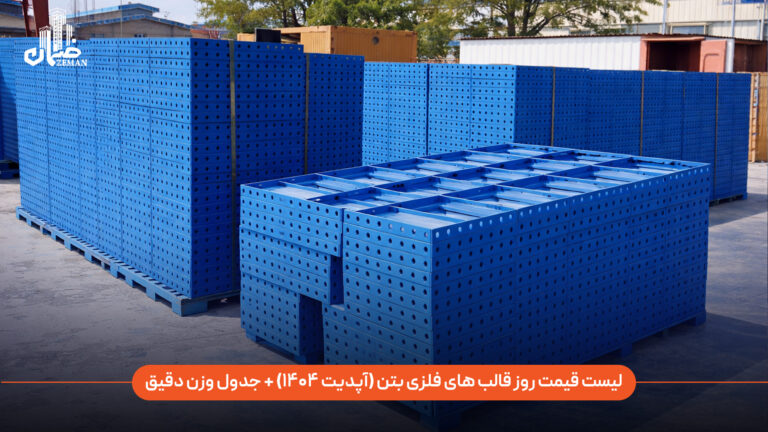
In the modern construction industry, cost management is one of the most challenging responsibilities for project managers and contractors. Since metal concrete formwork is considered one of the core tools in the execution of concrete structures, fluctuations in its price can directly impact the final project budget. With the entry into the year 1404 and the continuous changes in the steel market, having access to a transparent reference for metal concrete formwork prices and knowing the exact weight of each formwork sheet is vital to prevent financial losses.
In this comprehensive article by Beton Sazeh Zaman Company, we not only review the latest updated price lists, but also provide standard weight tables, factors affecting pricing, and a guide to distinguishing high-quality formwork from low-quality products. If you are planning a smart purchase, this article is your roadmap.
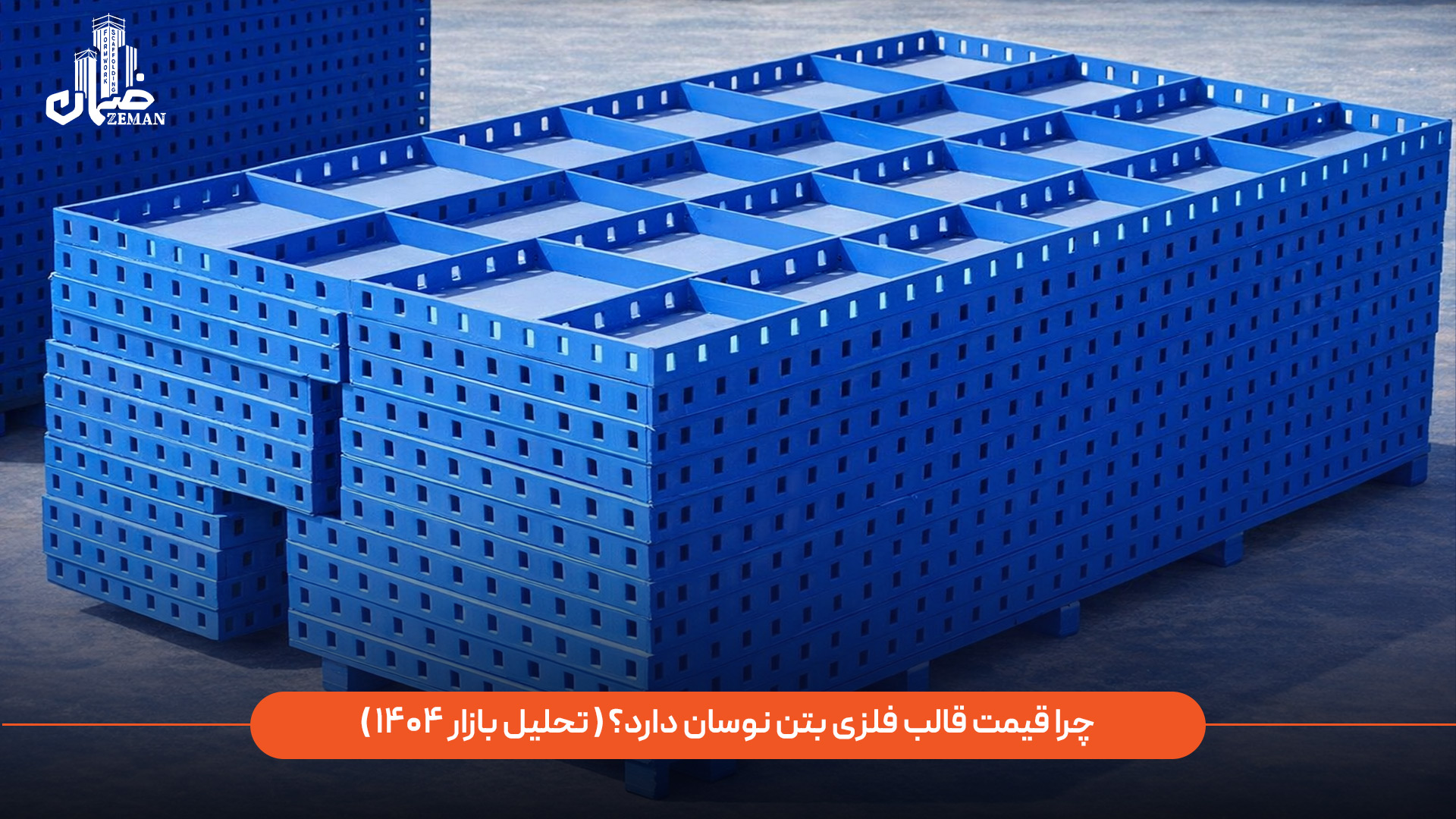
Why Does the Price of Metal Concrete Formwork Fluctuate? (Market Analysis 1404)
Before examining the figures and numbers, you should understand which factors determine the final amount on your invoice. Unlike many products, the price of metal concrete formwork is not fixed and depends on the following variables:
1. Daily Steel Sheet Price (Mobarakeh or Other Brands?)
The most important factor is the price of black steel sheet (ST37) on the commodity exchange. The best formwork available in the Iranian market is produced using Mobarakeh Steel sheets, which offer both excellent surface smoothness and high tensile strength.
Zaman Note: Some manufacturers use sheets from “Gilan” or “Ahvaz” to reduce costs, which may not have the same quality as Mobarakeh sheets. When requesting a price quote, be sure to ask about the sheet brand.
2. Sheet Thickness (3 mm or More?)
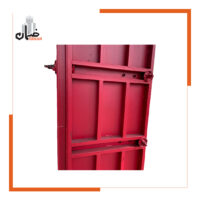
Standard formworks are usually manufactured with a 3 mm facing sheet and 5 mm ribs. In addition, the type of connecting components such as pins and wedges, which are used to fix the formworks together, plays a crucial role in the final structural quality. If weak connections are used, the formworks may open during concreting, causing significant damage.
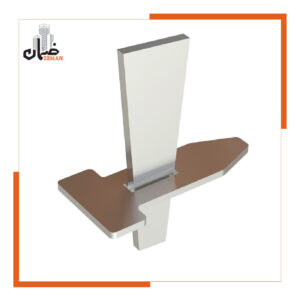
3. Edge Type (5 cm Edge or 6 cm Edge)
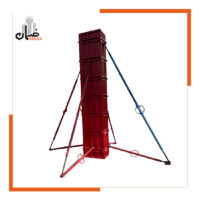
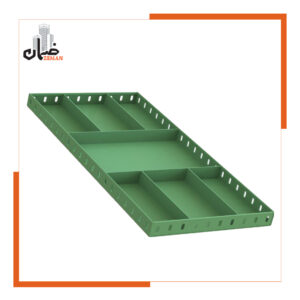
- 5 cm edge formwork: These formworks have a 5 cm edge height and are the most standard type available on the market.
- 6 cm edge formwork: The edge height is 6 cm, which provides higher strength but also results in greater weight.
Obviously, due to higher steel consumption, 6 cm edge formwork is more expensive.
4. Welding and Manufacturing Quality
Using CO₂ welding instead of conventional electric welding increases production costs, but multiplies the service life of the formwork. All formworks produced by Beton Sazeh Zaman are manufactured using robotic or manual CO₂ welding under strict quality control (QC) supervision.
Metal Concrete Formwork Weight Table (Standard Reference 1404)
In the formwork equipment market, pricing is calculated based on weight (kilograms). This means you multiply the unit price per kilogram by the total weight. Therefore, having an accurate weight table helps you verify the correctness of the issued invoice.
(Note: The weights listed below are approximate and calculated based on Zaman’s production standard using a 3 mm facing sheet and 5 mm ribs. A weight tolerance of approximately ±5% is normal in metal products.)
Table 1: Weight of Modular Formworks (5 cm Edge)
| Application | Approximate Weight (kg) | Formwork Dimensions (cm) |
| Narrow columns / corners | 5.5 | 100 × 10 |
| Column casting | 6.8 | 100 × 15 |
| Columns and walls | 7.8 | 100 × 20 |
| Standard wall and column | 10.5 | 100 × 30 |
| Shear walls | 13.5 | 100 × 40 |
| Most commonly used size | 15.5 – 16 | 100 × 50 |
| High-rise projects | 23.5 | 150 × 50 |
| Monolithic wall concreting | 31.0 | 200 × 50 |
Table 2: Weight of External and Internal Corners
| Corner Type | Dimensions (cm) | Approximate Weight (kg) |
|---|---|---|
| External corner | 10 × 10 × 100 | 10.5 |
| External corner | 10 × 10 × 150 | 15.5 |
| Internal corner | 10 × 10 × 100 | 8.5 |
| Internal corner | 10 × 10 × 150 | 12.5 |
Metal Concrete Formwork Price List (Daily Update)
Important notice: Due to momentary fluctuations in the steel market, listing fixed prices in the table below may be misleading. However, at Zaman, we have tried to provide an approximate price range to help you estimate your costs.
(To receive the final and real-time price, be sure to contact Zaman’s sales experts.)
| Product Name | Unit | Price Status | Estimated Price (Toman/kg) |
|---|---|---|---|
| 5 cm edge metal formwork (Mobarakeh sheet) | Kilogram | Available | Contact us |
| 6 cm edge metal formwork (custom order) | Kilogram | Custom production | Contact us |
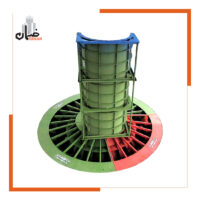
| Circular (round) column formwork | Kilogram | Available | Contact us (10% more expensive than flat formwork) |
| Formwork corners and angles | Kilogram | Available | Same price as modular formwork |
| Second-hand formwork (like new) | Kilogram | Limited | Approximately 30% cheaper than new |
Formula for Calculating Your Total Invoice Price
To know exactly how much budget you need to allocate, use the following formula:
(Number of formworks × Weight of each formwork) × Daily steel price + fabrication labor cost = Final price
At Zaman Group, by eliminating intermediaries and purchasing sheets directly from the factory, we strive to offer the lowest possible “fabrication labor cost” while maintaining high quality.
Should You Buy New or Second-Hand Concrete Formwork? (Economic Review)
One of the most frequently asked questions by our customers in 1404 is whether purchasing second-hand formwork is economically justified. Let’s review this honestly:
Advantages of Second-Hand Formwork
- Lower price: Usually 30% to 40% cheaper than new formwork.
- Suitable for short-term projects: If you only need formwork for a small project, it may be justifiable.
Disadvantages and Hidden Risks
- Deformation and warping: Second-hand formworks are often distorted. This means your concrete surface will not be smooth, and you will later have to pay significant costs for finishing and plastering to cover concrete irregularities.
- Reduced safety: The welds of old formworks may have weakened and can fail under pressure during concreting. This issue is especially dangerous in high-rise structures that require heavy scaffolding systems and shoring.
- Need for repairs: They often require adjustment and cleaning, which is both costly and time-consuming.
Zaman experts’ recommendation: If you are a contractor and intend to use the formwork for many years, be sure to buy new formwork. This is an investment, not an expense. After about five years of use, you can sell new formwork as second-hand at a good price, whereas second-hand formwork, after use, is practically considered scrap.
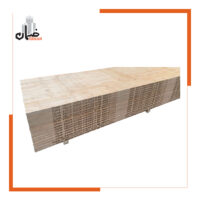
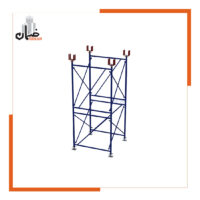
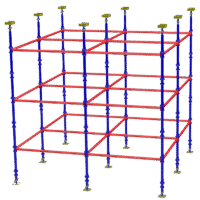
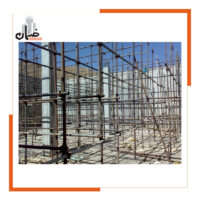
Cuplock scaffolding is one of the safest and most widely used scaffolding systems in concreting and formwork projects. With fast installation and suitable load-bearing capacity, it is an ideal option for high-rise structures.
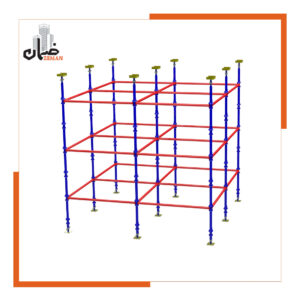
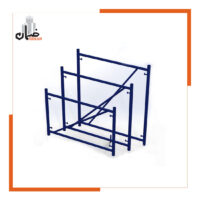
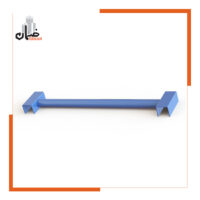
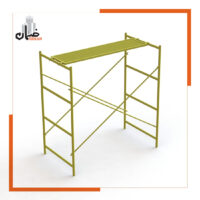
H-frame scaffolding, with its simple structure and adequate strength, is mostly used in light construction and facade projects and, due to its quick installation, is very cost-effective for short-term works.
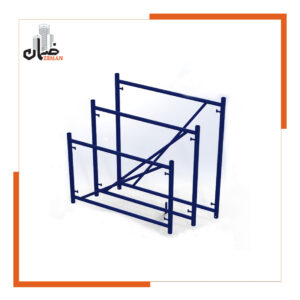
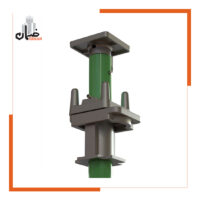
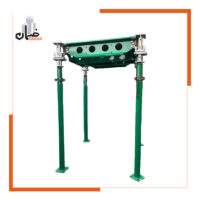
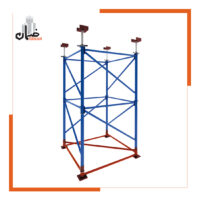
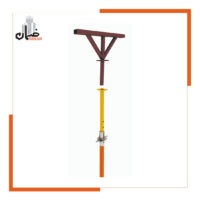
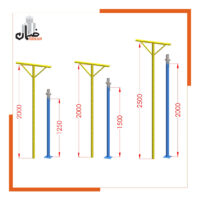
Triangular shoring is one of the most reliable systems for supporting concrete slabs and heavy decks, and it plays a key role in ensuring the safety of slab formwork in construction projects.
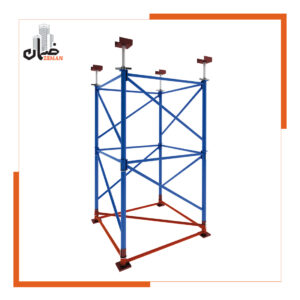
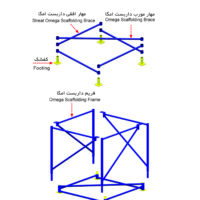
Hammer scaffolding, with its locking connections and high strength, is a suitable choice for industrial and heavy-duty projects and, alongside metal concrete formwork, ensures structural stability and safety.
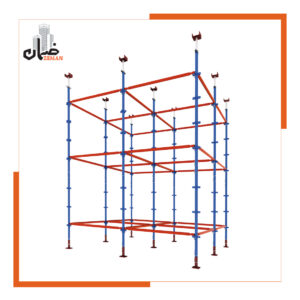
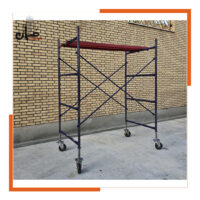
Service scaffolding is used to provide safe access to different parts of a structure during installation, repair, or maintenance, and is mostly applied in utility and service projects.
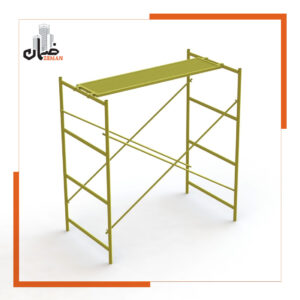
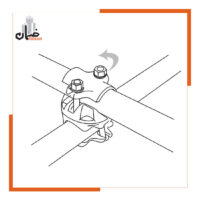
Traditional scaffolding, composed of pipes and couplers, offers high flexibility in execution and is still used in projects with special geometries or limited space.
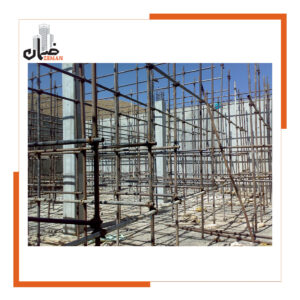
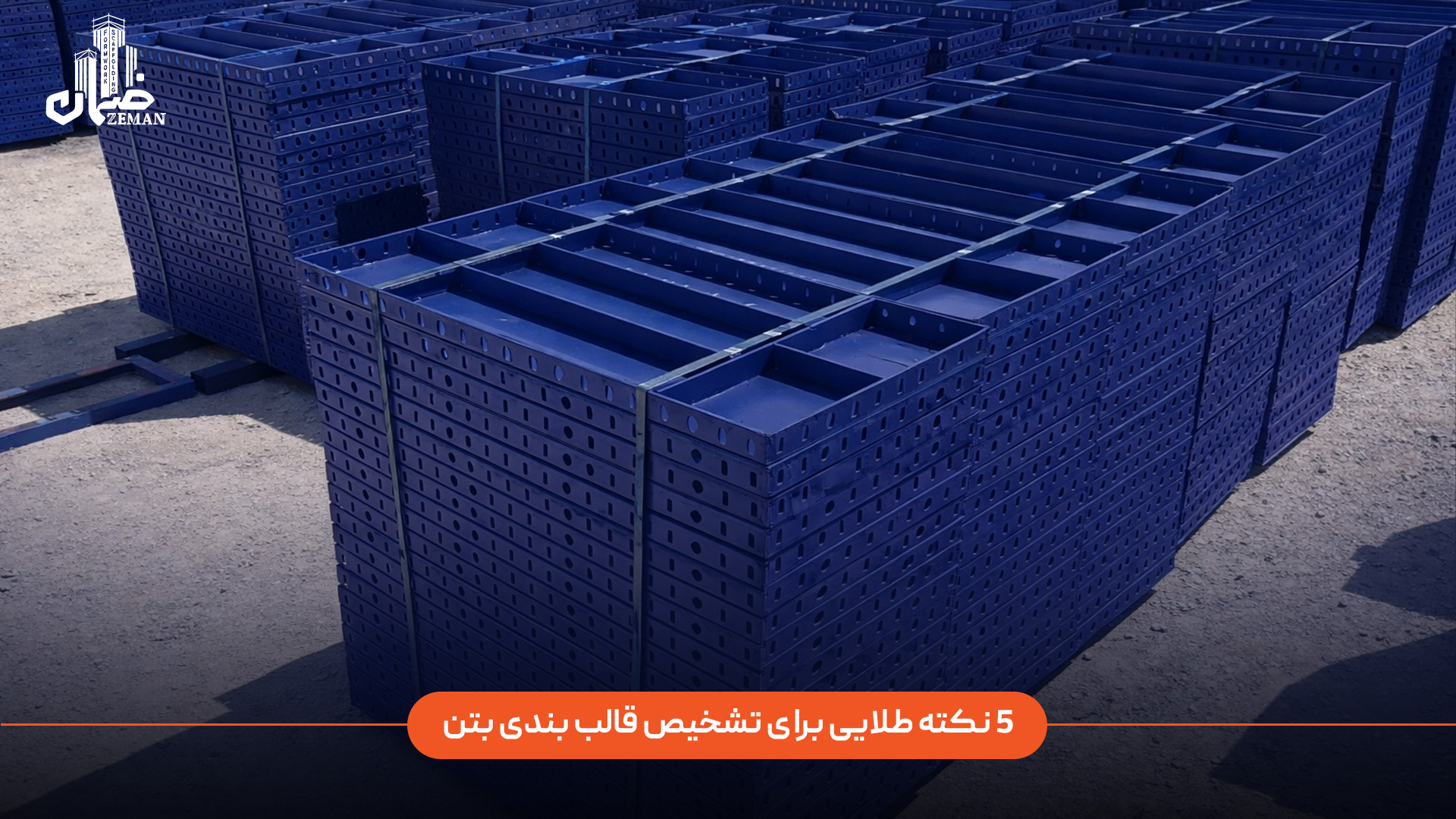
5 Golden Tips for Identifying High-Quality Metal Concrete Formwork
When you receive the formworks, how can you be sure you have not been misled?
- Check the ribs: The ribs around the formwork must be perfectly square. If the formwork is not a perfect rectangle, gaps will open during assembly, allowing concrete slurry to leak out.
- Punching quality: Pin and wedge holes must be precise and free of burrs. If the punching is not standard, pins and wedges will be difficult to insert, causing inconvenience for your workers during installation.
- Surface flatness: The facing sheet must not have any waviness. Place a metal straightedge on the surface to ensure it is perfectly flat.
- Painting: Although paint alone is not an indicator of quality, formworks that are oven-painted or dip-coated are more resistant to corrosion.
- Random weighing: Select several formworks at random and weigh them. The weight should correspond to the table provided by the seller (within a small tolerance).
Frequently Asked Questions (FAQ)
1. Is it possible to ship formwork to other cities?
Yes, Beton Sazeh Zaman Company provides daily loading and shipping to all parts of Iran (from Tehran to the southern and western regions of the country) at the lowest possible freight cost.
2. What is the service life of metal concrete formwork?
With proper maintenance (oiling before concreting, avoiding dropping from height, and appropriate storage), new Zaman formworks can be used for more than 50 concreting cycles without issues.
3. What is the difference between welded ribs and pressed ribs?
In welded-rib (welded-edge) formworks, the ribs are welded separately to the sheet, providing very high strength. In pressed (bent) models, the sheet is bent from a single piece. For heavy-duty projects, the welded-rib model—which is our area of expertise—is recommended.
4. Is installment or post-dated check payment available?
Payment terms vary depending on order volume and customer credit status. To learn about special credit sales conditions for certified contractors, please contact Zaman’s accounting department.
Conclusion and Purchasing Guide from Zaman
Purchasing concrete formwork means purchasing your working tools. The more precise your tools are, the cleaner and more professional your structural output will be. At the Zaman website, we are committed to delivering products made with standard alloys and precise geometry.
To receive an instant pro forma invoice and free consultation regarding the number of formworks required for your drawings, contact our engineers right now or send your list via WhatsApp.