




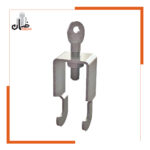
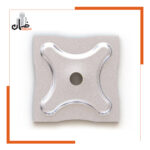
Washered Bolt Nut
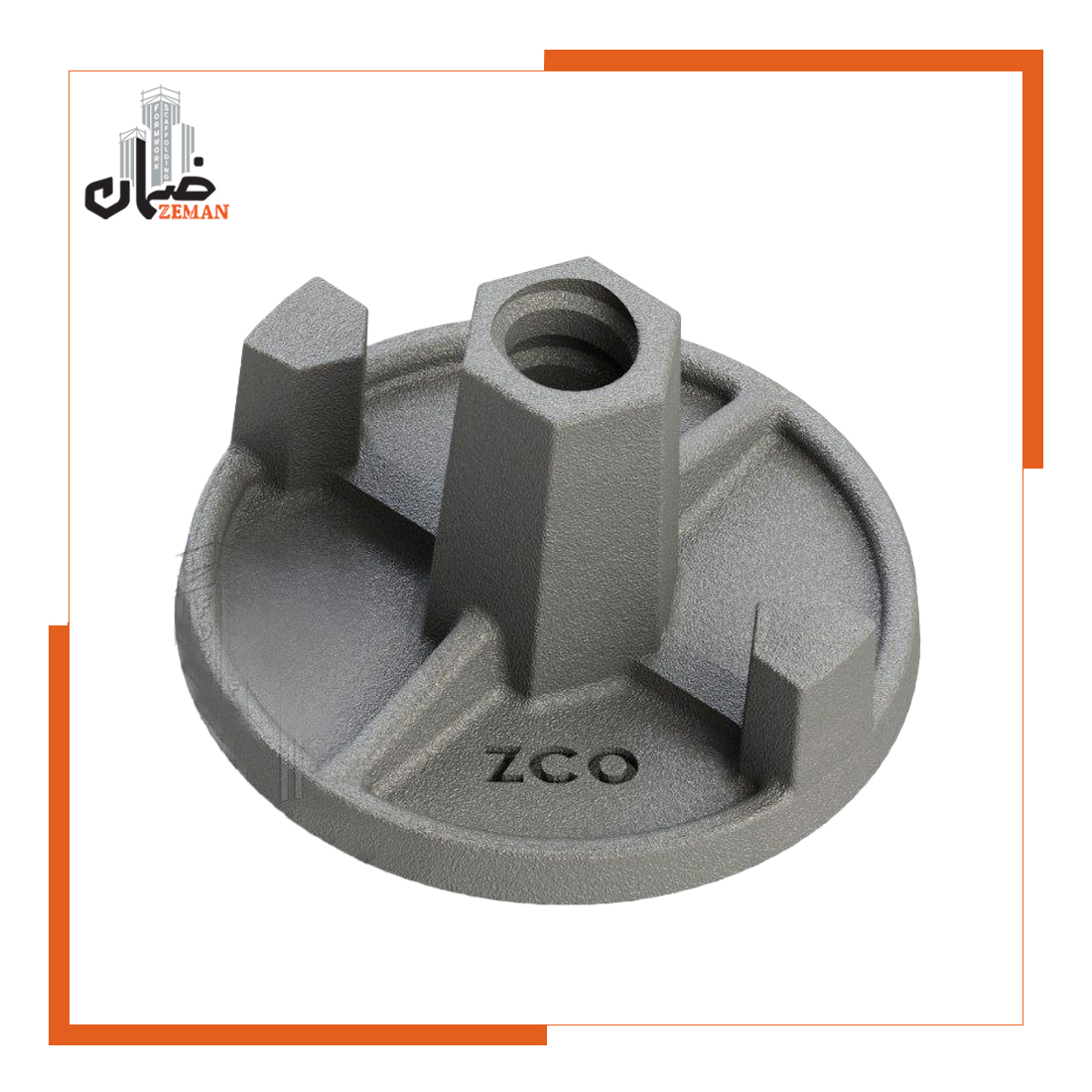
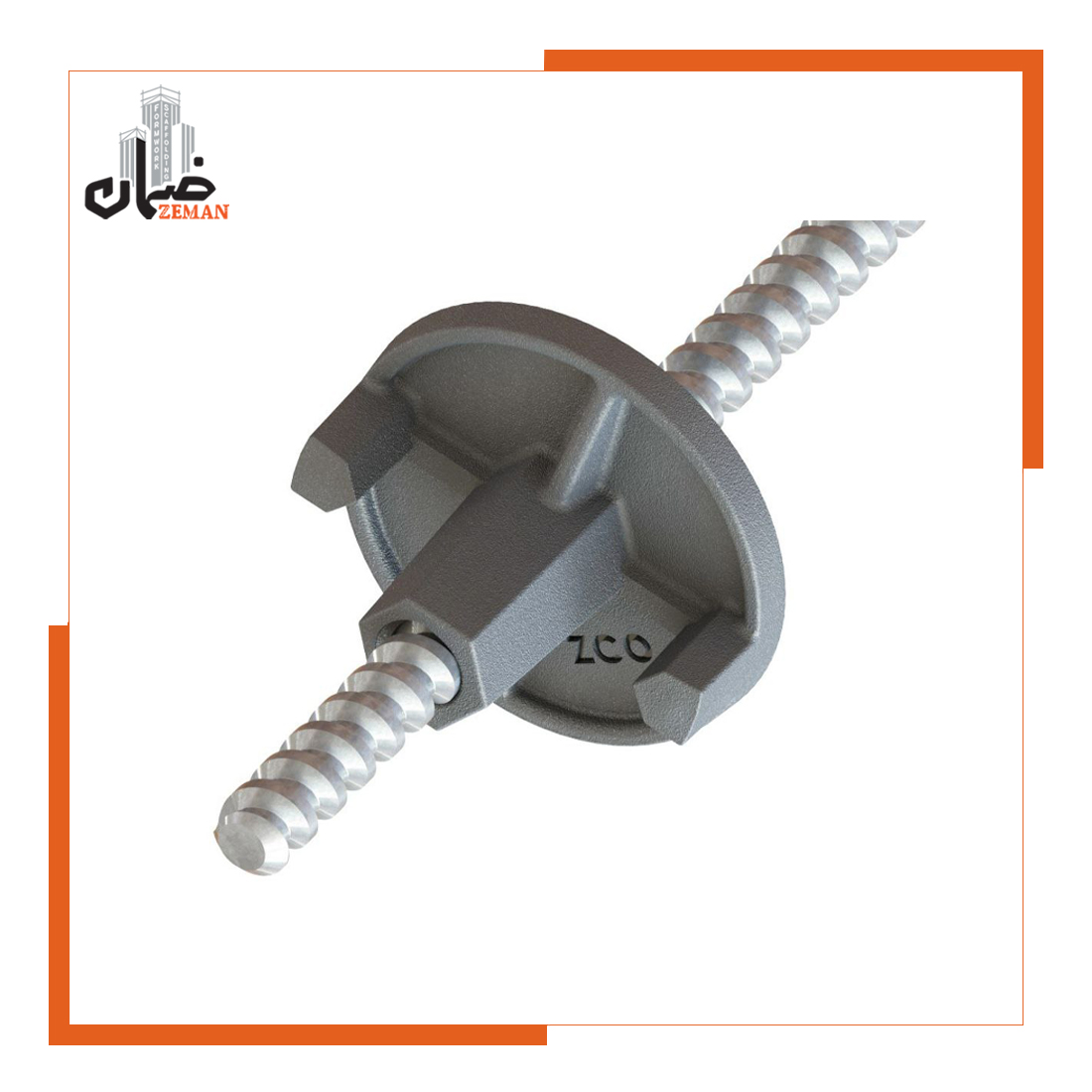
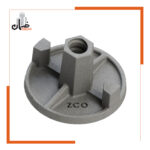
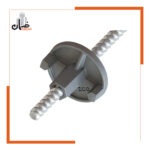
The washered bolt nut is one of the most commonly used accessories in concrete formwork and scaffolding systems, designed to securely fasten components and apply the required clamping force to formwork or scaffolding assemblies.
- General Specifications:
A combination of a wing nut with an integrated washer, typically manufactured from cast iron or steel.
The winged (butterfly) design allows tightening and loosening by hand without the need for a wrench.
Material: ductile cast iron or steel, usually provided with a galvanized coating for enhanced corrosion resistance. - Application:
Used in concrete formwork systems to secure and lock hook-type tie rods, fully threaded tie bolts, or double tie bolts from both sides of the formwork. - Features:
The wide metal washer integrated behind the nut distributes the applied load and prevents localized indentation or damage to the formwork surface.
Designed to withstand concrete pressure.
Reusable multiple times, depending on material quality and manufacturing standards. - Common Types:
1. Long washered bolt nut
2. Short washered bolt nut
3. Hammer nut or swivel nut (used in certain systems)
Washered Bolt Nut
Introduction: Optimizing Speed and Cost in Formwork through Smart Connections
In today’s highly competitive construction industry, civil project managers consistently face three fundamental challenges: accelerating execution schedules, reducing operational costs, and ensuring the highest possible level of safety on site.
Within this context, achieving “final performance gains” by optimizing seemingly minor components has become a key strategic approach for outperforming competitors. The intelligent selection of formwork connection systems represents one of the clearest examples of this strategy. Despite their relatively small size, these components play a critical role in maintaining the stability and integrity of the entire concrete formwork system against the immense pressures exerted by fresh concrete.
The washered bolt nut is far more than a simple hardware component; it is a strategic tool for enhancing operational productivity. While traditional approaches treat this item as a consumable and easily replaceable part, modern engineering perspectives recognize it as an integral element of a fully integrated formwork system. The correct performance of formwork panels, bolts, soldiers, and walers is directly dependent on the reliability and quality of these nuts. Even a minor defect at this connection point can lead to major and costly failures throughout the entire structure.
With a deep understanding of this responsibility, Zeman Company designs and manufactures washered bolt nuts not as auxiliary products, but as one of the core components of its formwork systems. This comprehensive guide will familiarize you with the technical, functional, and economic dimensions of this key product and demonstrate how selecting a high-quality nut can have a profound impact on the success of your project.
What Is a Washered Bolt Nut? The Driving Force of Modern Formwork Connections
A precise understanding of the nature and operating mechanism of a washered bolt nut is the first step toward recognizing its true value in concrete construction projects. With its distinctive design, this component provides an intelligent response to the complex demands of modern construction systems.
Technical Definition and Operating Mechanism
The washered bolt nut—also known in the industry as a “flange nut” or “bolt nut with integrated washer”—is a specialized nut designed with an integrated washer or flange as part of its structure. This unified design fundamentally differentiates its performance from that of conventional nuts.
The primary function of this nut is to secure bolts passing through formwork panels and to create a strong and stable connection. Its core operating principle lies in “uniform load distribution.” When the nut is tightened onto the bolt, the integrated flange spreads the compressive force over a wider surface area of the backing elements (such as soldiers or channels). This provides two major advantages:
- Prevention of component damage: Concentrated pressure from conventional nuts can damage backing elements, cause localized indentation, or compromise their protective coatings. The wide flange of the washered nut effectively eliminates such point-load damage.
- Increased connection stability: By distributing the load, the contact area and friction increase. This feature—especially in models equipped with locking serrations beneath the flange—significantly enhances resistance to vibration caused by concrete compaction and dynamic loading, preventing self-loosening of the nut.
The nut is designed to be quickly and easily tightened or loosened—often even by hand—thanks to its lateral wings.
Key Distinction: Washered Bolt Nut vs. Standard Wing Nut System
To fully appreciate the advantages of a washered bolt nut, it must be compared with the traditional system of using a standard wing nut together with a separate plate washer. While both systems may appear to serve the same purpose initially, their operational and economic differences are significant.
The two-piece system (nut + washer) introduces hidden challenges that directly impact project costs and productivity. These challenges extend beyond the purchase of two separate items and include logistical, executional, and managerial complications.
- Logistics and inventory management: Large-scale projects require independent inventory control for two separate item codes (nut and washer), complicating procurement, storage, and on-site distribution processes.
- Material loss on site: Washers are small and lightweight and are easily lost in busy construction environments. While minor individually, such losses become financially significant when multiplied across thousands of connections and can cause work stoppages.
- Reduced speed and increased human error: Placing and aligning two separate components takes more time than installing a single integrated piece. Multiplied across hundreds of connections, this results in substantial labor-hour losses and increases the risk of missing or improperly positioned washers.
By integrating these two components into one, the washered bolt nut eliminates these issues entirely. It is not merely a nut with a washer—it is a fully engineered solution designed to simplify processes, reduce hidden costs, and boost workforce efficiency.
| Feature | Zeman Washered Bolt Nut | Standard Wing Nut + Plate Washer |
|---|---|---|
| Number of components | Single integrated engineered unit | Two separate components requiring coordination |
| Installation speed | Very high; single-step installation | Moderate; separate washer and nut placement |
| Risk of human error | Minimal; no missing or misaligned components | High; washer omission or misalignment possible |
| Inventory management | Simple; one item code | Complex; two item codes |
| Material loss on site | Near zero | High; washers easily lost |
| Total system cost | Cost-effective when labor and waste reduction are considered | Lower initial cost, higher hidden expenses |
Get expert advice
Our sales experts at Zaman are ready to provide guidance and advice before your purchase.

Reviews
There are no reviews yet.