




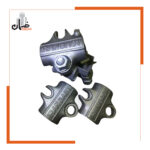
Swivel Coupler
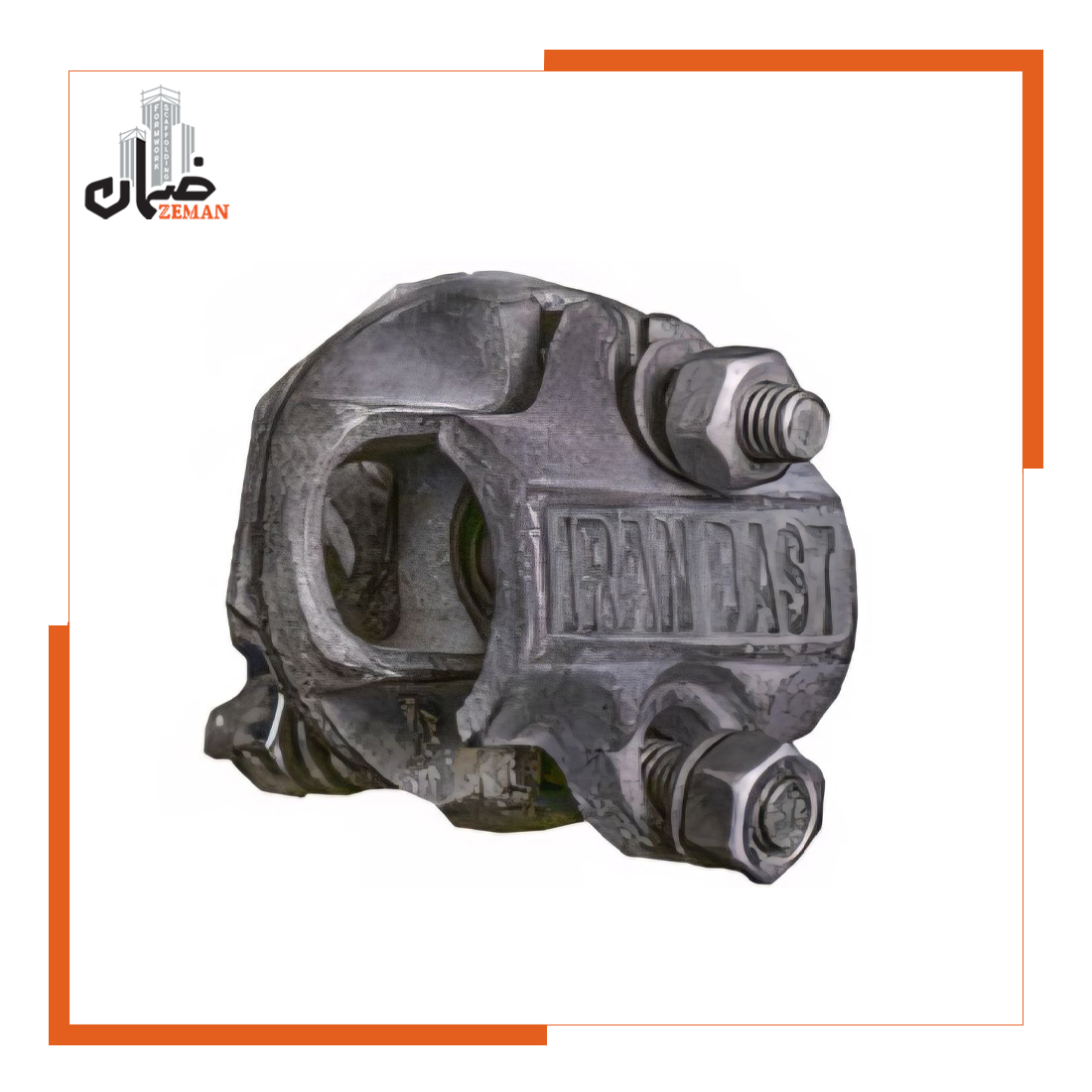
The Zeman scaffolding swivel coupler is a critical component for flexible connections, allowing two scaffold tubes to be joined at virtually any angle. Manufactured from high-strength, unbreakable ductile cast iron and certified in accordance with the Iranian National Standard as well as ISO 9001, this coupler demonstrates excellent resistance to high loads and stresses. With an approximate weight ranging from 1,250 to 1,750 grams, the Zeman swivel coupler is an ideal choice for projects with complex geometries—such as refineries and industrial structures—where superior strength and a high level of safety are essential.
Swivel Coupler
Introduction: The Swivel Coupler — The Architect of Flexibility in Scaffolding Structures
The construction industry and civil engineering projects have always been founded on the solid pillars of safety and efficiency. In this context, metal scaffolding systems, although temporary in nature, play a vital role by providing safe access to elevated areas and forming the foundation for a wide range of operations, from façade work to the installation of mechanical and electrical systems. Within the complex ecosystem of scaffolding, every component fulfills a critical function, and couplers act as the primary joints responsible for connecting tubes and ensuring the stability of the entire structure.
Among the various types of scaffolding couplers, the Swivel Coupler, also known as the “360-degree coupler,” holds a distinctive position due to its unique capabilities. This innovative component eliminates the limitations of fixed connections and enables the creation of more complex and flexible scaffolding configurations.
Beton Sazeh Zeman Company, with nearly half a century of experience in the industry and utilizing skilled specialists alongside the most advanced robotic manufacturing technologies, is recognized as one of the pioneers in producing concrete formwork systems and scaffolding solutions in the region. This report provides an in-depth analysis of the swivel coupler as a symbol of Zeman’s commitment to quality, innovation, and safety, examining its technical, functional, and economic dimensions.
What Is a Swivel Coupler? Technical and Functional Analysis
A swivel coupler is a precision-engineered mechanical component designed to connect two scaffold tubes at virtually any angle other than 90 degrees. This capability makes it an indispensable tool for enhancing structural stability and installing diagonal bracing (cross braces).
The structure of a swivel coupler consists of two main components connected by a thick central pin, forming a hinged joint that allows full 360-degree rotation between the connected tubes. The standard components of a swivel coupler typically include two plates, a central boss, and four bolts, nuts, and washers. However, some sources also reference the production of swivel couplers in configurations with two, six, or eight bolts.
The core applications of this coupler stem from its unmatched flexibility. In projects with highly complex and irregular geometries—such as scaffolding around mosque domes, historical façades with intricate ornamentation, or access structures for intertwined pipelines in refineries—fixed couplers often face significant execution limitations. In these scenarios, the swivel coupler allows the scaffolding specialist to fully adapt the structure to the project’s shape and functional requirements. This flexibility enables designers to transform creative concepts and complex designs into practical and safe structures.
Comparing the swivel coupler with fixed couplers, particularly the four-bolt coupler, provides deeper insight into the role of each type. The four-bolt coupler is the most commonly used coupler in building construction and connects scaffold tubes exclusively at a 90-degree angle. It offers exceptional strength and rigidity at right-angle intersections, making it ideal for conventional and straightforward structures. In contrast, the swivel coupler is the optimal choice when angular variation and greater flexibility are required. Therefore, the selection between these two couplers is not based on the absolute superiority of one over the other, but rather on the specific technical and geometric requirements of each project.
Comparison Table: Swivel Coupler vs. Fixed (Four-Bolt) Coupler
| Feature | Swivel Coupler | Fixed Coupler (Four-Bolt) |
|---|---|---|
| Primary Application | Connecting two tubes at various angles | Connecting two tubes at a right angle (90°) |
| Flexibility Level | Very high (360° rotation capability) | No angular flexibility |
| Structural Use | Diagonal bracing, truss structures, irregular geometries | Main frames and vertical/horizontal intersections |
| Suitable Projects | Refineries, complex structures, domes, inclined constructions | General building construction, conventional structures, high-rise projects |
| Connection Mechanism | Two hinged components with a central pin | Two fixed components locking tubes at a single angle |
Engineering and Manufacturing: From Materials to Strength
The quality of a scaffolding coupler begins with its raw materials and manufacturing process. Most scaffolding couplers are made from ductile (nodular) cast iron or high-carbon steel. Ductile cast iron, due to its high compressive strength and crack-resistant properties, is a popular choice in this industry. Some couplers, particularly those produced using the forging method, are made from iron or steel. To enhance resistance against corrosion and rust, these components are coated with a galvanized layer (zinc coating), which significantly extends service life and ensures reliable performance in various environmental conditions.
The manufacturing process itself has a direct impact on the final properties of the coupler. The two primary production methods in this industry are casting and forging.
In the casting process, molten metal is poured into a mold and allowed to cool into its final shape. This method is cost-effective and suitable for mass production of complex forms. However, the internal metal structure produced by casting may contain porosity and lower density, reducing impact resistance. As a result, cast couplers may fracture if dropped from height or subjected to severe impact.
In contrast, the forging process involves applying intense pressure or impact to heated metal within a die. This process significantly compresses and homogenizes the internal grain structure, resulting in superior mechanical strength and outstanding impact resistance. Forged couplers deform under impact or falling loads rather than breaking, which is a critical safety feature in construction projects. Although forged couplers generally have a higher initial cost than cast couplers, this cost is offset over time by their superior durability and safety performance.
Comparison Table of Scaffolding Coupler Manufacturing Methods
| Feature | Casting | Forging |
|---|---|---|
| Manufacturing Process | Pouring molten metal into molds | Applying high pressure to heated metal |
| Primary Material | Ductile Iron | Steel |
| Impact Resistance | Low (risk of fracture under impact or fall) | Very high (deforms without breaking) |
| Structural Strength | Lower than forging | Extremely high and uniform |
| Cost | Economical | Higher than casting |
| Best Application | Small structures, temporary projects | Heavy-duty projects, high elevations, permanent structures |
An analysis of weight variations among swivel couplers in the market also reveals important insights. Different sources cite weight ranges from approximately 1,250 to 1,750 grams for general couplers, and up to 2,200 to 2,500 grams for products manufactured by specific brands. This significant variation is not a market inconsistency, but rather reflects the close relationship between weight, material quality, and manufacturing method. Heavier couplers are more likely to be forged and made from higher-grade materials, resulting in superior strength and durability. Therefore, weight can be considered a key indicator for assessing product quality and compliance with standards.
Technical Standards and Safety Certifications
Compliance with standards in the production and use of scaffolding couplers is not merely an administrative requirement, but a critical guarantee of worker safety and structural stability. The use of non-standard or counterfeit couplers can lead to irreparable consequences. In Iran, Iranian National Standard No. 15443, developed by the Institute of Standards and Industrial Research of Iran, defines general design and performance requirements for scaffolding systems, including material quality, proper design, and the necessity of valid certification.
At the international level, the EN 74 European standard specifically defines requirements and testing methods for friction couplers, including swivel couplers. This standard classifies couplers based on load capacity into different categories, such as Class A and Class B.
The most important tests conducted under this standard include the slip test and the ultimate load test. The slip test measures the force a coupler can withstand before slipping occurs; for Class B couplers, this value must exceed 15 kN. The ultimate load test determines the maximum force a coupler can endure before complete failure, which for Class B couplers must be greater than 30 kN.
Swivel Coupler Installation Guide, Maintenance, and Safety Considerations
Even the highest-quality scaffolding couplers lose their effectiveness if they are not installed correctly. Scaffolding erection is a specialized process that must be carried out by trained and experienced personnel. The process begins with careful site preparation, ensuring that the ground surface is level and firm to prevent settlement of the base components.
During installation, applying the correct torque to bolts is critical. Insufficient torque results in loose and unstable connections, while excessive torque can damage threads and compromise joint integrity. Therefore, appropriate tools such as heavy-duty steel spanners should be used to tighten couplers properly.
On-site safety practices are equally essential to protect workers and maintain structural stability. Daily and periodic inspections of all scaffolding components and connections by qualified personnel are mandatory. Each scaffolding system and coupler has a defined load capacity that must not be exceeded. A swivel coupler can typically withstand loads of up to 1,000 kilograms. In addition, the use of personal protective equipment (PPE), including safety helmets, gloves, anti-slip footwear, and safety harnesses, is mandatory for all workers.
After project completion, proper maintenance significantly extends the service life of couplers and protects the investment. Couplers and tubes should be thoroughly cleaned after use and stored in dry, covered environments to prevent corrosion. Regular lubrication of moving components, such as swivel couplers, is essential to maintain smooth and reliable operation.
Comprehensive Guide to Scaffolding Coupler Installation and Maintenance
| Stage | Critical Considerations |
|---|---|
| Before Installation | Inspect the installation site (level surface, no obstacles), ensure component quality and absence of visible damage |
| During Installation | Use appropriate tools, apply correct torque, install diagonal braces for stability |
| During Operation | Daily scaffold inspections, adherence to maximum load limits, use of personal protective equipment |
| After Operation | Clean couplers and tubes, store in dry and covered areas, lubricate moving components |
A high-quality, standard-compliant coupler represents only part of the safety equation. Without proper installation and maintenance, its technical advantages are negated. For this reason, a responsible manufacturer must go beyond product sales and actively contribute to customer training and education. By providing educational content such as instructional videos and technical articles, Zeman Company can support customers in proper product usage and enhance its brand image as a partner committed to safety and social responsibility.
Swivel Coupler Pricing and Selection Criteria
The decision to purchase scaffolding couplers is a strategic choice that directly affects project safety, efficiency, and overall cost. Coupler pricing is influenced by several factors, with material type and manufacturing process being the most significant. Forged steel couplers, due to their higher strength and durability, are generally more expensive than cast iron couplers. Weight is another key pricing factor, as cost is directly correlated with material volume. Reputable brands with certified products typically command higher prices due to quality assurance.
The price of swivel couplers in the Iranian market can range from approximately 73,000 to 220,000 tomans. This wide price variation is commonly associated with differences in weight and product quality.
To ensure the purchase of a high-quality and standard-compliant product, it is essential to distinguish genuine couplers from counterfeit ones. Authentic couplers feature uniform and defect-free welding, precise threads, and clear brand markings and standard stamps. Counterfeit couplers are usually lighter and may deform or fracture easily under load or impact.
Criteria for Identifying Genuine vs. Counterfeit Swivel Couplers
| Feature | Genuine Coupler | Counterfeit Coupler |
|---|---|---|
| Brand/Standard Markings | Clear brand engraving and valid standard mark | No marking or unclear/irregular engraving |
| Welding Quality | Precise, uniform welds without cracks or excess material | Irregular and low-quality welding |
| Thread Quality | Consistent and accurate bolt and nut threads | Incomplete or poorly formed threads |
| Weight | Heavier (within standard range) | Lighter than standard weight range |
| Physical Resistance | Deforms under impact without breaking | Breaks or fractures under impact or fall |
Selecting scaffolding couplers should not be based solely on initial purchase price. Inexpensive and counterfeit couplers, despite their lower upfront cost, often impose significant hidden expenses due to rapid wear, frequent replacement, project delays, and—most critically—the risk of severe accidents and financial loss. In contrast, investing in high-quality, standard-compliant couplers such as Zeman’s products, although more expensive initially, results in reduced maintenance costs, enhanced safety, and improved project credibility over the long term.
Final Conclusion: Choosing Zeman Is an Investment in Safety and Innovation
The swivel scaffolding coupler is far more than a simple metal fitting; it is a precision-engineered component that plays a pivotal role in the safety and flexibility of construction projects. Its full rotational capability makes it indispensable for structures with complex and irregular geometries, and its use has expanded significantly in large-scale industrial projects such as refineries, where high strength and stability are essential.
With nearly five decades of experience, Beton Sazeh Zeman Company has established itself as a reliable partner in the construction industry by deeply understanding the critical importance of quality and safety. Leveraging modern technologies and adhering to stringent standards, the company delivers products that not only meet technical requirements but also provide peace of mind for contractors and workers alike.
Considering the technical, safety, and economic aspects, selecting swivel couplers from a reputable brand such as Zeman represents a smart investment in durability, performance, and reduced hidden costs throughout the project lifecycle. This choice ensures that the project’s safety infrastructure is built on a solid and standardized foundation. For expert consultation and to purchase products that guarantee the safety and efficiency of your project, it is recommended to contact Zeman Company’s specialists.
Get expert advice
Our sales experts at Zaman are ready to provide guidance and advice before your purchase.

Reviews
There are no reviews yet.